 En
En
 English
  Français
  русский
  中文简体
中文简体  عربى
عربى  Español

Bucket elevator bearings are the most common reason for unscheduled stops in a bucket elevator, and the real cause behind most early failures is contamination or lubrication loss, not the bearing itself. In dusty plants that handle fertilizer, grain, cement, or many bulk chemicals, a bearing that dies after a few months almost always points to dust that entered the housing or a grease path that was blocked. Understanding how these bearings are loaded, sealed, and maintained helps you solve failures before they stop the line.
The Role of Bearings in a Bucket Elevator
Every bucket elevator carries at least four bearings in its moving assembly: two at the head shaft and two at the boot shaft, with extra intermediate bearings on tall vertical runs. These bearings support the shaft, keep the bucket chain or belt aligned, and transmit the load that the row of buckets is lifting. Each position has its own load pattern and its own failure risk.
Head bearings sit behind the driven pulley at the top, where they see the highest rotational speed, the reaction torque from the drive, and the full tension of the loaded chain. Boot bearings hold the take-up shaft at the bottom; they see more impact because incoming material falls directly onto the buckets, and they are exposed to spillage that collects in the boot section. This difference matters in practice: boot bearings fail first in most installations.
- Head bearing: high speed, consistent load, long lubrication lines
- Boot bearing: lower speed, shock load, more contamination
- Intermediate bearing: prevents shaft whip, moderate load, often hard to access
On tall elevators, intermediate bearings prevent the long shaft from whipping and keep the chain tracking true. Because they are hard to reach, they are often the least lubricated point in the machine.
Bearing Types Used in Bucket Elevators
For moderate loads and speeds, a self-aligning insert ball bearing is the default choice; for heavy, shock-loaded service, a spherical roller bearing is the more durable alternative. Deep-groove ball bearings appear mainly on small, cheap elevators where speed matters more than load capacity.
| Bearing type | Typical bucket elevator service | Key advantage | Main limitation |
|---|---|---|---|
| Self-aligning ball bearing insert | Light to medium duty, moderate speeds | Compensates for minor shaft deflection | Lower radial load capacity |
| Spherical roller bearing | Heavy duty, high fill rates, shock loads | High capacity plus self-alignment | Requires careful lubrication |
| Deep-groove ball bearing | Small elevators, very low load, high speed | Low friction, low cost | No self-alignment, sensitive to contamination |
| Tapered roller bearing | High axial plus radial combined load | Handles combined loads well | Must be set as a pair |
Self-aligning ball bearings tolerate small shaft deflections and are easy to fit in standard pressed-steel housings. Spherical roller bearings carry more load, but they need wider housings and a stricter lubrication schedule. On an elevator that is expected to run 24 hours a day, the spherical roller design is usually worth the higher initial cost.
Key Selection Criteria for Bucket Elevator Bearings
Selection starts with load direction and magnitude, then speed, then shaft deflection, then the sealing class needed for the actual dust level. Skipping the misalignment check is common when buyers select by shaft diameter alone, and that shortcut explains why a new elevator sometimes eats bearings in the first year.
- Radial and axial load: chain tension and bucket weight are mostly radial; a steep tensioner can add axial force.
- Speed: bigger head pulleys lower the bearing speed and allow grease lubrication, while small pulleys may need a higher-speed grease or an oil sump.
- Shaft deflection: long unsupported shafts bend under load, so a self-aligning insert or spherical roller bearing prevents edge loading.
- Sealing class: labyrinth seals resist coarse dust, contact seals handle fine dust, and corrosion-resistant seals matter on fertilizer lines.
- Temperature: hot process material can raise the bearing temperature, so the grease must match the operating envelope.
A practical rule: if the shaft diameter is larger than 50 mm and the elevator is in continuous duty, choose spherical roller bearings and insist on a documented regreasing route.
Common Bearing Failure Modes and How to Prevent Them
Contamination and lubricant loss cause roughly two out of three early bearing failures in bucket elevators, so the best single improvement is better sealing plus a reliable grease route.
| Failure mode | What you see | Main cause | Prevention |
|---|---|---|---|
| Abrasive wear | Fine scratches or a matte look on raceways | Dust entering the housing | Better seals and positive-pressure greasing |
| Lubrication failure | Discoloured, smeared or welded surfaces | Grease starvation or wrong grease | Follow the regreasing schedule and keep records |
| Fatigue spalling | Flaking patches on the raceway | Overload or excessive preload | Correct bearing size and housing fits |
| Misalignment damage | Crescent-shaped wear track | Shaft flex or housing misalignment | Use a self-aligning insert and check frame straightness |
| Corrosion | Rust lines or pitted tracks | Moisture or aggressive fertilizer dust | Corrosion-resistant coating and regular purge |
A bearing can show more than one of these at the same time. A dusty boot housing often produces abrasive wear first, then the resulting friction heat drives out the grease, leaving discoloured races, and eventually the overload chips the surfaces.
Maintenance Practices That Extend Bearing Life
A simple weekly routine — regrease on schedule, listen for noise, feel for heat, and clear spillage around the housings — can double bearing life on most elevators, without any expensive condition monitoring.
- Regrease at the manufacturer's recommended interval and quantity. On small housings, overgreasing creates more heat than undergreasing.
- Purge old grease through the relief valve or cap until fresh grease appears, so contaminants are pushed out.
- Inspect seal lips once a shift on dirty lines; a torn lip is an open door for dust.
- Track temperature at the head and boot. A bearing that runs 20°C hotter than its normal steady value needs attention.
- Verify chain tension and boot position monthly. Abnormal tension transfers extra load straight to the boot bearing.
- Log temperature and vibration readings on each inspection so a slow change becomes visible before a failure.
These steps are covered in more detail in our industry news articles, where field problems from real production plants are discussed.
Choosing a Bucket Elevator That Protects Its Bearings
From a bearing perspective, the best bucket elevator design has oversized shafts, proper sealing, and external grease lines so the boot bearing can be serviced without dismantling the casing. If the vendor cannot explain how you will regrease the bottom bearing safely, that machine will eventually cost you bearings.
When evaluating options, ask three questions: what bearing class is standard, what seal faces the material, and can every bearing be relubricated while the elevator is running? Machines that fail these questions will cost more in bearings over ten years than their lower first price suggests.
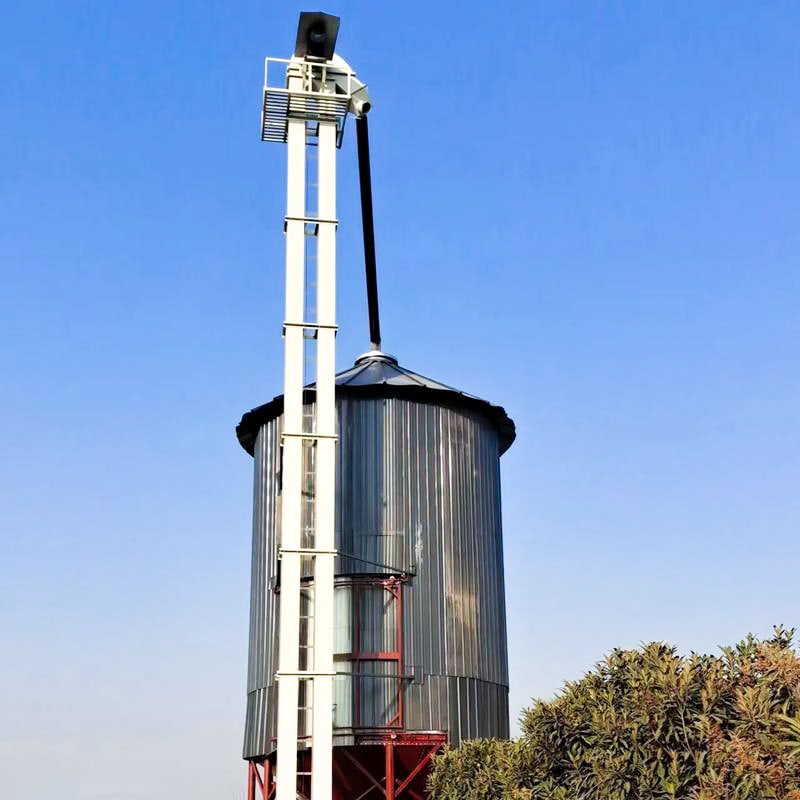
For compound fertilizer lines and similar moderate-duty plants, the TH bucket elevator is a good example of a serviceable design. Its bearing housings can be greased from outside the casing, and the shafts are sized to keep deflection below the bearing's tolerance.
 TH Bucket Elevator for Moderate-Duty Fertilizer LinesThis chain-type elevator offers four models with capacities up to 47.2 m³/h and lifting heights to 30.32 m. Its externally greasable bearings suit compound fertilizer plants seeking easy maintenance.View Product →
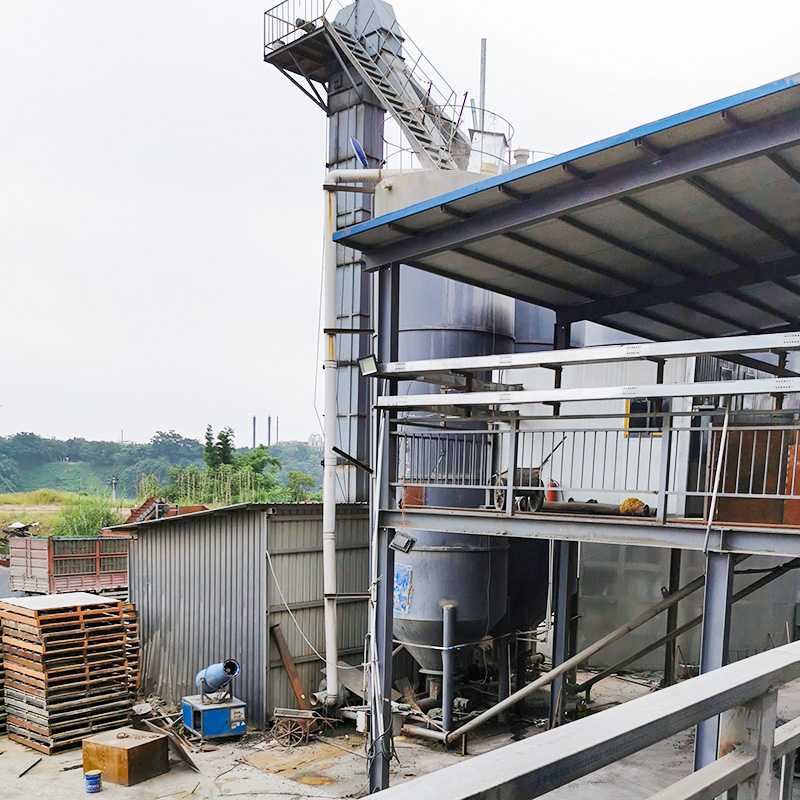
For higher volumes or slightly abrasive materials, the NE bucket elevator keeps the lifting speed lower because the material column is carried by an embedded chain. Lower speed and larger bearing seats make it a common choice for granulated fertilizers and dusty powders.
 NE Plate Chain Bucket Elevator for Abrasive MaterialsAvailable in eight sizes, this fully sealed elevator conveys 16–441 m³/h with heights up to 54.7 m. The embedded chain design keeps speeds lower, making it reliable for fertilizers and dusty powders.View Product →
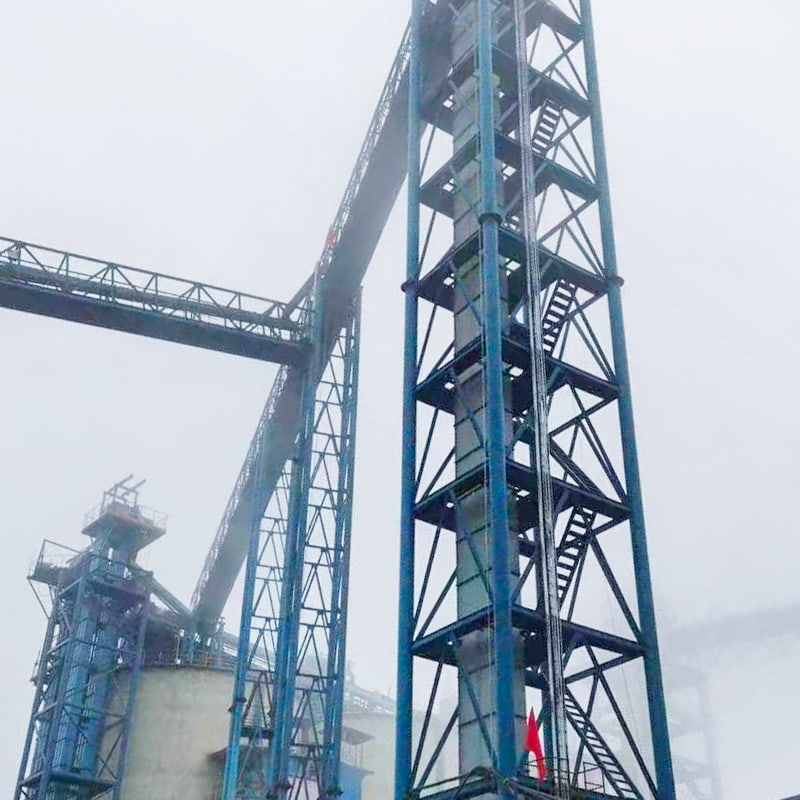
Where heavy, hot, or very abrasive material must be lifted over considerable height, the NSE plate chain bucket elevator is built with heavier bearings and a guide system that reduces side loads. That construction is typical in cement plants and solid bulk terminals.
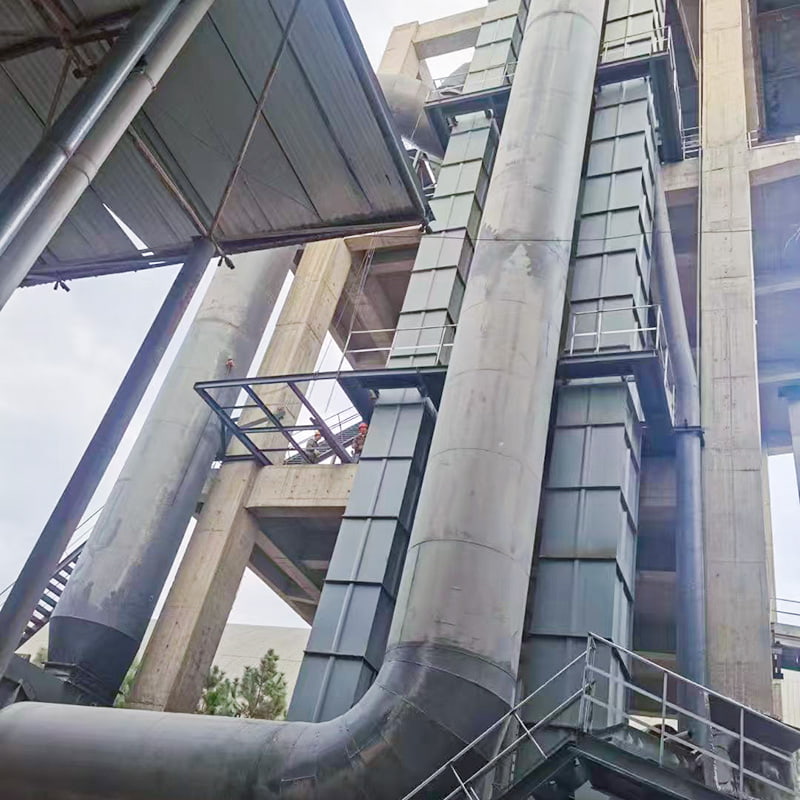 NSE High-Speed Plate Chain Elevator for High VolumesWith capacities from 100 to 1900 m³/h and heights up to 65 m, this high-speed elevator uses inflow feeding and induction discharge. Its heavy bearings suit cement plants and bulk terminals.View Product →
You can see how such elevators are integrated into complete compound fertilizer production lines in our company news section.
Frequently Asked Questions
What is the expected service life of bucket elevator bearings?
Under normal operating conditions — clean housings, correct greasing, and no repeated shock overload — a bucket elevator bearing will usually last two to five years in continuous service. In a dusty fertilizer or cement line, that figure can drop to one year or less if sealing is weak. Because the environment drives life more than the bearing itself, service life predictions should begin with a dust-control assessment rather than a catalogue rating.
Should I use grease or oil lubrication on these bearings?
Grease is the right answer for most bucket elevators. Grease remains in the housing, resists contamination ingress, and requires simpler sealing than oil. Oil bath or circulating oil is suitable only for very large, high-speed elevators where heat removal is critical. Changing from grease to oil without redesigning the housing and seals usually causes leaks.
Why does the boot bearing fail more often than the head bearing?
Because the boot is where spillage collects and where the buckets receive their impact load as material enters. The boot bearing sees continuous vibration plus occasional shock, and it sits in the dirtiest zone of the machine. Raising the boot slightly, adding a dust skirt, and keeping the area clear of spilled product are the most effective ways to close that gap.
Can I replace a standard insert bearing with a spherical roller bearing?
You can, but only after checking the housing bore, shaft fit, and locking arrangement. A spherical roller bearing is wider and may need a stronger housing and a different locknut. Converting a single boot or head position without checking the other side can also introduce misalignment. If you are unsure, ask the original equipment manufacturer for a drawing before making the swap.
Bucket elevator bearings are not exotic parts. They fail in predictable ways, and almost every failure can be prevented with the right bearing class, adequate sealing, and a simple inspection routine. If you are buying new equipment, treat bearing design as a first-order selection criterion; if you are maintaining an existing unit, start with the seals and the grease route.