 En
En
 English
  Français
  русский
  中文简体
中文简体  عربى
عربى  Español

A loaded bucket elevator does not stop when the drive fails. It reverses. The weight of filled buckets on the downward side pulls the belt or chain backward, and within seconds the boot fills with spilled material. If maintenance staff are working near the boot, they can be seriously injured. A bucket elevator backstop eliminates this risk: it allows the elevator to run forward normally but locks the head shaft as soon as reverse torque appears.
The short answer for anyone evaluating backstop requirements: a backstop is a one-way clutch installed on the head shaft or inside the drive assembly. It needs no electrical power, no control signal, and no operator action. When the drive stops or fails under load, it holds the elevator in place until normal drive is restored. The sections below explain how a backstop works, compare common types, and give a practical selection and maintenance approach consistent with the design practice used by established equipment manufacturers.
What Is a Bucket Elevator Backstop?
A bucket elevator backstop is a unidirectional mechanical locking device. It permits free rotation in the driving direction and blocks rotation in the opposite direction. In normal service, it rotates with the head shaft or drive coupling without interfering with elevator operation.
The same component is sometimes called a holdback or a non-reverse clutch. “Backstop” is the most common term in elevator applications; “holdback” appears more frequently with inclined conveyors. Both perform the same function: preventing gravity from turning a loaded elevator leg into a reverse-running machine.
- No external power or control wiring required
- Automatic engagement when reverse torque appears
- Compact installation on the head shaft or gearbox output
- One-way operation only
- Torque ratings from small grain legs to large industrial elevators
Why Does a Loaded Elevator Need a Backstop?
Without a backstop, a loaded bucket elevator that loses drive power will run backwards with enough force to damage equipment and endanger personnel. The higher the elevator and the denser the material, the greater the stored energy in the loaded leg.
The main consequences of reverse rotation include:
- Material falls from the buckets and compacts in the boot, blocking the next restart
- Belt tension drops and the belt slips, damaging lacing, buckets, and chain links
- The gearbox output shaft rotates backwards under load, causing component overstress
- In grain and fertilizer plants, friction and impact heat can become an ignition risk in a dusty atmosphere
- Personnel near the boot or casing openings can be hit by moving parts or falling material
Even a short reversal can interrupt production for several hours. In continuous fertilizer plants, elevators are often on the critical path between process steps, so a backstop failure quickly becomes a production loss. Most bucket elevator standards and manufacturer recommendations treat the backstop as a mandatory safety component rather than an optional accessory.
How Does a Bucket Elevator Backstop Work?
A backstop converts a small amount of reverse rotation into a wedging action that locks two components together. The most common designs use rollers or sprags inside a circular race.
In a roller ramp backstop:
- During forward rotation, the rollers stay in the wide side of the ramp and roll freely.
- When rotation slows, springs push the rollers toward the narrow side of the ramp.
- If reverse rotation starts, the rollers wedge between the inner race and the outer housing, locking the shaft.
- When forward torque is restored, the rollers move back to the free-rolling position.
Sprag clutches use the same principle with a set of shaped steel sprags around the circumference, giving a very small reverse angle before lockup. A well-maintained roller backstop locks within a few degrees of reverse rotation; a sprag backstop often locks within less than one degree. This small motion also serves as a built-in shock absorber, since lockup energy is absorbed by shaft and coupling deflection.
Types of Backstop
Backstops are classified by locking mechanism and mounting position. For bucket elevators, the most practical distinction is between internal and external mounting.
| Type | Mounting Position | Locking Mechanism | Typical Response | Typical Applications |
|---|---|---|---|---|
| Internal roller backstop | Inside the head pulley or drive unit | Roller ramp wedging | Locks after a small reverse angle | Compact new elevator drives |
| External sprag backstop | On exposed head shaft or coupling | Sprag wedge | Near-instantaneous lockup | High-torque and retrofit applications |
| External roller backstop | Shaft end near the support bearing | Roller ramp | Small reverse angle | Heavy-duty industrial elevators |
| Wrap-spring backstop | Between reducer and head shaft | Helical spring clamp | Fast engagement | Medium-duty packaged drives |
Internal backstops occupy no extra space, but they are harder to inspect. External units require a little more room, yet they simplify maintenance and retrofitting. For high-throughput elevators in fertilizer, grain, or mineral handling, an external sprag or roller backstop is usually preferred because it can be serviced without opening the elevator head.
How to Select the Right Backstop
Select a backstop on the basis of reverse torque, shaft size, available space, response time, and maintenance access—not price alone.
Step 1: Determine Reverse Torque
Calculate the weight of material in all buckets on the upward leg, multiply by the distance from the head shaft centerline to the bucket centerline, and add a safety factor for dynamic loads. If the calculation is uncertain, the elevator manufacturer should provide the approved torque rating for the specified duty.
Step 2: Choose the Mounting Arrangement
An internal backstop is suitable when the drive is compact and maintenance access to the head unit is available. An external backstop is generally better for existing elevators and for applications where lock-up angle and wear must be checked regularly.
Step 3: Check Operating Conditions
In dusty fertilizer or grain environments, the backstop must be sealed against dust ingress. In hot climates, the grease grade must suit the ambient temperature. Outdoor installations need corrosion protection on the housing, shaft bore, and fasteners.
Selection Checklist
- Reverse torque and operating speed
- Head shaft diameter, keyway, and coupling type
- Rotation direction
- Ambient temperature range
- Dust, moisture, or corrosive atmosphere
- Required inspection interval
- Available space for an external unit
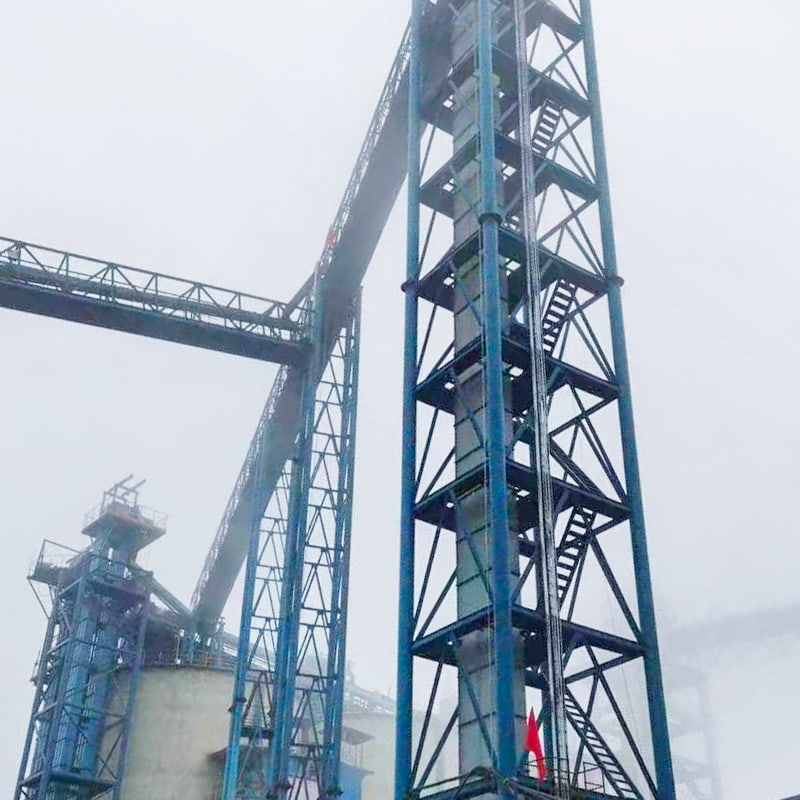
When these factors are clear, a specific elevator model can simplify the decision. A TH series belt bucket elevator, for example, offers an internal backstop option for high-capacity fertilizer and aggregate handling.
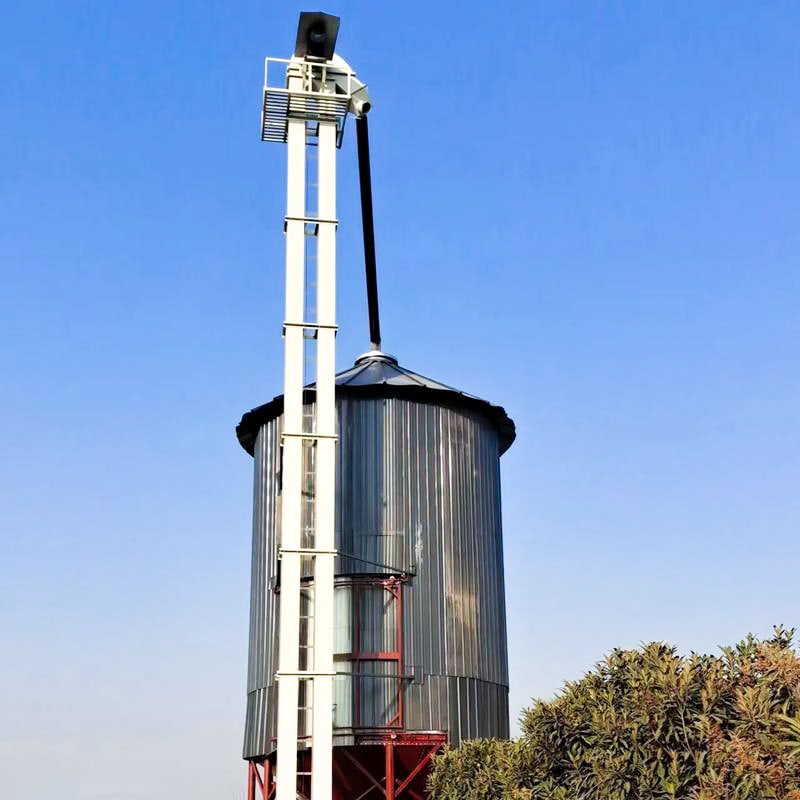
 TH Series Chain-Type Bucket Elevator for Bulk MaterialsThis chain-type elevator suits non-abrasive bulk materials up to 250°C, with multiple capacity and height options. Its external backstop near the drive simplifies lock-up checks and future replacement.View Product →
For chain-type elevators, the NE series places an external backstop close to the drive, making lock-up checks and future replacement straightforward.
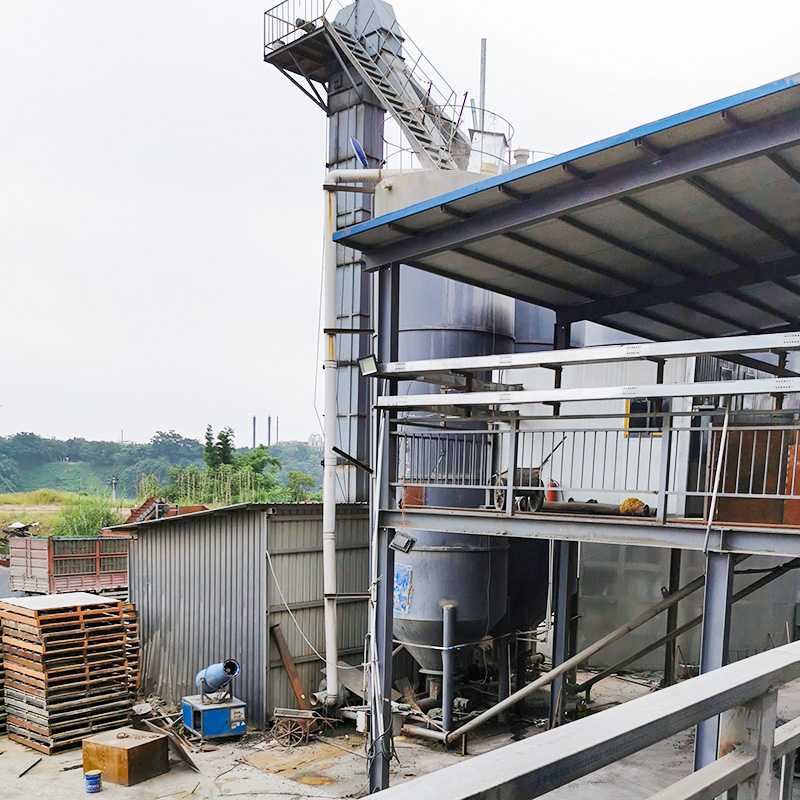
 NE Series Plate Chain Bucket Elevator with External BackstopOffered in eight sizes, this plate chain elevator handles abrasive powders and granules. It features a sealed, rigid ribbed housing, and its external backstop placement eases maintenance and alignment checks.View Product →
Installation and Maintenance
Correct alignment and a proper lubrication schedule are the two factors with the strongest influence on backstop service life.
Installation Notes
- Center the unit on the shaft to avoid edge loading of rollers or sprags.
- Match the keyway and locking collar to the shaft drawing exactly.
- Use the grease specified by the manufacturer; an incorrect grade can delay engagement.
- Confirm rotation direction before final tightening.
Inspection Routine
- Listen for abnormal clicking or grinding during normal running.
- Check the free lock-up angle periodically; a growing angle indicates wear.
- Look for oil or grease leaks around the seals.
- Check coupling bolts and keyway fasteners for looseness.
- Relubricate at the interval and quantity given by the manufacturer.
Common errors are the use of a heavy gearbox grease in the backstop, overtightening of mounting bolts, and ignoring misalignment between the gearbox output and the head shaft. Add the backstop to the plant’s critical equipment list so it is covered by the same preventive maintenance programme as the elevator drive. Additional guidance on elevators and conveyors can be found in the industry news and technical articles published by equipment suppliers.
Backstop vs. Brake: Which Do You Need?
A backstop is a passive one-way lock; a brake is an active friction device that controls or holds shaft movement in either direction.
- A backstop needs no sensors, no power supply, and no control logic. It protects against sudden reversal after drive failure.
- A brake needs compressed air, hydraulic pressure, or an electric actuator. It can decelerate the elevator intentionally and hold it during maintenance.
Most bucket elevators use the backstop as the primary safety device. A brake is added when controlled stopping is necessary, for example on very tall elevators, to reduce the shock of a sudden lock. When both are installed, the backstop prevents reversal while the brake controls deceleration.
Frequently Asked Questions
What happens if a bucket elevator backstop fails?
If the backstop does not engage, the elevator runs backwards when heavily loaded. Material piles up in the boot, the belt or chain can be damaged, and the gearbox may be overstressed. In dusty environments, friction heat also becomes an ignition hazard. Documented inspections minimize the chance of an unrecognized failure.
Can a backstop be fitted to an existing elevator?
Yes. An external backstop can usually be retrofitted on the head shaft or drive coupling. The prerequisites are sufficient space, a correctly sized shaft, and a torque rating that matches the elevator load. Retrofitting is normally quicker than replacing the entire drive unit.
Is a backstop the same as a brake?
No. A backstop is a passive one-way lock that prevents reverse rotation only. A brake is an active device that can slow, stop, and hold a shaft. Some elevators use both: the backstop handles emergency reversal, while the brake provides a controlled stop during shutdowns and maintenance.
How much reverse rotation is acceptable?
A well-maintained roller backstop should lock within a few degrees of reversal, and a sprag backstop within less than one degree. The exact angle depends on wear and lubrication. When the angle becomes noticeably larger, the unit should be inspected or replaced.
Do chain bucket elevators need a backstop?
Yes. Chain elevators are equally vulnerable to reverse motion, particularly with heavy loads. An external backstop mounted near the head shaft is common in NE series chain elevators and is easily checked during routine maintenance.