 En
 English
 Français
 русский
 中文简体
 عربى
 Español


A processor moving from a simple propeller mixer to a hygienic high shear vertical mixer usually does so for one reason: the product needs finer dispersion, faster powder wetting, or a repeatable emulsion, and the cleaning routine has to stand up to audit. The short answer is that a hygienic high shear vertical mixer is a vertical batch mixer fitted with a rotor-stator head, sanitary contact surfaces, and a cleanable vessel design. It is not just a stainless-steel mixer; hygiene is a package of material, surface finish, seal arrangement, drainability, and verification.
In practical terms, the unit combines two jobs. The rotor-stator applies intense localized shear to break droplets, disperse powders, and build a stable structure. The vertical layout keeps the shaft short, the tank profile simple, and the product path easy to drain and clean. That combination is why the design appears in sauces, dressings, dairy alternatives, pharmaceutical gels, cosmetic creams, and fine chemical suspensions.
What a Hygienic High Shear Vertical Mixer Does
A hygienic high shear vertical mixer creates intense shear in a small rotor-stator gap while keeping the product path short, drainable, and cleanable. The vertical shaft carries a rotor inside a fixed stator. Product is drawn axially into the head and expelled radially at high velocity. Tip speed, not shaft rpm, is the useful control variable because it determines the shear rate at the rotor edge.
For emulsions, a tip speed of roughly 15 to 25 m/s is a common starting point. For fine dispersions and powder wetting, 20 to 35 m/s may be needed. The rotor-stator gap often falls between 0.2 and 1.0 mm, depending on the product and the desired droplet size. A narrow gap increases shear but also increases heat input and wear risk, so the gap should be selected with the formulation in mind rather than simply made as tight as possible.
| Parameter | Typical range | Why it matters |
|---|---|---|
| Tip speed | 15-35 m/s | Controls droplet size, dispersion quality, and heat generation. |
| Rotor-stator gap | 0.2-1.0 mm | Sets shear intensity and cleanability of the head. |
| Batch size | 50-5,000 L | Determines shaft length, motor size, and tank geometry. |
| Viscosity | Up to about 50,000 cP | Above this, a hybrid anchor plus high-shear head is often more stable. |
| Surface finish | Ra 0.8 micron or better | Reduces soil retention and supports repeatable cleaning. |
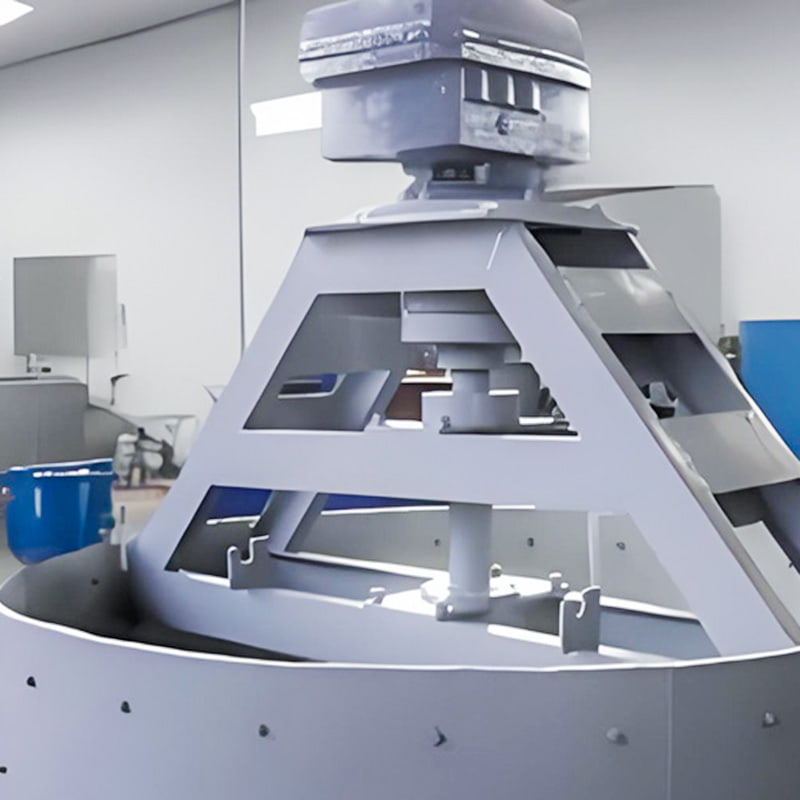
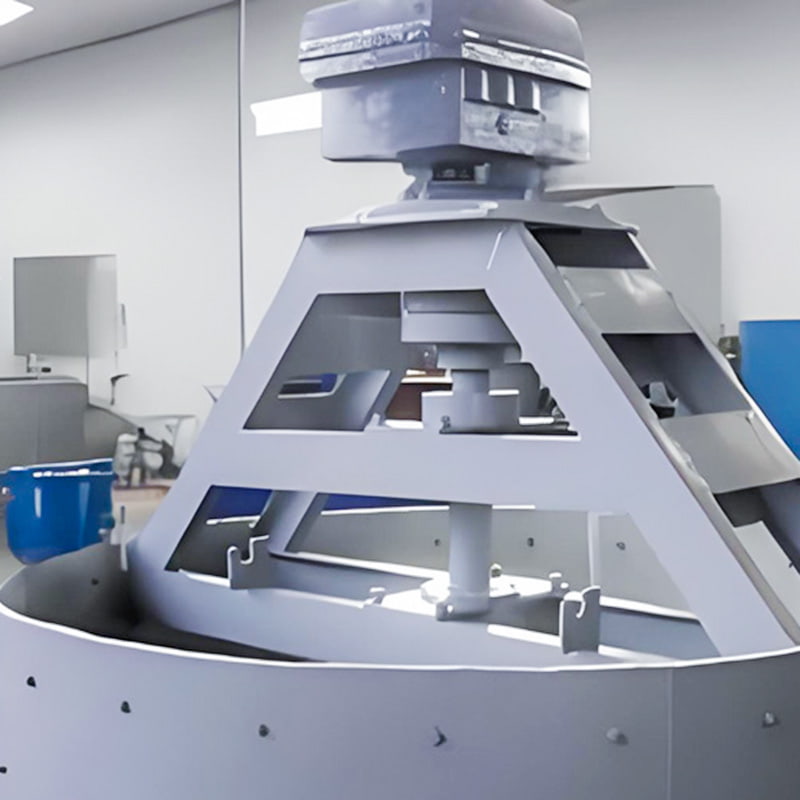 Vertical Mixer for Compound Fertilizer ProductionVertical fertilizer mixer with a polypropylene-lined tank for uniform mixing of pre-crushed materials; a compact option when floor space or maintenance access is constrained.View Product →
The vertical format is not automatically better than a horizontal design. It is usually preferred when floor space is tight, when the tank is tall and narrow, or when top-entry maintenance is easier than side-entry access. Horizontal high-shear mixers can be more effective for very high solids or for products that need a long, shallow flow path.
Hygienic Design Is a Package, Not a Material
Stainless steel alone does not make a mixer hygienic; the cleanability of the wetted path does. A sanitary unit must be designed so that product, cleaning fluid, and air can reach every surface and drain away without leaving a residue trap. That means more than specifying 316L contact parts.
- Contact surfaces should be 316L stainless steel, with a documented surface finish, typically Ra 0.8 micron for food and Ra 0.4 micron for pharmaceutical or biologic use.
- Welds should be ground flush and inspected. A good weld is not just strong; it is smooth enough to clean.
- Seals and elastomers should meet the intended regulatory route, such as FDA or EC 1935/2004 compliance, and should be compatible with the cleaning chemicals.
- The tank should drain to a single low point. Flat bottoms and horizontal ledges are common causes of standing product.
- CIP spray coverage should be verified, not assumed. A spray ball that looks adequate on a drawing can leave shadow areas behind baffles or under the rotor.
- Seal flush or barrier fluid may be needed for vacuum, pressure, or abrasive products. Dry-running protection is also important because seal failure often shows up as contamination before it shows up as leakage.
| Feature | Hygienic specification | Standard industrial practice |
|---|---|---|
| Contact material | 316L stainless steel with material certificates | 304 stainless steel or carbon steel |
| Surface finish | Ra 0.8 micron or better; 0.4 micron for pharma | Mill finish or painted finish |
| Welds | Ground flush, inspected, and documented | As-welded, structural finish |
| Seals | FDA or EC 1935/2004 compliant, with flush option | General-purpose mechanical seal |
| Cleaning | CIP/SIP capable with validated coverage | Manual cleaning or simple rinse |
| Drainability | Sloped bottom and crevice-free outlet | Flat bottom or standard outlet |
The purchasing risk is that a mixer can look sanitary in a photograph and still fail a cleaning validation. Ask for a documented finish, weld inspection, elastomer certificates, and a CIP coverage report. Those documents matter more than the polish on the outside of the tank.
How to Specify the Right Unit
Start with the product and the cleaning regime, then size the mixer; reversing that order is the most common specification error. A unit sized only by tank volume may be too weak for a high-solids dispersion or too aggressive for a shear-sensitive emulsion.
Use the following checklist to frame the inquiry. It also helps separate a true hygienic requirement from a general industrial mixing need.
- Define the process goal: droplet size, suspension stability, powder wetting time, or paste texture.
- Record the viscosity curve, density, solids loading, temperature, and any pressure or vacuum condition.
- Confirm the cleaning class: manual rinse, CIP, SIP, or a validated cleaning cycle.
- Select the rotor-stator geometry and tip speed range for the product, not for the motor frame size.
- Specify the surface finish, seal type, drain point, instrumentation, and documentation package.
- Ask for a trial or factory acceptance test that includes shear performance and cleaning verification.
| Specification | What to confirm | Example |
|---|---|---|
| Batch size | Working volume and minimum fill level | 500 L working volume |
| Viscosity | Process viscosity at shear and at rest | 8,000 cP at 25 C |
| Solids loading | Powder type, addition rate, and wetting behavior | 40% w/w solids |
| Cleaning | CIP coverage, drainability, and seal flush | Validated CIP with riboflavin test |
| Documentation | Material certificates, finish reports, and compliance statements | FDA and EC 1935/2004 |
For processors comparing vertical mixers with other batch mixers, the site's industrial mixing and agitation equipment overview is a useful starting point. It helps separate a high-shear head from a standard agitator and shows where a vertical mixer fits in a wider process line.
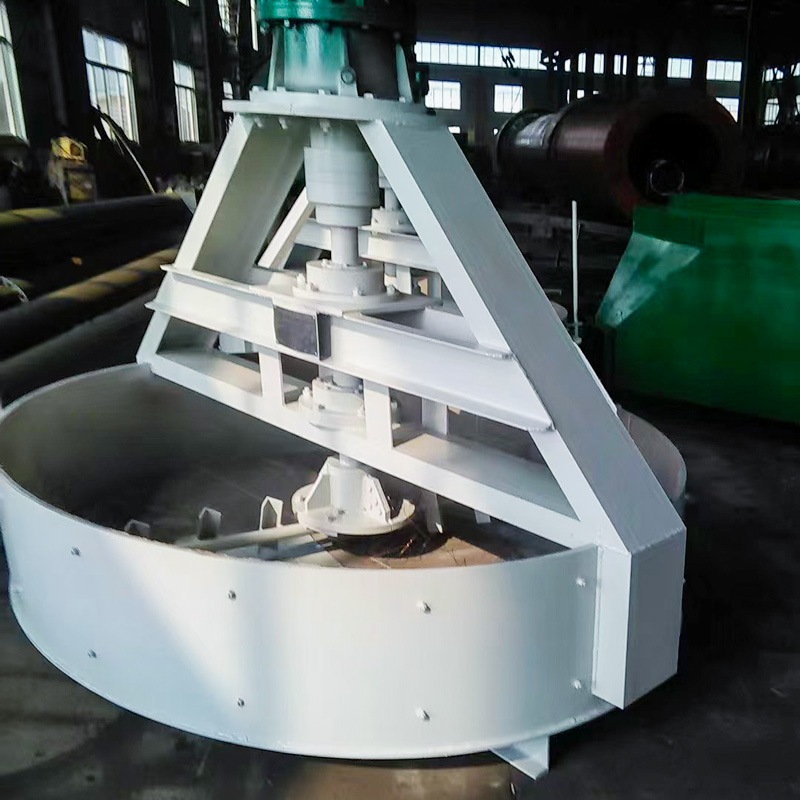
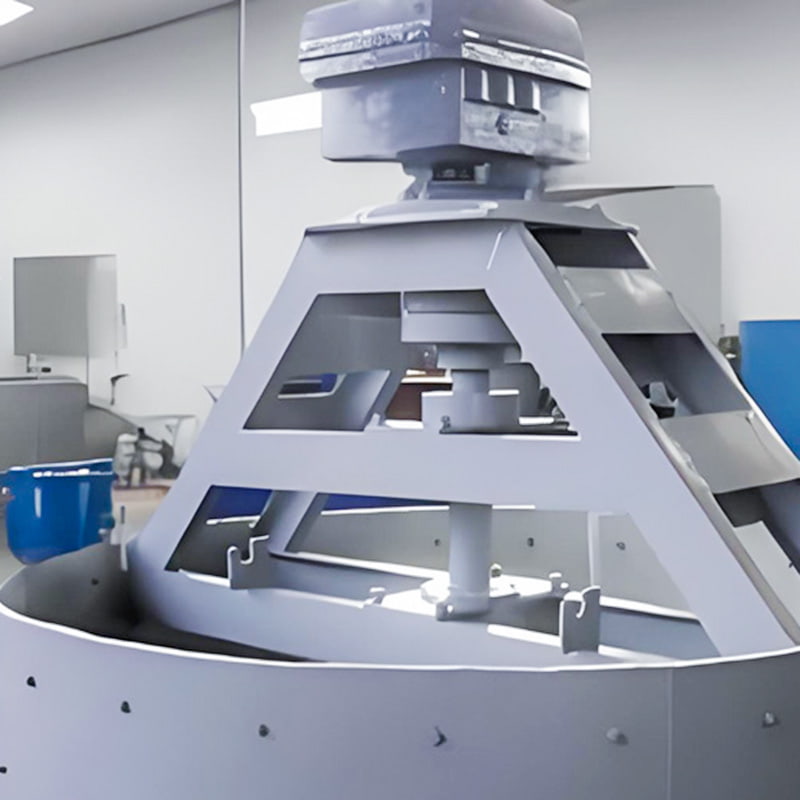 Compound Fertilizer Pan Mixer for Raw Material BlendingPan mixer for compound fertilizer raw materials with fixed agitator teeth and polypropylene or stainless steel lining; built for continuous industrial mixing.View Product →
In fertilizer and chemical plants, the same vertical mixing geometry is often built to industrial standards rather than hygienic standards. A specialty soluble grade or a coating emulsion may justify sanitary features, but a dry blend or mineral slurry usually does not. The correct choice depends on the product contact risk, not on the industry label.
Installation, Cleaning, and Verification
A sanitary mixer can still fail an audit if the tank, piping, and utilities create dead legs around it. The mixer is only one part of the wetted system, and the cleaning result depends on the whole flow path.
- Provide a sloped tank bottom and a drain that empties completely. A low point that holds liquid will hold product residue.
- Check baffle design. Baffles improve mixing but can create shadow areas for CIP spray if they are not positioned and finished correctly.
- Use seal flush or barrier fluid where the product can dry, crystallize, or set on the seal faces.
- Verify CIP coverage with a riboflavin test, conductivity mapping, or ATP swabs after cleaning. Visual inspection alone is weak evidence.
- Confirm motor overload protection and dry-run protection. A high-shear head can heat a small batch quickly if it runs without product.
- Document the cleaning cycle: time, temperature, chemical concentration, flow, and drain time.
A common practical example is a sauce or dressing line that switches between recipes. The mixer may be clean, but a horizontal transfer pipe with a low pocket can hold enough residue to affect the next batch. The fix is usually a drain valve, a slope change, or a shorter pipe run, not a different rotor.
Common Risks and Practical Fixes
Most hygiene failures come from dead zones, poor welds, and seal leakage, not from the rotor-stator head itself. Understanding the failure mode makes the specification more precise and the acceptance test more useful.
| Risk | Symptom | Practical fix |
|---|---|---|
| Dead zone in tank | Residue after CIP or inconsistent batch color | Slope the bottom, reposition the drain, or add a validated spray ball. |
| Seal leakage | Product contamination or flush fluid loss | Use a barrier seal, flush system, or dry-run protection. |
| Powder floating | Lumps and long wetting time | Add powder below the liquid surface or use a vacuum powder inlet. |
| Over-shearing | Temperature rise or emulsion breakdown | Reduce tip speed, shorten shear time, or use a wider gap. |
| Vortexing | Air entrainment and unstable density | Adjust baffles, fill level, or shaft speed. |
Frequently Asked Questions
Is a hygienic high shear vertical mixer suitable for high-viscosity pastes?
Yes, but only within a defined viscosity window; above roughly 50,000 cP, a hybrid anchor plus high-shear head is usually more stable. A standard vertical high-shear head can create poor bulk flow in very thick pastes, leaving unmixed zones away from the rotor.
What surface finish should I specify?
Ra 0.8 micron is a practical default for food applications, while Ra 0.4 micron is common for pharmaceutical and biologic products. The finish should be measured on the wetted surfaces, not just stated on a quotation.
Can the mixer be cleaned in place?
Yes, if the tank has the right spray ball coverage, slope, and drain; CIP is a system property, not a mixer option. A mixer with a polished head can still fail if the tank has a flat bottom or a dead-leg outlet.
Do I need a hygienic mixer for fertilizer products?
Not usually; fertilizer blends and coatings normally use industrial-standard vertical mixers unless the product is a specialty soluble grade with contamination-control requirements. In that case, the hygienic features should be justified by the product contact risk and the cleaning routine.
Should I choose batch or inline high shear?
Batch vertical mixers suit recipe changes and small-to-medium volumes, while inline high-shear heads suit continuous flow and high throughput. The batch route is often easier to validate for cleaning because the wetted path is shorter and more accessible.
Next step: define the product, the cleaning class, and the documentation package before requesting a quote. A useful comparison is to ask for a trial or factory acceptance test that includes surface finish checks, CIP coverage, seal leak testing, and a shear performance check at the intended tip speed. That turns the purchase from a mixer comparison into a verified process decision.