 En
 English
 Français
 русский
 中文简体
 عربى
 Español


No single vertical mixer is best for every plant. The best unit is the one that matches your batch size, bulk density, discharge routine and cleaning standard. For dry fertilizer blends and mineral powders, a vertical auger mixer with two or three augers and a full-length discharge gate is usually the strongest all-round choice. For moist granulation feed, a pan-type vertical mixer is often better. For livestock TMR, the priorities shift to hay handling and auger cleanout. In practice, "best" means repeatable mixing at your working volume with low residual, not the biggest tank or the lowest quote.
What makes a vertical mixer "best"?
The best vertical mixer is the one that meets a written mixing specification, not the one with the largest nominal volume. Start with the real batch. A mixer rated at 2 m³ may hold only 1.2–1.4 m³ of usable working volume at a 60–70% fill level. Buying on total volume is the most common sizing error.
- Material profile: bulk density, particle size, moisture, caking tendency and abrasiveness.
- Uniformity target: a coefficient of variation (CV) of 5% or lower for typical NPK blends, and 3% or lower for micro-ingredients.
- Discharge: residual of 0.3–0.5% or less, with a full-length gate or tilting design rather than a small center outlet.
- Drive: motor kW at nameplate, gearbox service factor, auger flight thickness and replaceable wear liners.
- Cleaning and dust: hinged access doors, safety switches, dust seals and a discharge that operators can reach safely.
| Design | Best for | Typical batch | Main trade-off |
|---|---|---|---|
| Vertical auger, single/twin/triple | Dry bulk blends, NPK, minerals | 0.5–5 t | Tall footprint; dead zones if discharge is poor |
| Vertical pan mixer | Moist powder, granulation feed, organic fertilizer | 0.2–2 t | Wall build-up and paddle wear with sticky material |
| Horizontal ribbon | Large batches, low residual, fragile granules | 1–10 t | More floor space; higher shear |
| TMR vertical feed mixer | Hay, silage and ration mixing | 3–20 m³ | Built for feed, not chemical duty or washdown |
| Paddle or plough mixer | Liquid addition, coating, paste | 0.3–3 t | Lump formation if liquid rate is wrong |
Vertical auger mixers: the default best choice for dry blends
For most dry fertilizer and mineral blends, a vertical auger mixer is the best place to start. A single auger suits roughly 0.5–1.5 t batches, a twin-auger unit 1.5–3 t, and a triple-auger unit 3–5 t, but those are starting points rather than rules. The final choice depends on bulk density and the share of micro-ingredients.
Look for a full-length discharge gate, not a small center outlet. A good vertical auger mixer should empty to 0.3–0.5% residual and mix a typical NPK blend in 3–6 minutes after the last ingredient. Longer mixing does not always improve uniformity; it can cause segregation in free-flowing granules. A well-built unit from our vertical mixing and agitation equipment range should include accessible cleanout points, replaceable liners and a gearbox selected for the starting load.
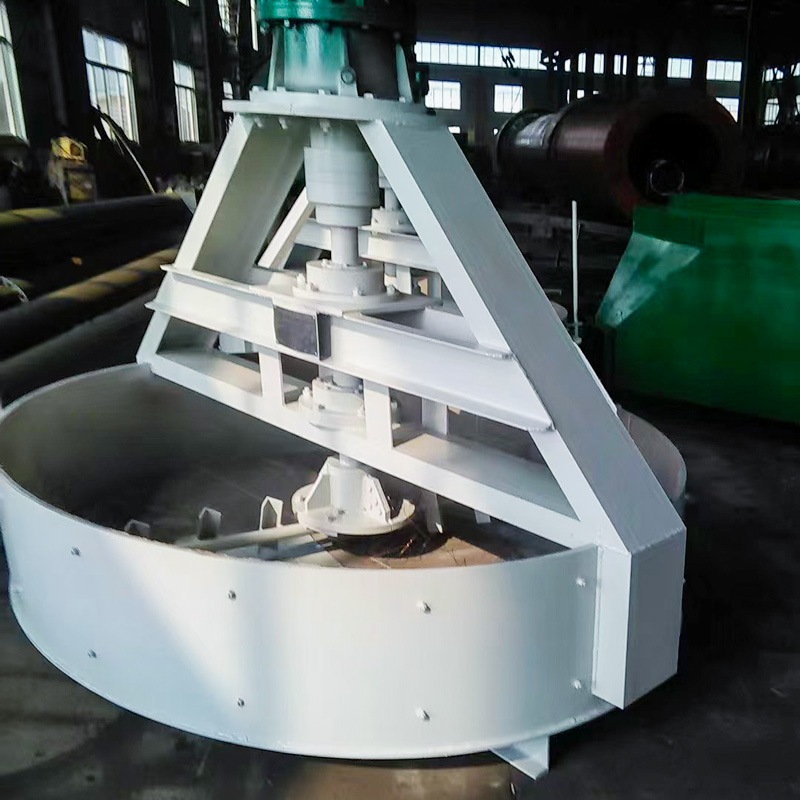
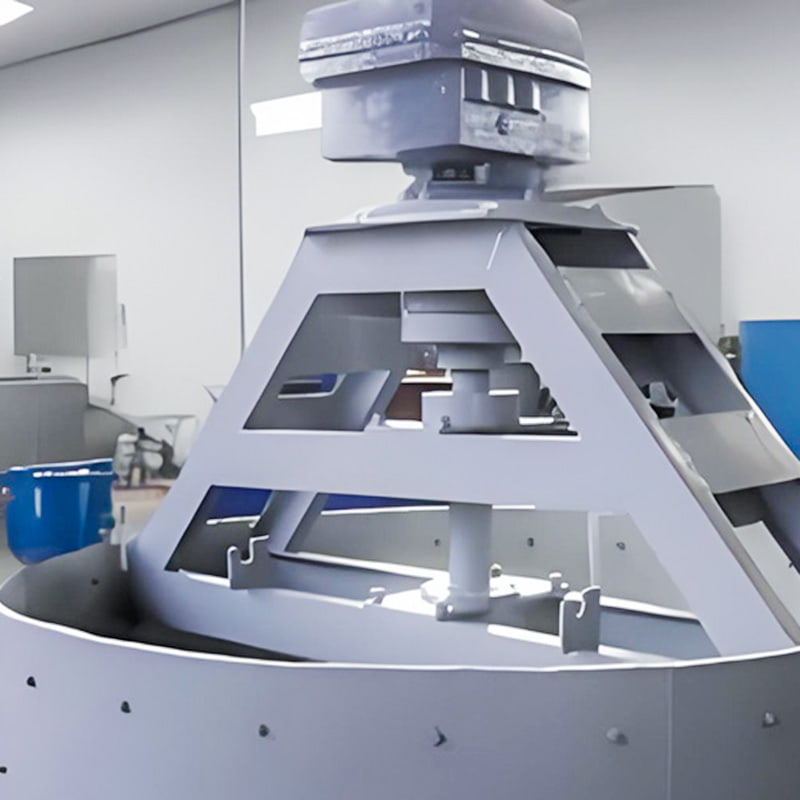
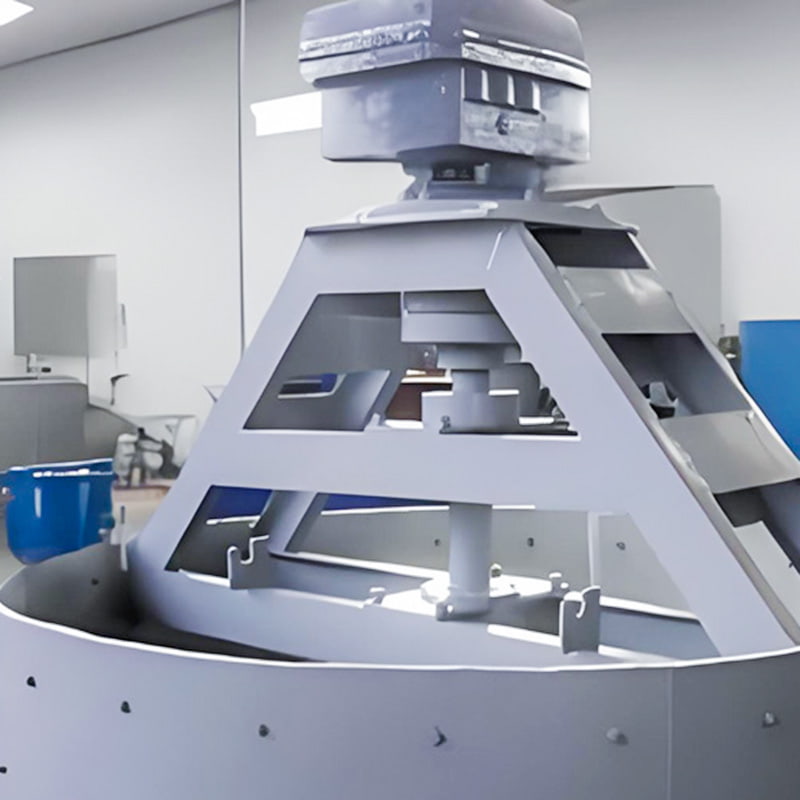 Vertical MixerA mixer is a common piece of equipment in compound fertilizer production lines. It mixes and stirs bulky, pre-crushed raw materials until the mixture is essentially un...View Product →
How many augers do you need?
Choose the smallest auger count that passes your material test at the required batch time. A single auger is easier to clean and uses less power; twin and triple augers shorten cycle time and reduce dead zones in larger tanks. If your recipe includes 1% or less of a micro-element, insist on a five-point sampling test before you accept the design.
Pan-type vertical mixers: best for moist and granulation feed
A pan-type vertical mixer is the better choice when the feed is moist, sticky or destined for granulation. Pan mixers use a vertical shaft with paddles or a rotating pan to create a high-intensity folding action. They handle 20–35% moisture material better than a simple auger, and they usually discharge faster. The trade-off is wall build-up and paddle wear, so scrapers and access doors matter.
These units are common in organic fertilizer and compound fertilizer granulation lines. If the mixer feeds a complete compound fertilizer production line, size it for the granulator's peak demand, not the average shift output.
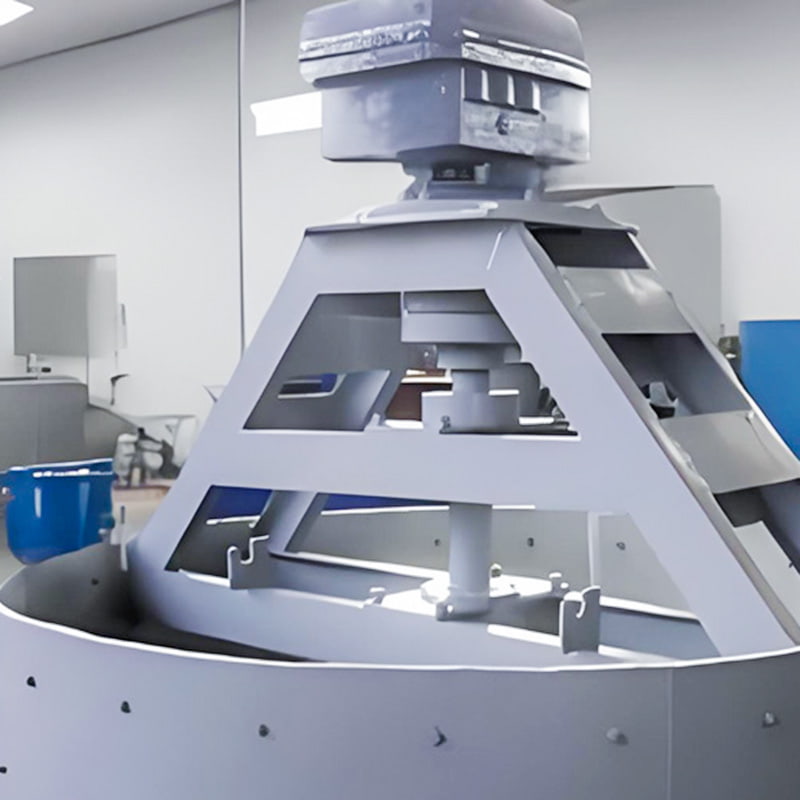 Compound Fertilizer Pan Mixer (Vertical Mixer)Vertical pan mixer for raw-material blending in compound fertilizer lines, suited to compact plants; review it when sizing a mixer to granulator peak demand.View Product →
When a horizontal mixer is the better buy
A horizontal mixer can beat a vertical unit when batch size is large and residual must be very low. Ribbon or paddle horizontal mixers suit 5–10 t batches and can reach 0.1–0.3% residual. They also handle fragile granules with less height. The costs are floor space, higher shear and more complex cleanout. For a 1–3 t dry blend in a tall, narrow building, a vertical auger mixer is usually the better buy; for a 6 t batch with strict changeover, compare horizontal first.
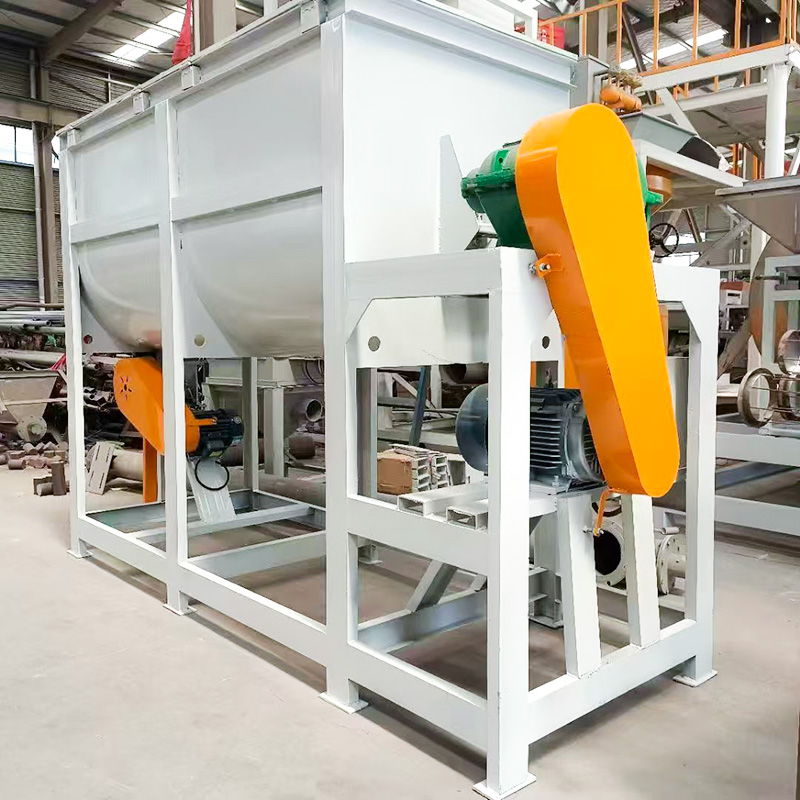 Horizontal Mixer for Organic and Inorganic Fertilizer BlendsHorizontal fertilizer mixer with adjustable near-zero rotor clearance and low residue; consider it for larger batches or strict changeover where floor space permits.View Product →
Specification and factory acceptance checklist
Buy on a witnessed test, not on a brochure. A vertical mixer is a process tool, and the numbers that matter should be measured with your material, at your batch size, before shipment.
- Confirm usable working volume at 65% fill, not just total tank volume.
- Run your hardest recipe for three consecutive batches.
- Take five samples per batch and calculate the CV.
- Measure residual material after discharge and record where it collects.
- Check motor kW, gearbox service factor and auger flight thickness against the quotation.
- Review access doors, safety switches, dust seals and guard details.
- Ask for foundation loads, anchor positions and installation tolerances.
- Require a factory acceptance test video, spare parts list and control recipe.
A supplier who cannot provide these details is asking you to carry the process risk. That risk usually appears later as longer batch times, higher residual and inconsistent granule quality.
Installation and operating details that decide performance
Most disappointing vertical mixers are installed or run outside their intended envelope. Check headroom and discharge height before the foundation is poured. Feed the mixer at a steady rate; dumping a full batch into one corner creates dead zones. Keep the fill level at 60–70% and do not use the mixer as a storage bin. For fertilizer, control moisture and clean the discharge gate at every changeover. Check auger flight wear, liner thickness and gear oil at fixed intervals.
FAQ
Is a vertical mixer better than a horizontal mixer?
It depends on batch size and residual target. Vertical auger mixers are compact, simple and effective for 0.5–3 t dry blends. Horizontal mixers are often better for 5 t and larger batches where changeover residual must be very low.
How long should a vertical mixer run?
Most dry blends reach a stable mix in 3–6 minutes after the last ingredient. Overmixing can separate particles by size or density, so use a sampling test to set the timer rather than adding extra minutes by habit.
Can one vertical mixer handle fertilizer and TMR?
No, that is usually a false economy. A TMR mixer is designed around hay, silage and feed cleanout, while a fertilizer mixer needs chemical resistance, dust control and low discharge residual. Separating those duties is safer and more repeatable.
What capacity should I buy?
Buy for working volume, not total volume. Choose a unit that holds your largest routine batch at 60–70% fill, so a 2 t batch points to roughly 3 m³ of working volume, not a 2 m³ nominal tank.
What mixing CV is acceptable?
For most fertilizer blends, target a CV of 5% or lower. For micro-ingredients added at 1% or less, aim for 3% or lower and verify it with five-point sampling from the actual production batch.
Bottom line
The best vertical mixer is the one that passes your material test at the batch size you actually run. Prioritize working volume, discharge residual, wear parts and a witnessed factory acceptance test. If you need dry blending, start with a vertical auger. If you need moist granulation feed, compare a pan mixer. If you need 5 t batches and strict changeover, test a horizontal design. The right unit will be the one your operators can fill, discharge and clean safely every shift.