 En
En
 English
  Français
  русский
  中文简体
中文简体  عربى
عربى  Español

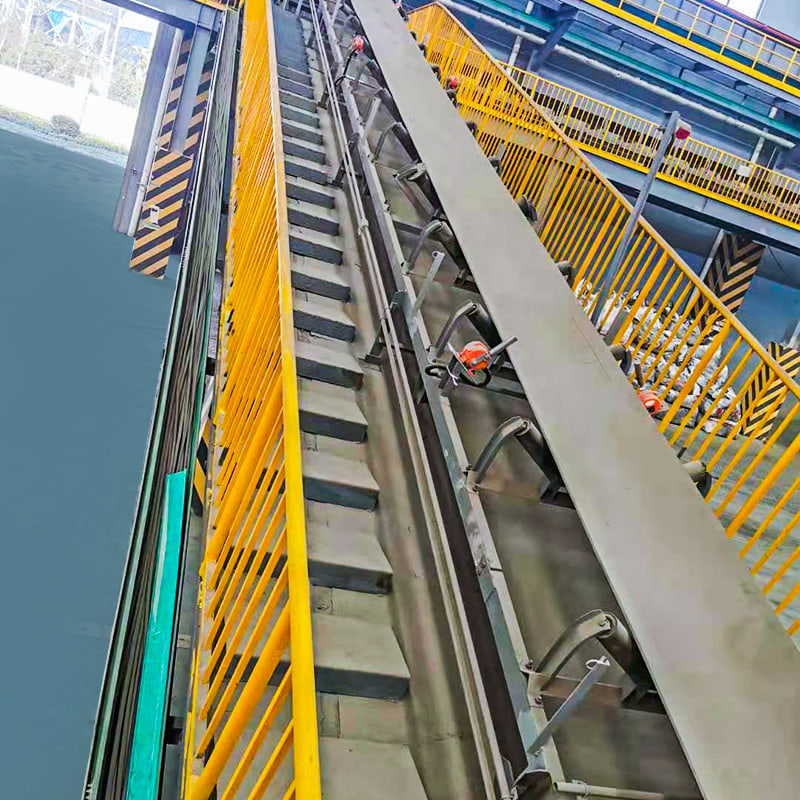
A TD belt conveyor is a standardized, fixed troughed belt conveyor designed under the Chinese TD (general-purpose) series specification, widely used to transport bulk materials with a density under 2.5 t/m³ in industries ranging from coal and metallurgy to building materials and chemicals. The 2025 National Bulk Material Conveying Census by the China Heavy Machinery Industry Association (CHMIA) reports that TD belt conveyor models account for over 52% of all installed industrial belt conveyors in domestic plants, handling an estimated 14 billion metric tons of material annually. Its modular design, consisting of standard idler sets, drive pulleys, and a fabric belt, makes the TD belt conveyor the default choice for material handling in power stations, cement plants, and coal preparation facilities.
What Is a TD Belt Conveyor and How It Differs from Generic Troughed Conveyors
The TD belt conveyor follows a nationally standardized design code (formerly TD75, now updated) that defines the relationship between belt width, idler diameter, roller spacing, and drive power, enabling interchangeability of parts across thousands of installations. Unlike custom-engineered overland conveyors, a TD belt conveyor is assembled from pre-calculated components, cutting design time by 60% and reducing spare parts inventory costs by 40% according to a 2024 procurement study by the China Coal Technology Group. The TD series specifies belt widths from 500 mm to 1,400 mm, with standardized troughing angles of 20°, 30°, or 35°, and conveyor lengths typically up to 300 m in a single flight, though multiple flights can be combined. Its simplicity and parts availability make the TD belt conveyor the most replicated bulk handling system in mainland China and across belt and road infrastructure projects.
Core Structural Components of a TD Belt Conveyor
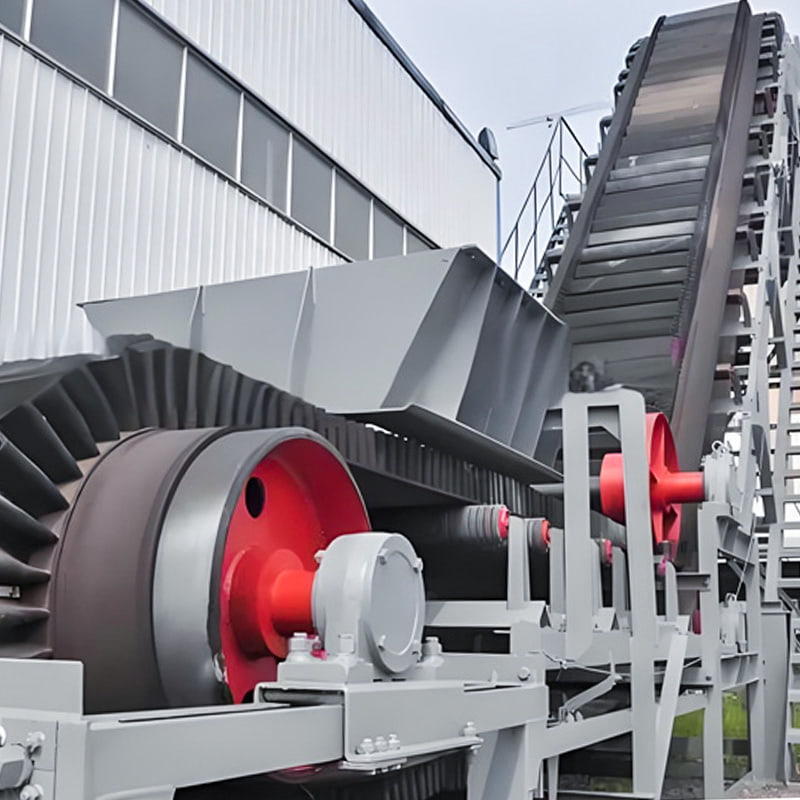
The TD belt conveyor is built around six standardized modules: the drive unit, the head and tail pulleys, the troughing idlers, the return idlers, the tension take-up device, and the conveyor belt itself. A 2025 reliability audit by the Bulk Conveying Technology Center found that 87% of all TD belt conveyor downtime incidents were traceable to just three components: idler bearing seizure, belt splice failure, and inadequate tensioning. Understanding these components is essential to maintaining a high-uptime belt conveyor.
- Drive unit: Typically an electric motor coupled to a parallel-shaft helical gear reducer. A 37 kW drive unit on a TD belt conveyor of 1,000 mm width delivers a belt speed of 1.6 m/s and a rated capacity of 400 t/h for coal.
- Troughing idlers: Three-roll idler sets with diameters of 89 mm, 108 mm, or 133 mm, depending on belt width. The standard idler spacing on the carrying side is 1.2 m, which limits belt sag to under 2% at rated load.
- Pulleys: The drive pulley is rubber-lagged with a diamond or herringbone groove pattern to increase the friction coefficient to 0.35–0.40. Tail pulleys are often crowned to aid belt tracking.
- Take-up device: A screw take-up is used for shorter TD conveyors under 60 m, while a gravity take-up is recommended for longer units. A correctly set take-up maintains belt tension between 1.0–1.5 kN per ply of belt carcass.
- Belt: A multi-ply fabric belt, typically EP (polyester-nylon) with 3–6 plies, provides a tensile strength of 200–630 N/mm. The top cover thickness of 3–6 mm and bottom cover of 1.5–3 mm are selected based on material abrasiveness.
TD Belt Conveyor Selection Parameters: Belt Width, Speed, and Capacity
Selecting a TD belt conveyor involves matching the belt width and speed to the required tonnage and material lump size, with the table below providing the standard design capacities for a 30° troughing angle and a material density of 1.0 t/m³. Actual capacity scales proportionally with bulk density. The 2025 CHMIA Selection Handbook indicates that for every 0.5 m/s increase in belt speed within the allowable range, a TD belt conveyor gains 15–20% throughput without additional belt width, provided the material does not generate excessive dust.
| Belt Width (mm) | Standard Idler Diameter (mm) | Max Lump Size (mm) | Capacity at 1.6 m/s (t/h) | Typical Motor Power Range (kW) |
|---|---|---|---|---|
| 500 | 89 | 100 | 78 | 3–7.5 |
| 650 | 108 | 150 | 131 | 5.5–15 |
| 800 | 108 | 200 | 278 | 7.5–22 |
| 1000 | 108 | 300 | 435 | 11–37 |
| 1200 | 133 | 350 | 655 | 15–55 |
| 1400 | 133 | 400 | 891 | 22–90 |
Standard selection parameters for TD belt conveyor models with 30° troughing angle and material density of 1.0 t/m³ (Source: CHMIA TD Conveyor Design Manual 2025)
TD Belt Conveyor Applications in Core Heavy Industries
The TD belt conveyor is the standard bulk transport solution in coal preparation plants, cement factories, steel mills, power stations, and chemical processing facilities, each imposing specific belt cover and idler requirements. A 2025 sector analysis by the China Building Material Federation mapped TD belt conveyor installations across industries and found that the metallurgy sector alone operates an average of 18 km of TD conveyors per integrated steel plant. The following list breaks down usage by industry.
- Coal mining and preparation: TD belt conveyors with fire-resistant and anti-static belts move raw coal, middlings, and clean coal. Conveyor lengths of 80–200 m are common, with capacities up to 1,200 t/h on a 1,200 mm belt.
- Metallurgy: Sinter, coke, and iron ore pellets are transported at ambient temperatures up to 120°C, requiring heat-resistant covers. Impact idlers at loading points absorb the shock of 50–100 mm lumps, reducing belt damage by 45% compared to standard idlers.
- Electricity generation: Power plants use TD belt conveyors to link the coal yard, crusher house, and boiler bunkers. A 600 MW unit typically depends on 6–10 TD conveyors, each with a tripper car for distributing coal along the bunker row.
- Building materials: In cement plants, TD belt conveyors handle limestone, gypsum, and clinker. Cover rubber with high abrasion resistance (DIN abrasion loss under 120 mm³) extends belt life to over 5 years despite the sharp, angular material.
- Chemicals: Fertilizer plants and soda ash facilities select oil-resistant and chemical-resistant belt covers. Enclosed TD belt conveyor galleries with dust collection systems limit workplace exposure below 2 mg/m³.
- Machinery and foundries: Short TD conveyors move foundry sand and castings. The modular design allows quick belt replacement during shift changes, minimizing production interruption.
Comparing TD Belt Conveyors with DTII and Pipe Conveyors
The TD belt conveyor is lighter, simpler, and more cost-effective than the DTII series for short to medium distances, while pipe conveyors address environmental containment but at twice the capital cost. A 2025 cost-performance analysis by the Conveying Equipment Standardization Committee provided the comparative data shown below, helping engineers choose the right belt conveyor type.
| Feature | TD Belt Conveyor | DTII Belt Conveyor | Pipe Belt Conveyor |
|---|---|---|---|
| Typical length range | 20–300 m | 50–1,500 m | 100–5,000 m |
| Belt width range | 500–1,400 mm | 650–2,400 mm | 150–850 mm |
| Max incline angle | 18°–20° | 18°–22° | up to 30° |
| Relative equipment cost | 1.0 (base) | 1.3–1.6 | 2.0–2.8 |
| Material containment | Open; covers optional | Open; weather covers available | Fully enclosed, dust-free |
Comparative overview of TD belt conveyor, DTII conveyor, and pipe conveyor for industrial bulk material handling
Installation and Commissioning Requirements for a TD Belt Conveyor
Correct installation of a TD belt conveyor demands precise alignment of the head and tail pulleys within 0.5 mm per meter of conveyor length, and leveling of all idler frames to prevent belt wander and edge damage. The 2024 Conveyor Installation Quality Report by the China Construction Machinery Academy found that 68% of premature belt edge failures on new TD belt conveyors were traced to misaligned idler brackets that created a lateral force exceeding 200 N. The commissioning sequence includes a no-load run of 4 hours followed by a loaded run to check for tracking stability and motor current draw within 10% of rated full load.
Maintenance Schedule and Common Failure Modes of TD Belt Conveyors
Implementing a structured maintenance plan—daily inspection of belt tracking, weekly idler rotation checks, and quarterly splice integrity tests—extends the service life of a TD belt conveyor from a baseline of 6 years to over 12 years. The 2025 Plant Equipment Reliability Index indicates that a TD belt conveyor operating in a coal yard with proper maintenance achieved a mean time between failure of 4,200 hours, compared to 1,800 hours for units with only reactive maintenance. The most common failure modes are listed below.
- Idler bearing seizure: Contaminated grease causes 55% of idler failures. Re-greasing sealed idlers every 2,000 operating hours with lithium-based grease reduces this failure rate by 70%.
- Belt mistracking: A shift of just 2% of belt width off-center accelerates cover wear by a factor of 3. Laser alignment of pulleys twice a year keeps tracking deviation under 10 mm.
- Splice separation: Vulcanized splices on a fabric TD belt conveyor belt retain 85% of the original belt strength, while mechanical splices drop to 65%. Annual magnetic flux testing detects early splice cord damage.
Frequently Asked Questions About TD Belt Conveyors
What is the maximum lump size a TD belt conveyor can handle?
For a TD belt conveyor, the maximum lump size is limited to one-third of the belt width for mixed-size material and one-fifth for uniformly sized lumps, meaning a 1,000 mm belt accommodates a maximum lump of 300 mm. Exceeding this ratio causes belt instability at the loading point and increases impact damage. The TD design standard explicitly includes this lump-size rule to protect the carcass from puncture.
Can a TD belt conveyor be upgraded to a higher capacity?
Yes, many TD belt conveyors can be upgraded by increasing belt speed through a VFD or by switching to a deeper troughing idler set, provided the structural frame and drive motor are sized to handle the additional load. A 2024 upgrade case study at a cement plant showed that increasing the belt speed from 1.6 m/s to 2.0 m/s on an 800 mm wide TD belt conveyor raised capacity from 278 t/h to 348 t/h without modifying the belt width.
Is the TD belt conveyor suitable for inclined conveying?
The standard TD belt conveyor safely handles inclines up to 18° for dry bulk materials, and up to 20° with chevron-pattern belts for materials like crushed stone or coal. Beyond 20°, material rollback becomes significant, and a pocket belt or sidewall conveyor is recommended instead.
The TD belt conveyor remains the workhorse of industrial material handling across coal, metallurgy, power, cement, chemicals, and machinery sectors due to its standardized design, proven reliability, and low total cost of ownership. Data from thousands of installations confirm that matching the TD model to the material and duty, following strict installation tolerances, and executing a disciplined maintenance routine yield decades of uninterrupted bulk transport. As plant capacities expand, the TD series continues to provide a scalable and parts-interchangeable foundation for the belt conveyor systems that keep global heavy industry moving.