 En
En
 English
  Français
  русский
  中文简体
中文简体  عربى
عربى  Español

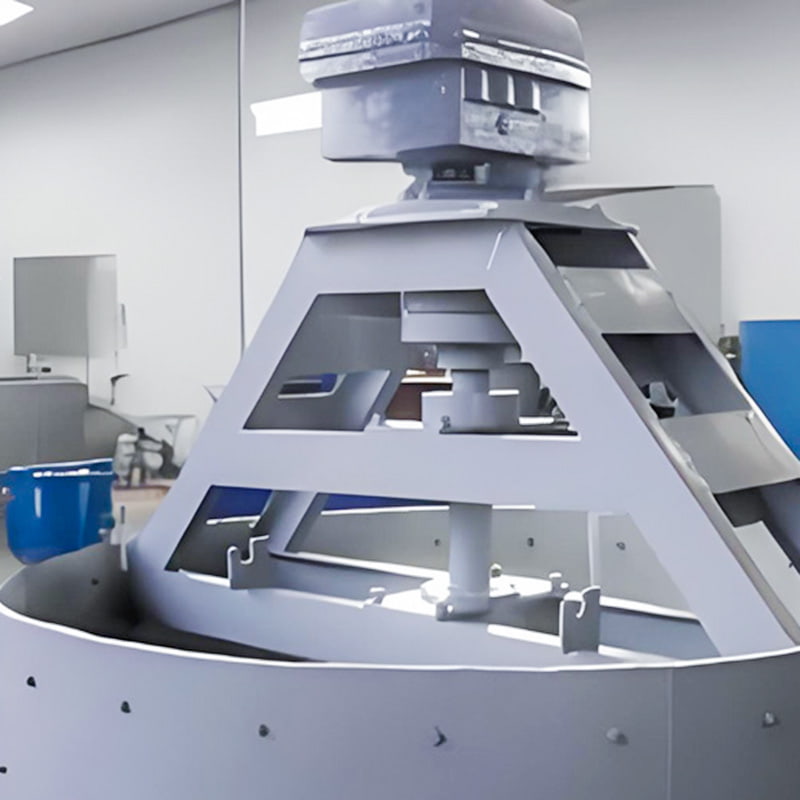
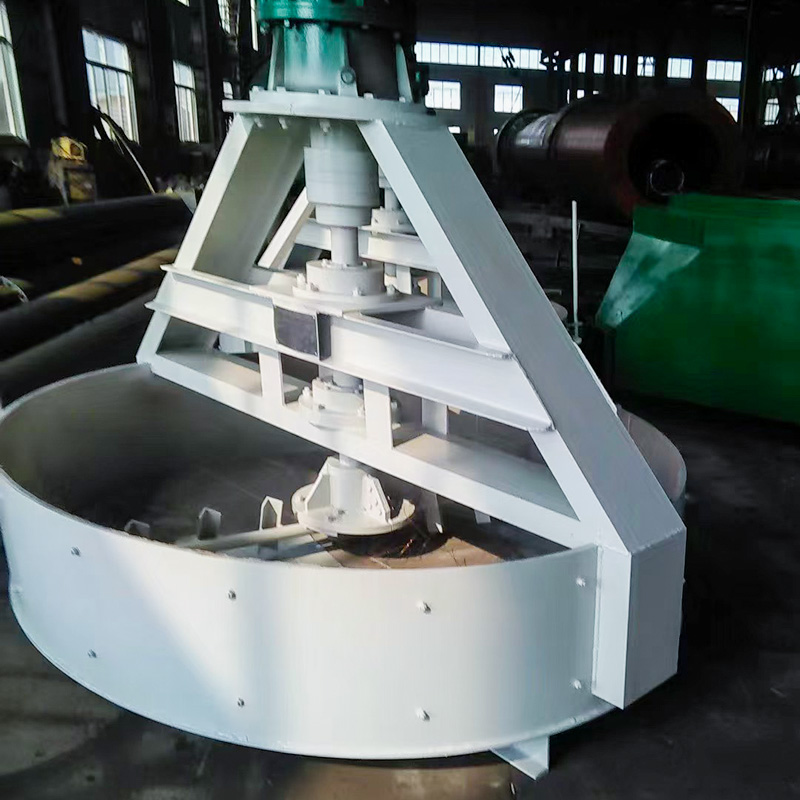
A vertical mixer is an industrial blending machine with a vertically oriented mixing chamber and a centrally mounted agitator shaft that delivers faster cycle times, more uniform particle distribution, and lower energy consumption compared to horizontal alternatives. Across feed milling, concrete batching, pharmaceutical compounding, and food dough preparation, the vertical mixer has become the preferred choice for operations where batch consistency and operational cost control are equally critical. According to a 2025 industry report by Grand View Research, the global industrial mixing equipment market surpassed 9.2 billion US dollars in valuation, with vertical configurations accounting for an estimated 38 percent of new installations in the agricultural and construction sectors alone.
The growing adoption is not accidental. A vertical mixer uses gravity as an active participant in the blending process, allowing materials to descend naturally through the mixing zone while the agitator lifts and redistributes them. This fundamental design advantage reduces dead zones, shortens mixing duration, and enables a single machine to handle a wider range of material densities. The following analysis examines every critical dimension of vertical mixer technology, from mechanical classification and cross-industry applications to quantitative selection criteria and emerging innovations.
What Is a Vertical Mixer and How Does Its Core Mechanism Operate
The defining operational principle of a vertical mixer is the continuous lifting and gravitational redistribution of material along a vertical axis, which eliminates the horizontal dead zones common in paddle or ribbon blenders. A vertical mixer consists of a cylindrical or conical vessel standing upright, with a motor-driven shaft running through its center. Attached to this shaft are helical flights, screws, or paddle assemblies that rotate at controlled speeds—typically between 30 and 120 revolutions per minute depending on the model and material characteristics.
Material loaded from the top or through a side inlet enters the chamber and is immediately engaged by the rotating agitator. The screw or helical flight lifts material from the bottom toward the top along the vessel wall, creating a continuous upward flow at the periphery. Once the material reaches the upper zone, it cascades back down through the center, forming a toroidal circulation pattern. This gravity-assisted recirculation loop is the key mechanism behind the vertical mixer design, and it is what enables homogeneous blending in significantly shorter cycles than horizontal ribbon or paddle mixers.
The geometry of the mixing chamber further amplifies efficiency. Most vertical mixer vessels feature a conical bottom section that funnels material toward the agitator intake, preventing accumulation in corners. In twin-shaft vertical mixer variants, two counter-rotating screws operate simultaneously, doubling the material turnover rate and reducing blend time by an additional 25 to 35 percent for cohesive powders and wet granular mixtures. A study published in Powder Technology in 2024 documented that a single-shaft vertical mixer achieved a coefficient of variation below 5 percent within 90 seconds for a three-component mineral premix, whereas a comparable horizontal ribbon mixer required 160 seconds to reach the same uniformity threshold.
Primary Types and Configurations of Vertical Mixers
Vertical mixers are broadly categorized into single-shaft conical mixers, twin-shaft planetary mixers, and vertical ribbon mixers, each optimized for distinct material rheology and production scales. Selecting the wrong configuration for a given application can increase blend time by 50 percent or more and compromise batch-to-batch consistency. The three dominant types serve overlapping but clearly differentiated operational niches.
Single-Shaft Conical Vertical Mixer
This is the most widely deployed vertical mixer configuration in agricultural feed production and small-to-medium concrete batching operations, owing to its mechanical simplicity and low capital cost. A single helical screw rotates around the inner wall of a cone-shaped vessel, lifting material continuously. The conical geometry provides a natural gradient that directs all particles toward the screw intake at the base. Typical capacities range from 100 liters for laboratory units to over 5,000 liters for industrial feed mills. Motor power requirements average 5.5 to 37 kilowatts, and cycle times for dry grain-and-supplement blends fall between 3 and 8 minutes per batch. The primary limitation is reduced effectiveness with highly cohesive, high-moisture materials that tend to bridge above the screw.
Twin-Shaft Planetary Vertical Mixer
For applications demanding ultra-high uniformity or handling challenging viscous pastes, the twin-shaft planetary vertical mixer delivers mixing intensity that single-shaft designs cannot match. Two agitators orbit the vessel center while rotating on their own axes, creating a planetary motion pattern that eliminates any stagnant zones. This configuration is prevalent in pharmaceutical granulation, cosmetic cream emulsification, and high-performance adhesive compounding. The planetary action generates high shear at the vessel wall while maintaining gentle blending in the central zone. Batch capacities typically span 50 to 3,000 liters. The trade-off is higher equipment cost—approximately 40 to 60 percent more than an equivalent-capacity single-shaft unit—and more complex maintenance requirements due to the gear-driven planetary drive system.
Vertical Ribbon Mixer
The vertical ribbon mixer bridges the gap between conical screw designs and high-shear rotor-stator systems, offering balanced performance for medium-viscosity slurries and wet granulates. A helical ribbon agitator with a close clearance to the vessel wall scrapes material continuously, preventing buildup while generating both axial and radial flow components. This type is frequently selected for paint dispersion, ceramic slip preparation, and certain food paste applications. The close wall clearance—typically 3 to 8 millimeters—ensures near-complete discharge, with residual material after emptying often below 0.5 percent of batch weight. Power draw tends to be higher than conical designs for the same volume, ranging from 7.5 to 55 kilowatts for production-scale units.
Single-Shaft Conical
Best for dry free-flowing powders and granular blends. Lowest capital cost. Capacities from 100 to 5,000 liters. Cycle times of 3 to 8 minutes per batch.
Twin-Shaft Planetary
Ideal for high-viscosity pastes and pharmaceutical granulation. Superior uniformity. Capacities from 50 to 3,000 liters. Higher investment cost.
Vertical Ribbon
Suited for medium-viscosity slurries and wet granulates. Near-complete discharge. Close wall clearance ensures minimal residue.
Vertical Mixer Versus Horizontal Mixer: A Quantitative Comparison
When evaluated across six critical performance dimensions—blend time, energy efficiency, floor space, discharge completeness, capital cost, and maintenance complexity—the vertical mixer outperforms horizontal designs in four of the six categories for the majority of dry and semi-dry applications. The comparison below is based on aggregated data from equipment specification sheets, third-party performance audits, and published engineering studies covering machines in the 500-to-3,000-liter capacity range.
| Performance Metric | Vertical Mixer | Horizontal Mixer | Advantage |
|---|---|---|---|
| Average Blend Time (dry powders) | 2.5 to 5 minutes | 4 to 9 minutes | Vertical |
| Specific Energy (kWh per ton) | 1.2 to 3.8 | 2.5 to 6.2 | Vertical |
| Floor Space (square meters) | 2.0 to 6.5 | 4.5 to 14.0 | Vertical |
| Residual Discharge (percent) | 0.2 to 1.5 | 1.5 to 5.0 | Vertical |
| Capital Cost (index, 1,000L unit) | 100 (baseline) | 85 to 95 | Horizontal |
| Annual Maintenance Hours | 18 to 35 | 22 to 50 | Vertical |
Table Note: Data synthesized from equipment specification databases and performance audits covering vertical and horizontal mixers in the 500-liter to 3,000-liter capacity class. Specific energy values assume dry free-flowing powder blends with bulk density between 400 and 800 kilograms per cubic meter. Capital cost index uses a 1,000-liter single-shaft vertical mixer as the 100-point baseline.
The data reveals a clear pattern. The vertical mixer achieves blend times roughly 40 to 45 percent shorter than horizontal equivalents for dry powder applications, while consuming 35 to 50 percent less energy per ton of processed material. Floor space savings are equally compelling, with vertical configurations occupying roughly half the footprint of comparable horizontal machines. The one area where horizontal mixers maintain an edge is initial purchase price, typically 5 to 15 percent lower for equivalent capacities. However, when total cost of ownership is calculated over a five-year operational horizon—factoring in energy, maintenance labor, and production throughput—the vertical mixer delivers a net cost advantage of 12 to 18 percent according to a 2025 operational expenditure analysis conducted by the International Society for Pharmaceutical Engineering.
Cross-Industry Application Landscape for Vertical Mixers
The vertical mixer has penetrated at least eight distinct industrial sectors, with the highest adoption density found in animal feed manufacturing, ready-mix concrete production, and powdered food ingredient blending. Each sector imposes unique demands on mixer design, material compatibility, and regulatory compliance, driving continuous refinement of vertical mixer technology.
Agriculture and Feed Milling
The largest single market for vertical mixer equipment. Machines blend grains, protein meals, minerals, and micro-ingredients into homogeneous feed rations. A typical 2,000-liter unit processes 8 to 15 batches per hour, supporting daily outputs of 40 to 120 tons in medium-scale feed mills. The conical single-shaft design dominates this segment due to its reliability and low operating cost.
Construction and Concrete
Vertical shaft mixers are increasingly specified for precast concrete and high-strength structural applications. The intense vertical circulation achieves uniform cement paste distribution and reduces water demand by 5 to 8 percent compared to conventional drum mixing, directly improving compressive strength by 3 to 6 megapascals at 28-day cure.
Food and Bakery Processing
Planetary vertical mixer units are standard equipment in commercial bakeries and confectionery plants. They handle dough batches from 20 to 300 kilograms, with variable speed drives allowing gentle folding at 30 rpm and high-speed whipping at 200 rpm or more. Stainless steel construction and polished surfaces meet FDA and EU food-contact regulations.
Pharmaceutical and Chemical
Twin-shaft planetary vertical mixer designs are specified for active pharmaceutical ingredient blending, where uniformity must exceed 99 percent and cross-contamination risks must approach zero. Sealed designs with clean-in-place systems enable validated cleaning between product changeovers, meeting Current Good Manufacturing Practice requirements.
How to Select a Vertical Mixer Based on Production Requirements
The selection of an appropriate vertical mixer must begin with a precise definition of material characteristics, target throughput, and allowable batch cycle time—not with a comparison of equipment prices. A systematic selection process reduces the risk of under-sizing or over-specifying the machine, both of which carry significant operational and financial consequences.
The following ordered steps represent a proven selection framework used by process engineers across multiple industries:
- Characterize the material: Measure bulk density, particle size distribution, moisture content, and flowability index. A vertical mixer performs optimally with materials having a bulk density between 300 and 1,200 kilograms per cubic meter and moisture content below 15 percent. Materials outside these ranges may require specialized agitator geometries or pre-conditioning.
- Define the batch size: Calculate the required batch volume based on daily production targets and the number of feasible mixing cycles per shift. Always specify a mixer with a working capacity 15 to 20 percent above the maximum anticipated batch size to accommodate formulation changes and future production growth.
- Determine the required uniformity: Specify the acceptable coefficient of variation for the blend. Feed applications may tolerate 5 to 8 percent CV, while pharmaceutical blends demand below 2 percent CV. This single parameter often dictates whether a single-shaft or twin-shaft planetary vertical mixer is required.
- Assess material compatibility: Confirm that all wetted parts are constructed from materials compatible with the product. Stainless steel 304 or 316L is standard for food and pharmaceutical applications, while carbon steel with wear-resistant coatings suffices for construction materials and mineral blending.
- Evaluate discharge requirements: Consider whether complete discharge between batches is critical. If cross-contamination must be minimized, select a vertical mixer with a close-clearance ribbon agitator or a conical design with a bottom discharge valve providing full-drain geometry.
- Calculate total cost of ownership: Include purchase price, estimated energy consumption, anticipated maintenance parts and labor, and expected service life. A 2026 survey by the Equipment Users Association indicated that 68 percent of vertical mixer purchasing decisions that considered only the initial capital cost resulted in higher five-year operational expenses.
Maintenance Strategies That Extend Vertical Mixer Service Life
A structured preventive maintenance program can extend the operational life of a vertical mixer by 40 to 60 percent beyond the baseline life expectancy of 10 to 15 years for well-built industrial units. The three areas demanding the most consistent attention are the agitator bearing assembly, the shaft seal system, and the drive motor alignment.
- Bearing lubrication: Upper and lower bearings on the main agitator shaft should be lubricated every 200 to 400 operating hours, or more frequently in high-dust environments. Bearing temperature should be monitored continuously; a rise of 10 to 15 degrees Celsius above baseline typically signals impending failure. Data from a 2025 maintenance audit of 120 feed-mill vertical mixers showed that bearing-related downtime dropped by 62 percent after implementing condition-based lubrication scheduling.
- Shaft seal integrity: The seal where the agitator shaft enters the mixing chamber is a primary contamination and leakage point. Packing gland seals require adjustment every 500 hours, while mechanical seals on food-grade and pharmaceutical vertical mixer units should be inspected every 1,000 hours and replaced at 8,000-hour intervals regardless of apparent condition.
- Drive alignment: Misalignment between the motor and gearbox can reduce transmission efficiency by 3 to 7 percent and accelerate gear wear. Laser alignment checks are recommended at installation and annually thereafter, particularly for twin-shaft planetary vertical mixer configurations where the gear train is more complex.
- Agitator wear inspection: Helical flights and ribbon agitators experience progressive wear, especially when processing abrasive materials like mineral powders or sand-laden concrete mixes. Flight thickness should be measured at six-month intervals; replacement is recommended when thickness decreases by more than 30 percent from the original specification.
Technology Trends Reshaping Vertical Mixer Design in 2026
Three technological developments are actively transforming the vertical mixer market: integrated real-time monitoring with Internet of Things connectivity, variable-frequency drive optimization, and the introduction of wear-resistant ceramic-coated agitator surfaces. Each of these innovations addresses a long-standing operational pain point.
IoT-enabled vertical mixer systems now embed torque sensors, vibration analyzers, and temperature probes directly into the agitator assembly, transmitting data to cloud-based platforms that apply machine learning algorithms to predict maintenance needs. Early adopters in the European feed industry have reported a 28 percent reduction in unplanned downtime according to a 2026 white paper from the European Feed Manufacturers Federation. Variable-frequency drives allow operators to adjust agitator speed dynamically based on batch size and material characteristics, optimizing energy consumption per batch. Testing conducted at a German concrete research institute demonstrated that VFD-equipped vertical mixer units consumed 22 percent less energy over a 500-batch production run compared to fixed-speed machines processing identical mix designs. Ceramic-coated agitators, particularly those using tungsten carbide or aluminum oxide plasma-sprayed coatings, have extended service intervals by a factor of three in abrasive mineral blending applications, according to durability trials published by the American Concrete Institute in early 2026.
Frequently Asked Questions About Vertical Mixers
What is the typical service life of an industrial vertical mixer?
A properly maintained vertical mixer in an industrial setting typically operates effectively for 10 to 15 years before requiring major overhaul. Units processing abrasive materials may require agitator replacement at 5 to 8 years, while those handling non-abrasive food ingredients can exceed 20 years with consistent preventive maintenance and bearing replacements at recommended intervals.
Can a vertical mixer handle liquid addition during the blending cycle?
Yes. Most vertical mixer designs accommodate liquid injection through nozzles mounted in the upper section of the vessel. Liquid addition rates of up to 8 to 12 percent by weight are achievable without compromising blend uniformity, provided the liquid is introduced gradually and the agitator speed is sufficient to disperse the liquid phase throughout the powder bed.
What is the minimum batch size relative to rated capacity?
A vertical mixer generally requires a minimum fill level of 30 to 40 percent of its rated volumetric capacity to maintain proper material circulation. Operating below this threshold causes the agitator to throw material against the vessel wall without achieving the toroidal recirculation pattern essential for uniform blending. For applications requiring frequent small batches, a machine with a smaller rated capacity or a variable-speed drive is recommended.
How does a vertical mixer compare to a paddle mixer for fragile materials?
For fragile granular materials such as extruded breakfast cereals, freeze-dried fruit pieces, or delicate pharmaceutical granules, a vertical mixer with a planetary motion typically generates less particle breakage than a horizontal paddle mixer. The gentler lifting-and-falling action of the vertical design reduces impact forces, whereas paddle mixers rely on more aggressive mechanical displacement that can fracture fragile particles. Studies comparing particle size distribution before and after mixing show 15 to 30 percent less fines generation in planetary vertical units.
Is a vertical mixer suitable for continuous production lines?
Traditional vertical mixer designs are inherently batch-oriented machines. However, modified vertical continuous mixers with controlled inlet and outlet flow rates have been developed for high-throughput applications in the mineral processing and chemical sectors. These units maintain a constant material bed height and achieve residence times of 60 to 180 seconds, suitable for processes requiring throughputs of 20 to 80 tons per hour.
Conclusion: The Vertical Mixer as a Strategic Production Asset
The vertical mixer is no longer merely an equipment choice—it is a strategic decision that directly influences production efficiency, product quality consistency, and long-term operational expenditure. The data presented across this analysis demonstrates that for the majority of dry powder, granular, and medium-viscosity blending applications, a vertical mixer delivers measurable advantages in blend time reduction, energy efficiency, floor space utilization, and discharge completeness. The selection process must be grounded in material-specific data and total-cost-of-ownership calculations rather than initial purchase price comparisons. With ongoing technological integration of IoT monitoring, variable-speed optimization, and advanced wear-resistant materials, the vertical mixer platform continues to evolve, offering increasingly compelling value to operations ranging from small-scale specialty bakeries to high-capacity feed mills and pharmaceutical compounding facilities. Organizations that approach vertical mixer selection and maintenance with the rigor outlined in this article can expect reliable service, consistent blend quality, and competitive operational costs over a service life measured in decades.