 En
En
 English
  Français
  русский
  中文简体
中文简体  عربى
عربى  Español

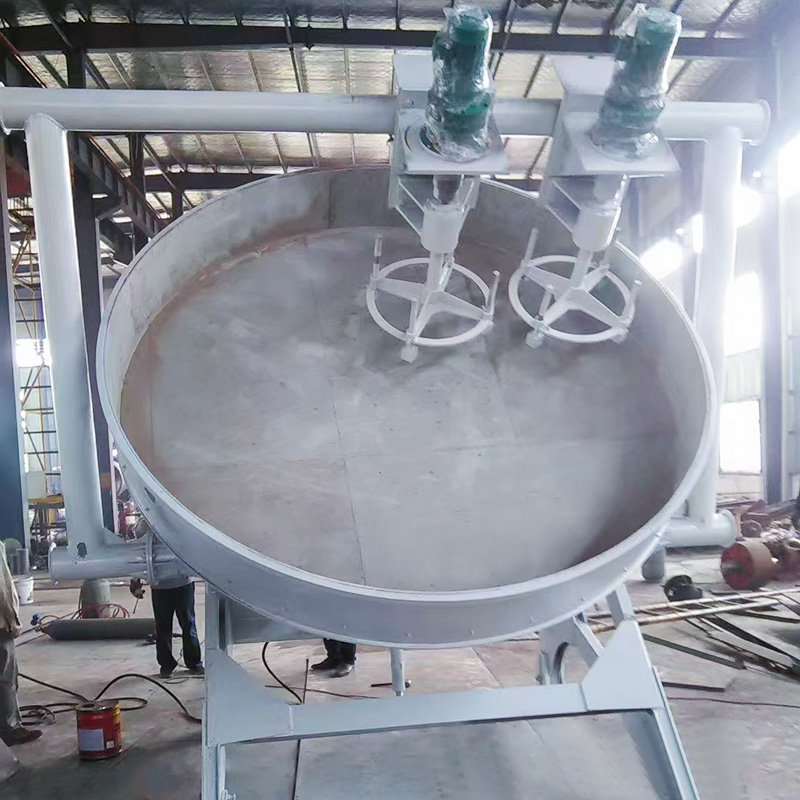
A disc pelletizer machine — also called a pan granulator — is the preferred granulation solution across fertilizer, mining, and chemical industries because it delivers uniform spherical pellets at high throughput with low energy consumption. Its open-pan design allows real-time observation, easy adjustment, and minimal downtime, making it both operationally flexible and cost-effective.
Global demand for granulated materials is accelerating. According to a 2024 report by Grand View Research, the global fertilizer granulation equipment market was valued at USD 1.47 billion and is projected to grow at a CAGR of 4.3% through 2030, with disc pelletizers accounting for a significant share of installed capacity worldwide. Yet despite this widespread adoption, many plant engineers and procurement managers still have fundamental questions: How does a disc pelletizer actually work? Which configuration suits my raw material? What output quality can I realistically expect?
This article answers all of those questions directly, with technical data, real-world comparisons, and practical guidance for selecting and operating a disc pelletizer machine.
How Does a Disc Pelletizer Machine Work?
A disc pelletizer machine operates through a rotating inclined pan that combines centrifugal force, gravity, and liquid binder spray to agglomerate fine powder particles into uniform spherical pellets. The core mechanism is elegant in its simplicity: powder is fed onto a spinning disc (typically inclined at 45°–55°), a binder solution is sprayed over the bed, and as the disc rotates, small nuclei form and grow progressively larger until they roll over the disc rim and discharge by gravity.
Key Mechanical Components
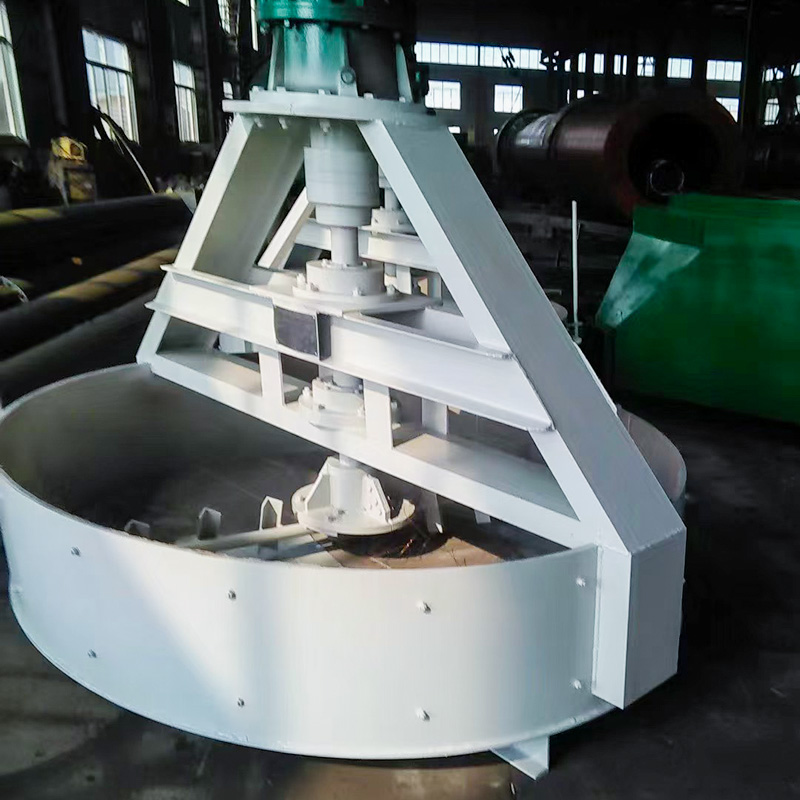
- Rotating Disc (Pan): The primary working surface, typically fabricated from Q235 steel with a wear-resistant lining. Diameter ranges from 0.5 m (lab-scale) to 7.5 m (industrial-scale).
- Drive System: An electric motor coupled with a gearbox drives the disc. Speed is typically adjustable between 5–25 RPM via a frequency inverter (VFD).
- Scraper Blades: Fixed scrapers prevent powder from caking on the disc surface, ensuring a continuous rolling bed.
- Binder Spray System: Atomized nozzles distribute moisture (water, molasses, or chemical binders) evenly across the powder bed.
- Inclination Adjustment Mechanism: Manual or motorized adjustment of the disc angle controls pellet residence time and final size.
The Pelletizing Process — Step by Step
- Nucleation: Fine powder particles are wetted by the binder spray, forming micro-clusters of 0.5–1 mm.
- Layering & Growth: Nuclei tumble across the rotating disc surface, picking up additional powder layers. Pellet diameter grows steadily from 1 mm to the target size (commonly 2–10 mm).
- Consolidation: Continued rotation compacts the internal structure, improving density and crushing strength.
- Discharge: Once pellets reach the target size and exceed the disc lip height, they discharge by gravity into a downstream conveyor.
This self-classifying discharge behavior — where only pellets of sufficient size exit the disc — is a defining advantage over drum granulators, which discharge a broad size distribution requiring extensive screening.
Which Industries Use Disc Pelletizer Machines Most?
Disc pelletizer machines are deployed across at least eight major industries, with fertilizer production and iron ore processing leading global installed capacity. Their ability to process a wide variety of raw materials — from fine mineral powders to organic waste — makes them one of the most versatile granulation platforms available.
| Industry | Typical Raw Materials | Pellet Size Range | Key Requirement |
| Fertilizer | NPK powder, urea, DAP | 2–6 mm | Uniformity, nutrient retention |
| Iron & Steel | Iron ore concentrate, limestone | 8–16 mm | High crush strength (>200 N) |
| Chemical | Detergent powder, catalysts | 1–5 mm | Dust reduction, flowability |
| Environmental / Waste | Sludge, fly ash, bentonite | 3–10 mm | Volume reduction, stabilization |
| Animal Feed | Bone meal, grain dust | 2–8 mm | Palatability, nutrient integrity |
| Ceramics | Kaolin, alumina | 1–4 mm | Narrow size distribution |
Table 1: Major industries using disc pelletizer machines, with typical materials, pellet sizes, and performance priorities.
Why Choose a Disc Pelletizer Over Other Granulation Methods?
The disc pelletizer machine consistently outperforms alternative granulation technologies in pellet sphericity, size uniformity, and operational flexibility — making it the first choice when product quality is the top priority.
Disc Pelletizer vs. Rotary Drum Granulator vs. Extrusion Pelletizer
| Parameter | Disc Pelletizer | Rotary Drum Granulator | Extrusion Pelletizer |
| Pellet Shape | Spherical (≥95%) | Near-spherical (70–85%) | Cylindrical |
| Size Uniformity (CV%) | <8% | 15–25% | 10–15% |
| Throughput (t/h) | 0.5–30 | 5–100+ | 0.1–5 |
| Energy Use (kWh/t) | 8–18 | 10–22 | 25–60 |
| Capital Cost | Low–Medium | Medium–High | High |
| Process Visibility | Fully open (real-time) | Enclosed (limited) | Enclosed |
| Startup Time | <5 minutes | 15–30 minutes | 10–20 minutes |
Table 2: Technical comparison of disc pelletizer, rotary drum granulator, and extrusion pelletizer. Sources: Equipment specification data compiled from manufacturer technical sheets and academic literature (KONA Powder and Particle Journal, 2023).
The data makes one conclusion clear: if you need high sphericity, tight size distribution, and low energy cost, the disc pelletizer machine wins outright. The drum granulator is more competitive only when raw throughput volume exceeds what a single disc can handle — in which case two or more disc units are often still preferred for quality-critical applications.
How to Select the Right Disc Pelletizer Machine Specifications
Selecting a disc pelletizer machine requires matching five core parameters to your production requirements: disc diameter, inclination angle, rotation speed, binder type, and feed moisture content. Getting any one of these wrong can reduce pelletizing efficiency by 20–40%.
1. Disc Diameter and Capacity
Disc diameter is the primary determinant of output capacity. As a general guideline, a 1.5 m disc typically handles 0.5–2 t/h, a 3.6 m disc handles 5–10 t/h, and a 6.0 m disc can process 20–30 t/h of finished pellets. For capacities above 30 t/h, installing multiple disc units in parallel is the standard approach.
2. Inclination Angle (45°–55°)
A steeper angle (50°–55°) shortens residence time and produces smaller pellets with faster discharge. A shallower angle (45°–48°) increases residence time, promotes larger pellet formation, and improves compaction. For fertilizer applications targeting 3–5 mm pellets, 48°–52° is the typical optimum range.
3. Rotation Speed and Froude Number
The Froude number (Fr = ω²r/g) should be maintained between 0.20 and 0.35 for most materials. Below 0.20, the powder bed slides rather than rolls, producing irregular agglomerates. Above 0.35, centrifugal force dominates and prevents proper layering. For a 2.5 m diameter disc, this translates to an operating speed of approximately 8–14 RPM.
4. Moisture Content of Feed
Most inorganic materials pelletize best at a total feed moisture content of 12–16% (w/w). Organic materials such as compost or sludge may require 18–25%. Excessive moisture produces pellets that flatten during discharge; insufficient moisture produces powdery, undersized agglomerates that recycle back into the bed rather than discharging.
5. Material Particle Size Distribution (PSD)
Feed particles should ideally be below 200 µm (–100 mesh) for good nucleation. Materials with a D90 above 500 µm typically produce irregular, low-strength pellets unless a pre-grinding step is added. For iron ore pelletizing, the industry standard is a feed PSD of 80% passing 45 µm (–325 mesh), which ensures strong inter-particle bonding during balling.
What Are the Key Performance Metrics for a Disc Pelletizer Machine?
High-performing disc pelletizer machines consistently achieve a pelletizing efficiency above 85% and a qualified product yield (on-size pellets) above 90% in stable operation. Understanding and tracking the right KPIs is essential for maximizing return on investment.
- Pelletizing Efficiency (%): The ratio of on-size pellets discharged to total material fed. Target: >85%. Below 75% indicates a problem with binder dosing, disc speed, or feed PSD.
- Green Pellet Compressive Strength (N): The crushing force before drying. For iron ore, the minimum acceptable value is typically 10–12 N per pellet. For fertilizer, 3–6 N is common.
- Dry Pellet Crush Strength (N): After drying and/or firing. Iron ore pellets must exceed 200 N for blast furnace use. Fertilizer pellets typically require 15–35 N for handling and bulk transport.
- Size Coefficient of Variation (CV%): A CV below 8% indicates excellent size uniformity. Above 15% suggests the disc parameters need recalibration.
- Moisture Content of Green Pellets (%): Should be controlled within ±0.5% of the target to maintain consistent pellet strength and prevent cracking during drying.
- Specific Energy Consumption (kWh/t): Well-optimized disc pelletizers operate at 8–14 kWh per metric ton of product. Values above 20 kWh/t suggest inefficiency in the drive system or excess recirculating load.
How to Operate and Maintain a Disc Pelletizer Machine for Maximum Longevity
Proper operation and preventive maintenance can extend a disc pelletizer machine's service life beyond 15 years, with major overhauls required only every 5–7 years. The most common cause of premature failure is neglected scraper blade wear, which leads to uneven powder distribution and accelerated disc surface erosion.
Daily Operational Checks
- Verify binder spray nozzle output rate and pattern — clogged nozzles are the most frequent cause of pellet size drift.
- Check scraper blade clearance (recommended: 3–8 mm from disc surface depending on material).
- Monitor drive motor current draw — a sustained increase of >10% above baseline indicates overload or bearing wear.
- Record pellet size samples from the discharge stream every 30 minutes during startup until steady state is confirmed.
Scheduled Preventive Maintenance Intervals
| Interval | Task | Target Condition |
| Weekly | Inspect scraper blades; lubricate pivot bearings | No cracking, uniform clearance |
| Monthly | Check gearbox oil level and condition; inspect disc weld seams | Oil at dipstick mark, no discoloration |
| Quarterly | Replace spray nozzle tips; measure disc surface wear depth | Wear <3 mm; nozzle flow within ±5% |
| Annually | Full gearbox oil change; vibration analysis on drive shaft | Vibration <4.5 mm/s RMS (ISO 10816) |
| 5–7 Years | Replace disc lining; overhaul gearbox; re-calibrate inclination system | Restore to OEM specification |
Table 3: Recommended preventive maintenance schedule for disc pelletizer machines in continuous industrial operation.
What Are the Latest Technological Advances in Disc Pelletizer Machines?
Modern disc pelletizer machines increasingly incorporate variable frequency drives (VFDs), PLC-based automation, and real-time moisture sensing to achieve pelletizing efficiencies above 92% with minimal operator intervention.
- Variable Frequency Drive (VFD) Integration: Allows continuous disc speed optimization during operation. Plants using VFD-equipped disc pelletizers report 8–12% energy savings compared to fixed-speed units (source: Energy Efficiency in Industrial Processes, IEA, 2023).
- Online Moisture Measurement: Near-infrared (NIR) sensors installed above the disc feed zone provide real-time moisture data, enabling automatic binder dosing adjustment. This reduces pellet size variance by up to 30% compared to manual control.
- Machine Vision Size Classification: High-speed camera systems at the disc discharge point use AI-based image processing to classify pellet size in real time, triggering automatic disc angle adjustments to maintain target size distribution.
- Wear-Resistant Composite Linings: High-chromium cast iron and rubber-ceramic composite disc linings now achieve service lives of 18,000–24,000 operating hours, versus 6,000–10,000 hours for standard steel linings.
- Dual-Spray Binder Systems: Using two independently controlled spray circuits — one for nucleation and one for layering — allows precise control over pellet density profile, producing pellets with a harder outer shell and lower internal porosity.
Frequently Asked Questions About Disc Pelletizer Machines
Q: What is the typical lifespan of a disc pelletizer machine?
A well-maintained disc pelletizer machine from a reputable manufacturer typically has a mechanical service life of 15–20 years. The disc pan itself may need re-lining every 5–8 years depending on material abrasiveness, while the gearbox and drive components often last the full equipment life with proper lubrication.
Q: Can a disc pelletizer process sticky or high-moisture materials?
Yes, but with modification. For materials with inherently high moisture (above 20%), scraper blade frequency and clearance must be increased to prevent pan caking. Some designs incorporate a perforated disc surface or an internal ventilation ring to remove excess surface moisture from the pellet bed during rolling.
Q: What binders work best with a disc pelletizer machine?
The optimal binder depends on the end application. Water alone is sufficient for materials with natural binding properties (bentonite, clays). Bentonite slurry (0.5–1.5% by weight) is standard for iron ore pelletizing. For fertilizers, diluted molasses (2–5%) or lignosulfonate solutions improve green pellet strength. For chemical and pharmaceutical applications, polyvinyl alcohol (PVA) or CMC solutions are common choices.
Q: How much does a disc pelletizer machine cost?
Pricing varies significantly with size and specification. Small-scale units (disc diameter 1.0–1.5 m, capacity 0.3–1 t/h) typically cost USD 8,000–25,000. Mid-scale units (2.5–3.6 m diameter, 5–12 t/h) range from USD 45,000–120,000. Large industrial units (5.5–7.5 m diameter, 20–30 t/h) are typically priced above USD 200,000, excluding installation, foundation, and auxiliary systems. Always request a complete system quote including scrubber, dryer, and screening circuits.
Q: How long does it take to reach steady-state production?
One of the advantages of a disc pelletizer machine is its rapid startup. Most units reach steady-state pellet production within 3–8 minutes of startup, compared to 15–30 minutes for rotary drum granulators. This makes disc pelletizers particularly advantageous for batch campaigns or plants that require frequent product changeovers.
Q: Is a disc pelletizer suitable for heat-sensitive materials?
Yes. Because the disc pelletizer machine operates at ambient temperature with no applied heat during the pelletizing stage itself, it is well-suited to heat-sensitive materials. Drying occurs in a separate downstream dryer where temperature can be precisely controlled. This is a key reason why disc pelletizers are widely used in the animal feed and pharmaceutical granulation sectors.
Conclusion: Why the Disc Pelletizer Machine Remains an Industry Standard
After decades of industrial use and continuous engineering refinement, the disc pelletizer machine remains the benchmark for applications demanding high pellet sphericity, narrow size distribution, and operational simplicity. Its open-pan design enables real-time process visibility that enclosed systems cannot match. Its low energy footprint and rapid startup time reduce both operating costs and production downtime.
Critically, advances in VFD control, online moisture sensing, AI-based vision systems, and wear-resistant materials are extending the performance envelope further — making modern disc pelletizer machines smarter, more energy-efficient, and more durable than their predecessors.
Whether you are processing iron ore, NPK fertilizer, fly ash, or specialty chemicals, selecting the right disc pelletizer machine — with properly matched disc diameter, inclination, speed, and binder system — will directly determine product quality, throughput efficiency, and long-term profitability. Use the comparison tables and specification guidelines in this article as your starting framework, and consult with an experienced pelletizing engineer before finalizing your equipment specification.