 En
En
 English
  Français
  русский
  中文简体
中文简体  عربى
عربى  Español

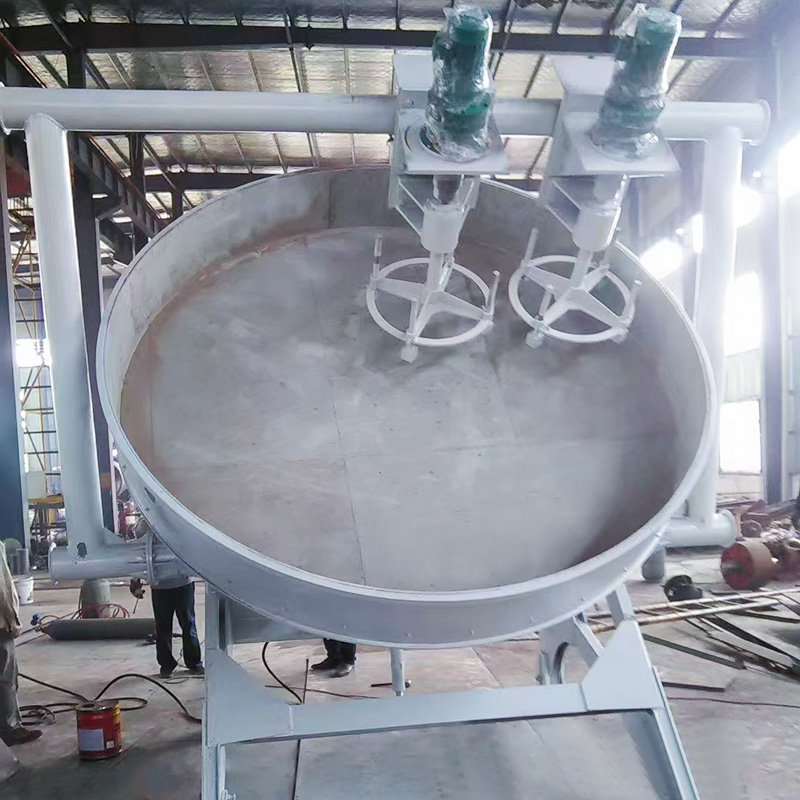
Disc pelletizer operation is a wet agglomeration process in which fine powder or particulate material is continuously fed onto a rotating inclined disc, moistened with liquid binder, and rolled into spherical pellets through a combination of centrifugal force, gravity, and particle-to-particle adhesion. As material tumbles across the disc surface, fine particles nucleate into small seed pellets, which grow by collecting additional fines with each revolution until they reach the target size — typically 6 to 30 mm in diameter — and discharge over the disc rim by gravity. Disc pelletizers are widely used in fertilizer production, iron ore processing, cement manufacturing, and the recycling of industrial dusts and fines because they offer continuous, controllable pellet sizing with relatively simple mechanical operation. Understanding each element of disc pelletizer operation — from feed preparation and binder addition to disc geometry and discharge behavior — is essential for achieving consistent pellet quality and maximizing throughput.
Core Principle of Disc Pelletizer Operation
The fundamental mechanism driving disc pelletizer operation is the balance between centrifugal force, gravitational force, and inter-particle cohesion. The disc rotates at a controlled speed — typically expressed as a percentage of the critical speed, which is the RPM at which centrifugal force equals gravity — and is tilted at an angle of 40 to 60 degrees from horizontal. Material fed onto the disc surface is carried upward by friction and centrifugal action, then cascades back down under gravity in a rolling, tumbling motion. This tumbling motion causes particles to collide and bond through liquid bridges formed by the binder. Smaller, lighter particles are carried higher on the disc and spend more time in the rolling zone, while larger, heavier pellets migrate to the outer rim and discharge over the edge when their mass and momentum exceed the retaining force of the disc lip. This natural size classification — large pellets discharging continuously while fines recirculate — is what gives the disc pelletizer its characteristic narrow pellet size distribution, typically within a range of plus or minus 2 to 4 mm around the target diameter when properly operated.
Key Components of a Disc Pelletizer and Their Role in Operation
Each mechanical component of a disc pelletizer directly influences operational outcomes. Understanding their function allows operators to diagnose problems and optimize performance systematically.
The Disc Pan
The disc pan is the primary working surface and is the most critical component for pellet formation. Disc pans range from 1.0 m to 7.5 m in diameter in industrial installations, with throughput capacity scaling approximately with the square of the disc diameter — a 5 m disc handles roughly 25 times the throughput of a 1 m disc for the same material and conditions. The pan is fabricated from wear-resistant steel (typically Hardox 400 or equivalent), often with replaceable liner plates in high-wear zones. The rim depth — the height of the upright edge around the disc circumference — is adjustable on most designs and controls the bed depth of material on the disc, directly influencing residence time and therefore pellet growth rate.
The Drive System
The drive system rotates the disc at a controlled, adjustable speed. Modern disc pelletizers use variable-frequency drives (VFDs) on the main motor, allowing disc speed to be adjusted in real time without stopping the machine. Disc speed is expressed as a fraction of critical speed — in practice, most disc pelletizers operate between 50 and 75% of critical speed. Operating above 75% of critical speed causes material to centrifuge to the disc rim without adequate rolling, producing irregular or elongated pellets. Operating below 50% results in insufficient centrifugal action, causing material to slide rather than roll, reducing pellet density and sphericity. For a 3.5 m diameter disc, critical speed is approximately 17 RPM; typical operating speed is therefore 8.5 to 13 RPM.
The Inclination Mechanism
Disc inclination angle is one of the two most influential variables in disc pelletizer operation (the other being moisture content). The angle is adjustable during operation, typically through a mechanical screw jack or hydraulic cylinder acting on the disc support frame. Increasing the inclination angle reduces the effective bed depth, shortens material residence time, and produces smaller pellets with a faster discharge rate. Decreasing the angle increases bed depth and residence time, promoting larger pellet growth. Most disc pelletizers are operated at 45 to 55 degrees for standard granular products, with the angle adjusted to fine-tune pellet size during production startup and whenever feed material properties change.
The Scraper System
Scrapers are fixed blades or plows positioned against the disc surface to prevent material buildup (caking) on the pan and to redirect material flow within the rolling bed. A typical disc pelletizer uses two to four scrapers: a bottom scraper that prevents compaction at the disc floor, a side scraper that breaks up material accumulation at the rim, and in some designs a middle scraper that redirects the rolling bed to improve mixing. Scraper positioning has a measurable effect on pellet quality — mispositioned scrapers can disrupt the rolling bed pattern, reduce residence time, or create dead zones where material stagnates and overs (oversized pellets) accumulate.
The Binder Addition System
Binder — most commonly water, but also molasses, bentonite slurry, or polymer solutions depending on the application — is added to the disc surface through spray nozzles positioned above the rolling bed. The spray pattern, droplet size, and spray location are critical operational parameters. Binder should be applied to the active rolling zone where fines are nucleating and growing, not to the discharge zone where finished pellets are leaving the disc. Spray nozzle clogging is one of the most common causes of pellet size inconsistency in disc pelletizer operation; automated nozzle flushing systems or air-purge nozzles are standard equipment on production-scale installations.
Critical Operating Parameters in Disc Pelletizer Operation
Consistent pellet quality depends on maintaining all key operating parameters within defined ranges simultaneously. The table below summarizes the primary variables, their typical ranges, and their effect on pellet characteristics.
| Operating Parameter | Typical Range | Effect if Too High | Effect if Too Low |
| Disc speed (% critical) | 50 to 75% | Centrifuging, poor sphericity | Sliding, low density pellets |
| Disc inclination angle | 40 to 60 degrees | Short residence, small pellets | Long residence, overs, caking |
| Moisture content of feed | 8 to 14% by mass (material-dependent) | Wet sticking, disc caking | Dusty fines, no nucleation |
| Feed rate (t/h) | Design-specific, 5 to 200+ t/h | Overloading, discharge of fines | Underloaded bed, irregular pellets |
| Rim depth | 150 to 400 mm (size-dependent) | Excessive bed depth, overs | Shallow bed, fines discharge |
| Binder spray rate | Varies with feed moisture target | Over-wet pellets, agglomeration | Dry fines, poor nucleation |
Table 1: Key disc pelletizer operating parameters, their typical ranges, and the effects of operating outside those ranges on pellet quality and process stability.
Step-by-Step Disc Pelletizer Operation Sequence
Consistent disc pelletizer operation follows a defined startup and steady-state procedure. Deviating from this sequence is the most common cause of off-spec product at the beginning of a production run.
- Pre-start inspection — verify scraper clearances (typically 3 to 6 mm from disc surface), inspect spray nozzles for blockage, check drive lubrication, and confirm disc rim depth setting matches the product specification.
- Start disc rotation — bring the disc to operating speed (50 to 75% of critical) before introducing any feed material. Starting feed onto a stationary or slow-moving disc causes immediate caking on the disc floor.
- Initiate seed bed — introduce a small quantity of pre-moistened fines or recycled undersize pellets (seeds) to establish the initial rolling bed. Seeding the disc before introducing fresh feed accelerates the nucleation phase and reduces the time to reach a stable, on-specification product. In iron ore pelletizing, seed bed establishment typically takes 5 to 15 minutes.
- Begin binder addition — activate the spray system at a low rate before introducing fresh feed, ensuring the disc surface and seed bed are at target moisture before new fines contact them. The optimal moisture for most inorganic mineral feeds is 10 to 13% by mass at the point of pellet formation.
- Introduce feed at ramp rate — increase the fresh feed rate gradually over 5 to 10 minutes to the target throughput, adjusting binder spray rate proportionally. Ramping prevents sudden overloading of the rolling bed that would discharge wet, undersized pellets into the product stream.
- Monitor and adjust during steady state — once the disc is operating at full feed rate, monitor pellet size distribution visually at the discharge point and via downstream screening. Adjust inclination angle, disc speed, or binder rate as needed to maintain target size. A well-operated disc will discharge approximately 85 to 92% on-specification product by mass, with the balance returned as recycle.
- Controlled shutdown — reduce feed rate to zero while continuing disc rotation and binder addition until the disc is clear of material. Stopping the disc with material on it causes compaction and hardening, making restart difficult and potentially requiring manual removal of hardened material.
Feed Preparation: Why It Determines Disc Pelletizer Performance
Feed preparation is the single most important upstream factor in disc pelletizer operation — poorly prepared feed cannot be corrected by adjusting disc parameters alone. The ideal feed for disc pelletizing has a particle size of 80 to 90% passing 150 microns (100 mesh), with less than 5% of particles coarser than 500 microns. Coarse particles act as nuclei but do not bond well into pellets, producing a bimodal size distribution with a large proportion of irregular or single-particle pseudo-pellets. Feed moisture at the disc entry should be controlled within plus or minus 0.5% of the target moisture to maintain consistent nucleation and growth behavior — moisture variations exceeding 1% will cause visible swings in pellet size and discharge rate that cannot be fully corrected by real-time operator adjustments. Pre-mixing the feed in a pug mill or ribbon blender before the disc ensures homogeneous moisture distribution, which is particularly important for feeds with high clay content or mixed powder compositions that resist uniform wetting.
Disc Pelletizer vs. Drum Pelletizer: Operational Comparison
Disc pelletizers and drum pelletizers (rotary drum agglomerators) are the two dominant technologies for wet pelletizing of fine powders. Each has distinct operational characteristics that make it more or less suitable for specific applications and product requirements.
| Characteristic | Disc Pelletizer | Drum Pelletizer |
| Pellet size control | Excellent (narrow distribution) | Moderate (wider distribution) |
| Typical size range | 6 to 30 mm | 3 to 25 mm (wider spread) |
| Throughput capacity | Up to 200+ t/h per unit | Up to 500+ t/h per unit |
| Recycle ratio | Low (5 to 15%) | High (100 to 400%) |
| Operator visibility | Excellent (open disc) | Poor (enclosed drum) |
| Footprint | Compact | Large (long drum) |
| Sensitivity to feed variation | High | Moderate |
| Typical applications | Iron ore, fertilizer, cement, dust recycling | Potash, NPK fertilizer, industrial minerals |
Table 2: Operational comparison between disc pelletizer and drum pelletizer (rotary drum agglomerator) across key performance and design characteristics.
Industrial Applications of Disc Pelletizer Operation
Disc pelletizer operation is deployed across several major industries, each with distinct feed materials, binder systems, and pellet quality requirements.
Iron Ore Pelletizing
Iron ore pelletizing is the largest single application for disc pelletizers by installed capacity. Magnetite or hematite concentrates ground to 80% passing 44 microns are pelletized on discs 5 to 7.5 m in diameter with bentonite or organic binder additions of 0.3 to 0.7% by mass. Target pellet size for blast furnace feed is 9 to 16 mm. Green pellets (unfired) discharged from the disc are conveyed directly to a traveling grate or grate-kiln induration furnace where they are dried, preheated, and fired to 1,250 to 1,340 degC to develop the ceramic bond needed for blast furnace charging. Production rates on a single 7.5 m disc can reach 180 to 220 dry tonnes per hour of green pellets.
Fertilizer Granulation
Disc pelletizers are used in the production of granular single superphosphate (SSP), triple superphosphate (TSP), compound NPK fertilizers, and lime granules. Water or dilute acid solutions serve as binders, and disc diameter ranges from 1.5 to 4 m for typical fertilizer plant capacities of 10 to 80 tonnes per hour. Fertilizer pellets are typically dried in a rotary dryer immediately downstream of the disc to reduce moisture from 10 to 14% down to 1 to 3%, preventing caking during storage and shipping.
Cement and Lime Processing
In the cement industry, disc pelletizers are used to produce nodules from raw meal (kiln feed) for the Lepol process, as well as to pelletize cement kiln dust (CKD) and lime fines for recycling. Raw meal nodules for Lepol kilns are typically 10 to 15 mm diameter, formed at 11 to 14% moisture, and must have sufficient green strength (greater than 10 N per pellet) to survive handling on the traveling grate preheater without breakage.
Industrial Dust and Waste Recycling
Electric arc furnace (EAF) dust, blast furnace flue dust, carbon fines, and other industrial byproducts are pelletized using disc pelletizers to convert fugitive, difficult-to-handle fines into stable, handleable granules suitable for recycling or landfill disposal. Binders such as molasses, sodium silicate, or Portland cement are used to achieve adequate green and dry strength in materials that have poor natural cohesion. Disc pelletizer operation in waste recycling applications often handles feeds with variable composition, requiring more active operator adjustment of moisture and inclination to maintain consistent output.
Troubleshooting Common Disc Pelletizer Operation Problems
Most disc pelletizer operation problems can be traced to one of three root causes: feed variation, moisture control deviation, or mechanical wear. The following table summarizes the most frequently encountered issues with their likely causes and corrective actions.
| Problem | Likely Cause | Corrective Action |
| Pellets too small or dusty discharge | Moisture too low, angle too steep, speed too high | Increase binder spray, reduce angle, reduce speed |
| Oversized pellets (overs) | Angle too flat, moisture too high, low speed | Increase angle, reduce binder, increase speed |
| Material caking on disc floor | Scraper clearance too wide, over-wet feed | Reduce scraper gap, reduce moisture, stop and clean |
| Irregular or non-spherical pellets | Coarse feed particles, speed too low | Improve feed grinding, increase disc speed |
| Unstable discharge rate (surging) | Feed rate variation, inconsistent moisture | Stabilize feed rate, improve feed pre-mixing |
| Low pellet green strength | Insufficient binder, coarse feed, low moisture | Increase binder dose or change binder type, re-grind feed |
| Excessive wear on disc liner | Abrasive feed, incorrect scraper angle | Upgrade liner material, adjust scraper position |
Table 3: Common disc pelletizer operation problems, their probable causes, and recommended corrective actions for operators and maintenance teams.
Maintenance Practices That Support Reliable Disc Pelletizer Operation
Planned maintenance is the foundation of consistent disc pelletizer performance. Unplanned downtime from mechanical failure typically costs 4 to 10 times more per hour than the cost of the preventive maintenance that would have avoided it.
- Daily inspection items: scraper clearance and condition, spray nozzle function, disc surface for caking or liner damage, drive motor current draw (a rising current trend indicates increasing mechanical resistance from caking or bearing wear).
- Weekly maintenance: lubricate drive gear and pinion, check rim depth setting against product specification, inspect binder supply lines and nozzles for wear or partial blockage, verify VFD speed setting against target.
- Monthly overhaul items: measure disc liner thickness at high-wear zones (bottom and lower rim), replace worn scraper blades, inspect tilt mechanism for backlash, check disc runout (flatness) — runout exceeding 5 mm on a disc over 3 m diameter significantly affects rolling bed behavior and pellet uniformity.
- Liner replacement planning: in iron ore pelletizing, disc liners typically last 3 to 6 months of continuous operation before requiring replacement. Scheduling liner changes during planned maintenance shutdowns avoids emergency downtime and allows worn liners to be replaced before they affect pellet quality or disc balance.
- Drive system: gearbox oil analysis every 3 months detects early bearing or gear wear before catastrophic failure. A single unplanned gearbox failure on a large iron ore pelletizer can cause 24 to 72 hours of production loss — far exceeding the cost of an oil analysis program.
Frequently Asked Questions About Disc Pelletizer Operation
What is the ideal disc speed for pelletizer operation?
The ideal disc speed is between 50 and 75% of the critical speed for the specific disc diameter. Critical speed in RPM equals 42.3 divided by the square root of the disc diameter in meters. For a 3 m disc, critical speed is approximately 24 RPM, so operating speed should be 12 to 18 RPM. The exact operating point within this range is adjusted based on feed material density, target pellet size, and moisture — denser or wetter feeds generally benefit from slightly higher speeds to maintain adequate rolling action without the bed collapsing to the disc floor.
How does moisture content affect disc pelletizer operation?
Moisture is the most sensitive control variable in disc pelletizer operation. Too little moisture (typically below 8% for most mineral feeds) results in weak liquid bridges between particles, preventing nucleation and producing dusty discharge. Too much moisture (above 14 to 16% depending on material) creates plastic, sticky pellets that deform under their own weight, cake on the disc surface, and agglomerate into oversized masses. The optimal moisture window for consistent operation is often only 1 to 2 percentage points wide, making accurate feed moisture measurement and closed-loop binder control highly valuable in production environments where feed moisture varies.
How do you increase pellet size on a disc pelletizer?
To increase pellet size, reduce the disc inclination angle (flattening the disc increases residence time), reduce disc speed slightly (allowing more rolling passes before discharge), or increase moisture content moderately. Reducing the feed rate also increases average residence time and promotes larger pellet growth, though at the cost of throughput. In practice, inclination angle adjustment is the fastest and most controllable method for real-time pellet size correction during steady-state operation.
What binders are used in disc pelletizer operation?
The most common binder in disc pelletizer operation is plain water, which is sufficient for materials with adequate natural plasticity and cohesion. For iron ore, sodium bentonite (a swelling clay) at 0.3 to 0.7% addition provides the green strength needed for handling and induration. Organic binders such as carboxymethyl cellulose (CMC) or polyacrylamide are used where low residual ash or high pellet strength is required. Molasses and cane syrup are cost-effective binders for fertilizer and agricultural products. Portland cement is used as a cold-cure binder in waste pelletizing applications where heat curing is not available.
How long does it take for a disc pelletizer to reach steady-state operation?
Under normal conditions, a disc pelletizer reaches steady-state operation — where the discharge pellet size distribution is stable and on-specification — within 15 to 45 minutes of startup from a cold, empty disc. The time is reduced to 5 to 15 minutes if recycled undersize pellets are used as seeds to pre-establish the rolling bed. After any significant parameter change (inclination angle, disc speed, or feed rate), the disc requires 3 to 10 minutes to re-equilibrate to a new steady state before product quality sampling should be taken.
What is recycle ratio in disc pelletizer operation and why does it matter?
Recycle ratio is the mass of off-specification material (undersize fines and oversize pellets) returned to the disc as a fraction of total fresh feed. In disc pelletizer operation, the recycle ratio is typically 5 to 15% — significantly lower than drum pelletizer systems that may require 100 to 300% recycle. A low recycle ratio is operationally desirable because it minimizes the additional grinding or crushing energy required to process returned material, reduces the load on downstream handling conveyors, and simplifies steady-state control. A rising recycle ratio is an early indicator that feed properties, moisture, or operating parameters have drifted outside the optimal range.
Conclusion: Mastering Disc Pelletizer Operation for Consistent Results
Effective disc pelletizer operation requires understanding and controlling the interaction between disc geometry, rotation speed, inclination angle, feed preparation, and binder addition as an integrated system. No single parameter determines pellet quality in isolation — moisture content determines whether nucleation occurs, disc speed and angle determine how long particles roll and how they discharge, and feed particle size determines the upper limit of pellet strength and sphericity. Production teams that understand these interdependencies can adjust proactively when feed conditions change, minimize off-specification output, and maintain the low recycle ratios that characterize well-run disc pelletizing operations. Combined with a disciplined maintenance program that keeps scrapers, liners, nozzles, and drive components in optimal condition, these operational fundamentals are the basis for achieving the narrow pellet size distributions and high throughput efficiencies that make disc pelletizers indispensable in iron ore, fertilizer, and industrial mineral processing worldwide.