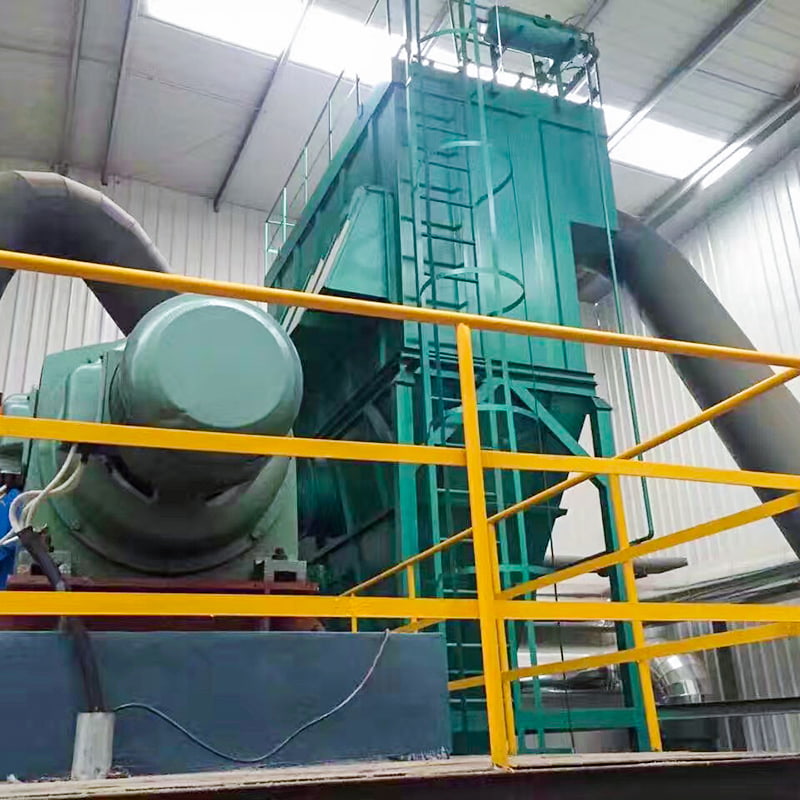
 En
En
 English
  Français
  русский
  中文简体
中文简体  عربى
عربى  Español

An industrial dust collector is a powered filtration system built from five basic components: capture hoods and ductwork, a fan or blower, filter media, a filter cleaning mechanism, and a discharge hopper. Every collector on the market — pulse-jet baghouse, cartridge unit, or cyclone — follows the same architecture, so you can compare any machine by looking at the same five subsystems. This guide explains what each component does, how they work together, and which parameters actually matter when buying or troubleshooting a unit.
The Five Basic Components of an Industrial Dust Collector
The basic composition of an industrial dust collector consists of five functional groups: capture hoods, ductwork, a fan, filter media, and an integrated cleaning and discharge system. If you can identify these five areas, you can read any general arrangement drawing and understand where most operating problems start.
The table below summarizes each component, its role, and the specification detail that matters most.
| Component | Role in the system | What matters most when specifying |
|---|---|---|
| Capture hoods / pickup points | Draws dusty air into the system at the generation point | Capture velocity, hood position and geometry |
| Ductwork | Conveys dust-laden air from the hoods to the collector | Conveying velocity and total pressure drop |
| Fan (blower) | Creates the airflow that drives the whole system | Actual airflow (ACFM) and static pressure |
| Filter media (bags / cartridges) | Separates dust from the airstream | Media material, temperature rating and filtration area |
| Filter cleaning system | Removes the accumulated dust cake to keep the media permeable | Cleaning method, compressed-air consumption and control logic |
| Discharge hopper and valve | Collects and removes the separated dust | Hopper angle, valve capacity and level monitoring |
How the Five Components Work Together
These five components form one continuous airflow loop: the fan creates negative pressure in the housing and ductwork, the hoods capture dusty air at the source, the filter media stops the particles, the cleaning system drops the dust cake into the hopper, and the cleaned air leaves through the exhaust stack.
During operation, dust accumulates on the outside of the bags or cartridges and forms a filter cake that actually improves collection efficiency. When the cake becomes too thick, the differential pressure across the media rises; at a preset value, the cleaning system fires a pulse of compressed air — or activates shakers or reverse-air flow — to release the cake, which falls into the hopper and is discharged through a rotary valve or screw conveyor. A well-tuned system keeps the differential pressure stable so the fan always runs on its design curve.
Filter Media and Cleaning Systems Decide Real-World Performance
The filter media and the cleaning mechanism, rather than the steel housing, determine the emission level, pressure drop and maintenance interval of an industrial dust collector.
Fabric bags made of polyester are the default choice for dry, non-combustible dust up to roughly 120–130°C, while cartridge filters offer more filtration area in the same footprint for fine, low-moisture dust. For coarse, abrasive or mildly sticky dust — the kind encountered in fertilizer, cement, minerals and building materials — air-box pulse-jet bag collectors return the best balance of efficiency, operating cost and bag life. In these units, compressed-air pulses from the upper air box clean the bags row by row without complex mechanical drives.
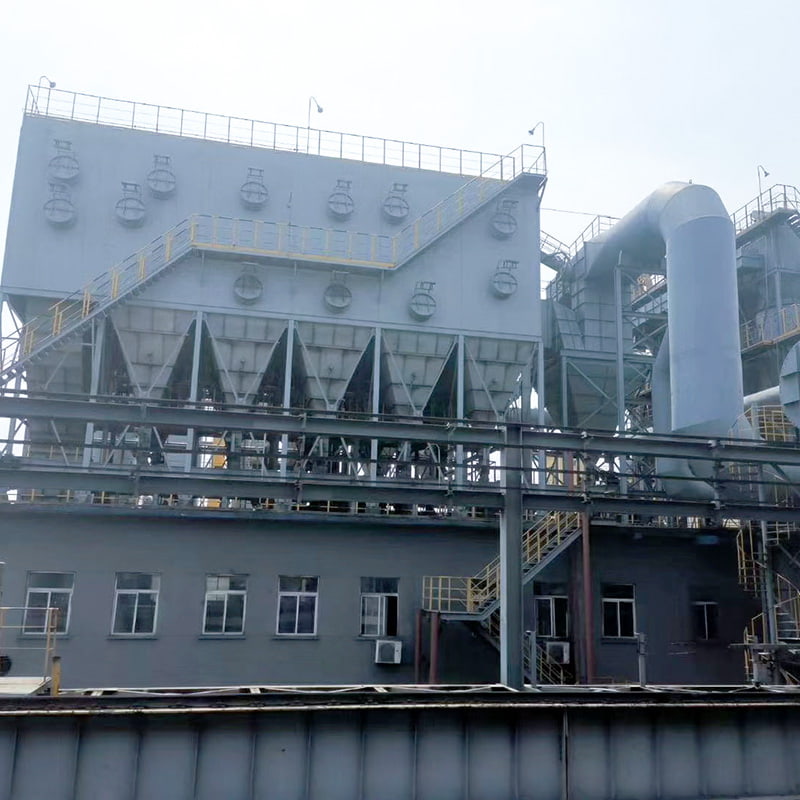
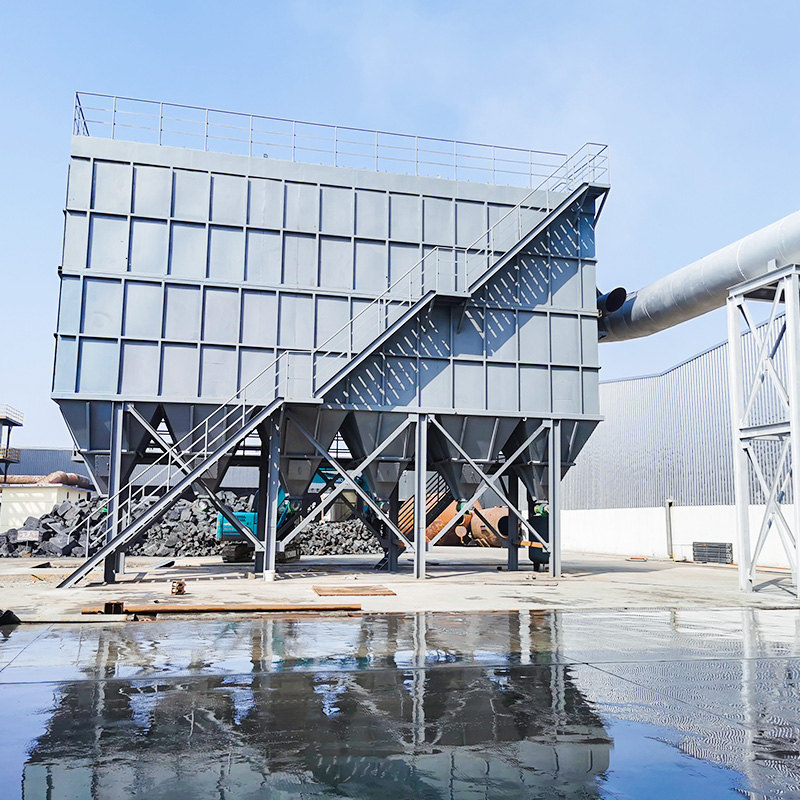
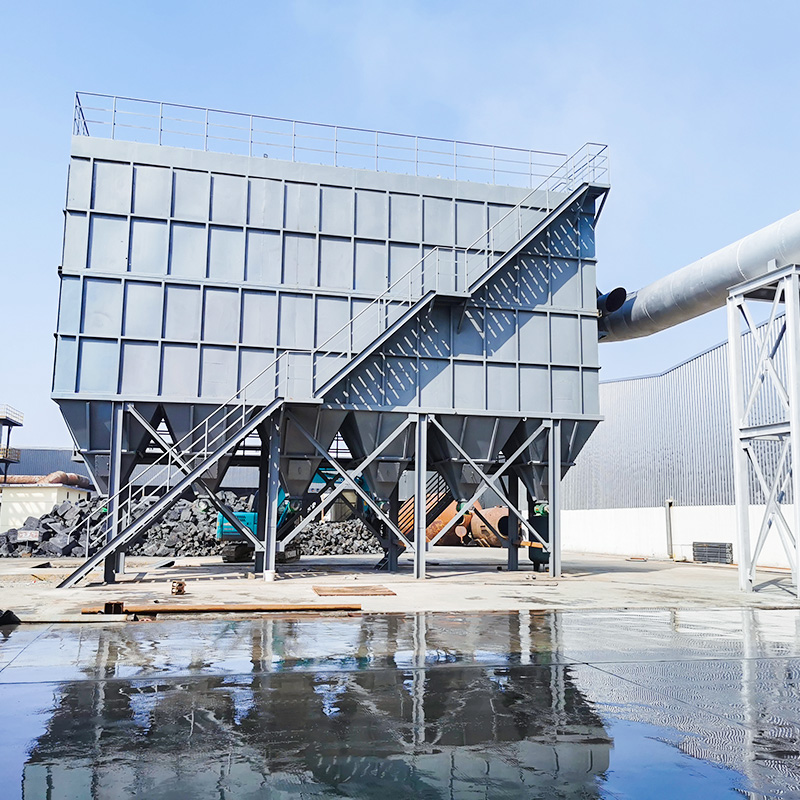 Air Box Pulse Bag Dust Collector for High-Dust ProcessesThis integrated chamber cleaning unit uses large-scale pulse valves to handle high-concentration dust, making it a practical choice for cement plants and similar industries where coarse or mildly sticky dust must be filtered efficiently.View Product →
Shaker collectors are simpler and inexpensive, but they cannot clean continuously; reverse-air units handle high temperatures gently; cartridge collectors suit applications where fine respirable dust or high filtration density is the priority. Whichever type you choose, the cleaning system must match the actual dust loading so the filter never operates blinded.
Match the Components to the Dust and Operating Conditions
Dust properties limit collector selection before any sizing is done: particle size, moisture, temperature, abrasiveness and combustibility come first.
Sticky or hygroscopic dust requires insulated housings and a powerful cleaning system; abrasive dust wears ductwork and bags rapidly at high velocity; hygroscopic salts in fertilizer dust can blind standard media in weeks. For heavy coarse loads, adding a pre-separator is usually cheaper than enlarging the baghouse.
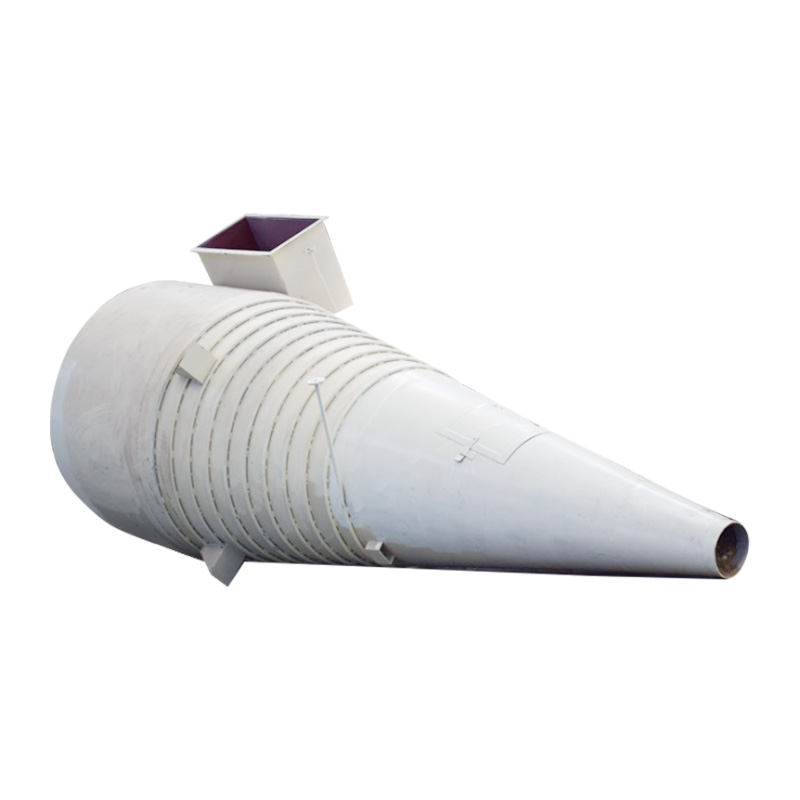
A cyclone dust collector uses centrifugal force rather than filter media, so it has no bags to clean and almost no maintenance cost; it is often installed upstream of a baghouse when the gas stream is heavily loaded with coarse particles, protecting the bags and reducing the load on the main filter.
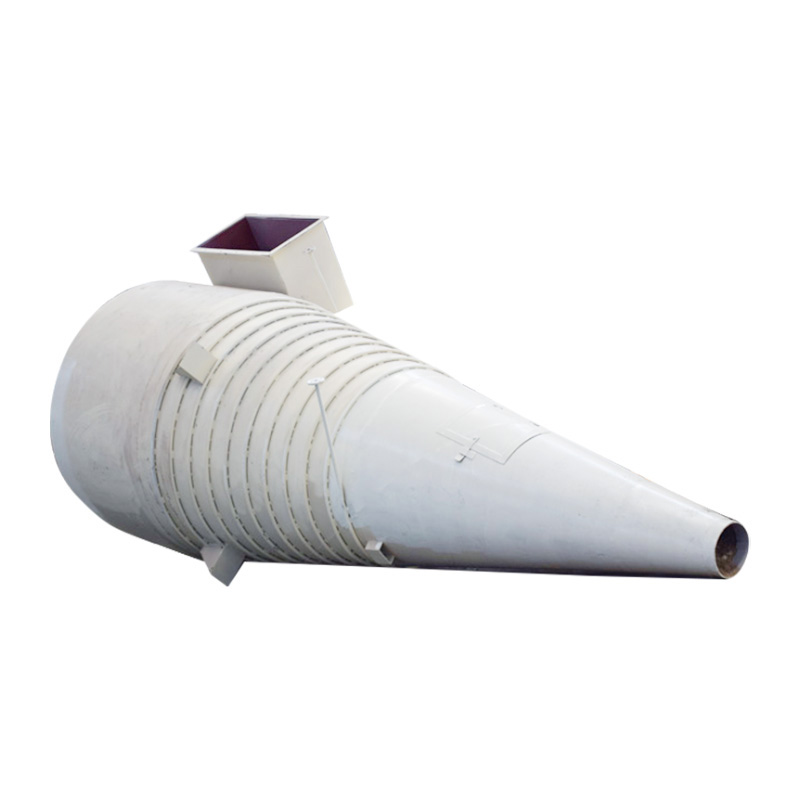 Cyclone Dust Collector for Coarse Particle Pre-SeparationUsing centrifugal force without filter media, this compact unit removes dense, non-fibrous dust and is well suited as a pre-cleaner ahead of baghouses, especially for initial purification of high-temperature flue gas.View Product →
For gas temperatures above the limit of standard media, the basic composition must change: high-temperature pulse-jet bag dust collectors with fiberglass or aramid media handle exhaust from dryers, kilns and boilers at 200°C or higher without premature bag failure.
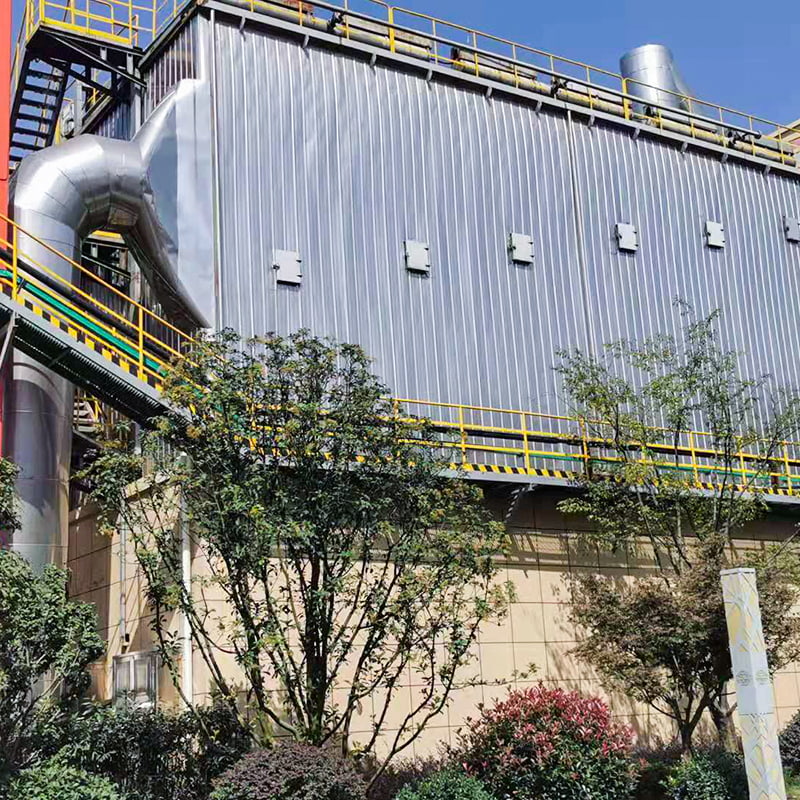
 High Temperature Pulse Jet Bag Dust Collector for Kiln ExhaustDesigned for exhaust from kilns, dryers, and coolers, this GMC series collector uses high-pressure pulse valves to capture fine dust at high efficiency, with emissions below strict limits for demanding industrial applications.View Product →
Combustible dust, such as coal dust or metal fines, requires explosion-proof construction — pressure-rated housings, explosion relief panels and isolation valves. Corrosive dust, such as chloride-laden fertilizer dust, calls for coated or stainless surfaces. These condition-driven choices define the basic composition of your system more than any brand preference.
Sizing Parameters a Buyer Should Ask For
Once the collector type is fixed, its physical size is determined by airflow, filtration velocity and dust properties, not by the space you have available.
Three numbers dominate the sizing calculation: the required gas flow in actual cubic meters per hour (or ACFM), the air-to-cloth ratio, and the static pressure the fan must overcome. The air-to-cloth ratio is the gas volume divided by the filter area; a conservative ratio of 1.0–1.5 m³/m²/min is standard for fine or sticky dust, while coarse dry dust can run at 1.5–2.5 m³/m²/min.
| Parameter | What it means | Typical guidance |
|---|---|---|
| Gas flow (ACFM) | Actual air volume at operating temperature and altitude | Sum of all hood requirements plus 10–20% safety margin |
| Air-to-cloth ratio | Gas flow divided by filter media area | 1.0–1.5 m³/m²/min for fine or sticky dust; higher for coarse dust |
| Can velocity | Upward velocity of gas between the bags | 1–2 m/s, depending on dust settling behavior |
| Differential pressure | Resistance across the filter media | 1000–2000 Pa normal; cleaning triggers at setpoint |
| Inlet temperature | Gas temperature at the collector entrance | Media must be rated above the maximum possible temperature |
| Dust explosion class | Combustibility of the collected dust (Kst / ST class) | ST1–ST3; dictates vents, isolation and housing strength |
In a real project, these numbers are refined with the dust's particle size distribution and moisture content. For example, in a compound fertilizer production line, the dust from dryers, coolers and screens is often slightly moist and chloride-bearing, so buyers usually select a lower air-to-cloth ratio and pulse-jet bag collectors with coated housings.
Frequently Asked Questions About the Basic Composition of Industrial Dust Collectors
The best way to verify your understanding of a dust collector is to trace a dust particle from the hood to the hopper; the questions below cover the most common points of confusion.
What are the basic parts of an industrial dust collector?
The basic parts are capture hoods, ductwork, a fan or blower, filter media, a filter cleaning system, and a hopper with a discharge valve. Together they form a complete, closed-loop filtration system.
Which components fail most often?
Pulse valves and filter bags are the most frequent wear items. Pulse valves fail because of moisture or dirt in the compressed air, while bags fail from chemical attack, temperature spikes or mechanical abrasion at the cage contact points.
Is a cyclone dust collector a complete dust collector?
Technically yes, because it separates dust without filter media, but a cyclone alone rarely meets strict emission limits on fine dust. In practice it is used as a pre-separator ahead of a baghouse or cartridge collector.
How can I tell if my dust collector is undersized?
Three symptoms stand out: differential pressure rises above the design value, hoods lose capture velocity so dust escapes at the source, and visible emissions appear at the discharge. Each points to a mismatch in one of the basic components — usually undersized ductwork, a small fan, or insufficient filter area.
In short, the basic composition of an industrial dust collector is simple enough to summarize in one sentence: hoods capture, ductwork carries, the fan moves, the media filters, the cleaning system regenerates, and the hopper discharges. Choosing the right arrangement for each of these components is where engineering experience matters, and it is the part worth verifying before you commit to a purchase.