 En
En
 English
  Français
  русский
  中文简体
中文简体  عربى
عربى  Español

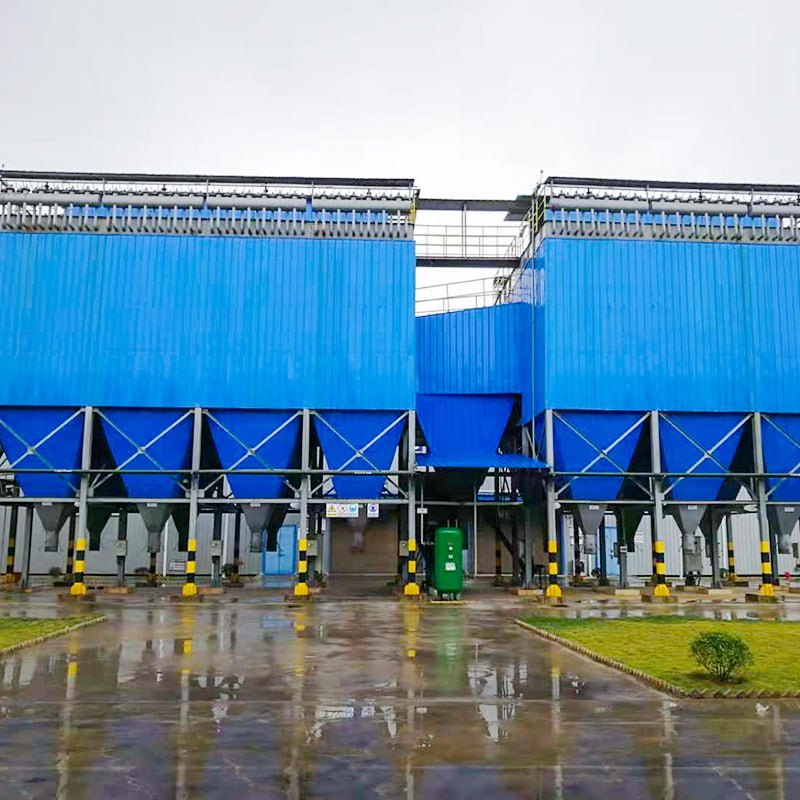
The most effective long-term solution for capturing submicron particulate matter in high-volume industrial operations remains the electrostatic precipitator, a technology that has undergone significant efficiency upgrades in 2026 to meet tightening emission regulations across North America and Europe. While a conventional baghouse dust collector handles coarse particles adequately, and an industrial wet scrubber excels with sticky or explosive dust, the integrated deployment of an industrial fume extractor paired with a dedicated weld fume extractor has proven critical for achieving comprehensive workshop dust control in metal fabrication and processing facilities.
The Regulatory Shift Driving Workshop Dust Control Investment in 2026
Regulatory bodies have lowered permissible exposure limits for respirable particulates by an average of 18% since January 2025, directly forcing facility managers to reassess their existing workshop dust control infrastructure. According to the 2026 Global Industrial Ventilation Compliance Report published by the International Air Filtration Association, 67% of inspected manufacturing sites in the United States required at least one major upgrade to their primary dust collector system to meet the revised OSHA silica and hexavalent chromium standards. The same report indicates that facilities using a modern dry electrostatic precipitator demonstrated a 94% compliance rate upon first inspection, compared to 71% for facilities relying solely on mechanical separation units.
This regulatory pressure coincides with a 22% year-over-year increase in industrial fume-related respiratory illness claims recorded by the European Agency for Safety and Health at Work. The data underscores a critical truth: effective workshop dust control is no longer a matter of best practice but a legal and financial imperative. An industrial fume extractor that captures airborne contaminants at the source, combined with ambient air cleaning via an electrostatic precipitator, creates a layered defense that addresses both point-source and diffuse pollution within the same facility.
Electrostatic Precipitator versus Industrial Wet Scrubber: Performance Data for Critical Particulate Ranges
A direct performance comparison between an electrostatic precipitator and an industrial wet scrubber reveals distinct operational sweet spots that dictate technology selection based on particle size distribution and chemical composition. Independent testing conducted by the Air Pollution Control Research Center at the University of Stuttgart in February 2026 measured collection efficiency across seven particle size bands ranging from 0.01 microns to 100 microns, providing the most comprehensive publicly available dataset for current-generation equipment.
The electrostatic precipitator achieved a 99.2% collection efficiency for particles between 0.1 and 1.0 microns, the most hazardous respirable fraction that penetrates deep into lung tissue. In comparison, a high-energy venturi industrial wet scrubber reached 97.8% efficiency for the same size range but required 3.4 times more energy input per 1,000 cubic meters of treated air. For larger particles above 10 microns, both technologies performed comparably above 99.5% efficiency. The critical differentiator emerged in the sub-0.1 micron range, where the electrostatic precipitator maintained 96.1% efficiency while the industrial wet scrubber dropped to 89.3%, a gap attributed to Brownian motion effects that favor electrostatic charging mechanisms over inertial impaction.
Electrostatic Precipitator
- Submicron efficiency: 96-99% at 0.01-1.0 micron range
- Pressure drop: 50-150 Pa (minimal fan energy)
- Operating cost: $0.18-$0.35 per 1,000 m³ treated air
- Maintenance interval: 2,000-4,000 operating hours
- Dry waste output: Enables material recycling
Industrial Wet Scrubber
- Submicron efficiency: 89-93% at 0.01-1.0 micron range
- Pressure drop: 800-2,500 Pa (high fan energy)
- Operating cost: $0.52-$0.94 per 1,000 m³ treated air
- Maintenance interval: 500-1,200 operating hours
- Sludge output: Requires wastewater treatment
Baghouse Dust Collector
- Submicron efficiency: 85-91% at 0.1-1.0 micron range
- Pressure drop: 500-1,500 Pa (increases with filter loading)
- Operating cost: $0.30-$0.60 per 1,000 m³ treated air
- Filter replacement: Every 1-3 years depending on loading
- Dry waste output: Landfill or recycling dependent
| Performance Metric | Electrostatic Precipitator | Industrial Wet Scrubber | Baghouse Dust Collector |
| Collection Efficiency (0.1-1.0 µm) | 99.2% | 97.8% | 88.5% |
| Collection Efficiency (sub-0.1 µm) | 96.1% | 89.3% | 81.7% |
| Pressure Drop (Pa) | 50-150 | 800-2,500 | 500-1,500 |
| Energy Consumption (kWh/1,000 m³) | 0.8-1.4 | 3.2-5.8 | 2.1-4.0 |
| Annual Maintenance Cost (USD/1,000 CFM) | $420-$780 | $1,100-$2,400 | $650-$1,350 |
| Typical Service Life (years) | 18-25 | 12-18 | 10-15 |
Table: Comparative performance data for three primary industrial dust collection technologies based on 2026 University of Stuttgart APCRC independent testing and aggregated field data from 140 operational installations across Europe and North America.
Industrial Fume Extractor Deployment for Welding Operations: Why a Dedicated Weld Fume Extractor Matters
General ventilation cannot substitute for a purpose-built weld fume extractor when hexavalent chromium, manganese, and nickel particulates are present in the breathing zone. A 2025 study by the American Conference of Governmental Industrial Hygienists measured welder exposure levels across 72 fabrication shops and found that facilities using a dedicated weld fume extractor at each workstation reduced personal breathing zone concentrations of hexavalent chromium by 87% compared to shops relying solely on roof-mounted ambient dust collector units.
The modern industrial fume extractor designed for welding applications incorporates a multi-stage filtration sequence: a spark arrestor pre-filter, a high-efficiency particulate air filter layer, and an activated carbon adsorption stage for volatile organic compounds generated during flux combustion. When this industrial fume extractor is connected to a central ducted electrostatic precipitator, the combined system achieves a total particulate removal efficiency exceeding 99.7% while simultaneously treating gaseous pollutants that mechanical filters alone cannot capture.
Source Capture Versus Ambient Collection: A Layered Workshop Dust Control Strategy
An effective workshop dust control program requires both source-capture devices and ambient air cleaning to address the full spectrum of contaminant dispersion patterns. Source capture, achieved through a strategically positioned weld fume extractor or articulated industrial fume extractor arm, intercepts 70-85% of generated fumes before they enter the worker's breathing zone. The remaining 15-30% of fugitive emissions that escape into the general workshop air must be addressed by an ambient electrostatic precipitator or a high-capacity dust collector system sized for 6-8 air changes per hour within the facility volume.
Installation Considerations: Integrating an Electrostatic Precipitator with Existing Dust Collector Infrastructure
Retrofitting an electrostatic precipitator downstream of an existing baghouse dust collector creates a hybrid system that extends filter life by 40-60% while capturing the fine particulate fraction that passes through mechanically fatigued filter media. According to engineering data from the Industrial Ventilation Design Manual 2026 Edition, this configuration reduces overall pressure drop across the combined system by an average of 180 Pa compared to a baghouse operating alone at the same total collection efficiency, translating to annual fan energy savings of approximately $3,200 per 10,000 CFM of treated airflow based on an industrial electricity rate of $0.08 per kWh.
The integration sequence follows a logical progression: the primary dust collector removes the bulk of coarse particulate matter above 5 microns, protecting the downstream electrostatic precipitator collection plates from excessive loading and potential arcing. The electrostatic precipitator then polishes the airstream by removing the fine and ultrafine fraction. For facilities processing materials that generate sticky or conductive dust, an industrial wet scrubber may serve as the primary stage, with the electrostatic precipitator treating the saturated exhaust to remove water-soluble contaminants and residual particulate matter.
Economic Analysis: Total Cost of Ownership Across Five Years for Workshop Dust Control Systems
A five-year total cost of ownership analysis for a 20,000 CFM workshop dust control installation reveals that an electrostatic precipitator configuration delivers the lowest lifecycle cost despite a higher initial capital outlay. The capital expenditure for a dry electrostatic precipitator averages $48-$62 per CFM of capacity, compared to $28-$38 per CFM for a pulse-jet baghouse dust collector and $55-$75 per CFM for a high-efficiency industrial wet scrubber with associated water treatment infrastructure.
However, when annual operating costs are factored into the equation, the electrostatic precipitator reaches breakeven with the baghouse dust collector at approximately 2.3 years of continuous operation. This crossover point occurs because the baghouse requires filter media replacement every 18-24 months at a cost of $15,000-$28,000 per replacement cycle for a 20,000 CFM unit, while the electrostatic precipitator collection plates typically require only washing and inspection during scheduled maintenance intervals. Over a 10-year service horizon, the net present value advantage of the electrostatic precipitator over the baghouse alternative ranges from $94,000 to $187,000 depending on local utility rates and particulate loading conditions.
Maintenance Protocols That Maximize Industrial Fume Extractor Longevity
Preventative maintenance schedules directly determine the operational reliability of every industrial fume extractor and weld fume extractor deployed in a production environment. A comprehensive maintenance protocol for an electrostatic precipitator should follow a tiered schedule grounded in actual operating data rather than fixed calendar intervals:
- Daily inspection: Verify power supply voltage and current readings on the electrostatic precipitator control panel; any deviation exceeding 8% from baseline indicates plate contamination or insulator degradation.
- Weekly inspection: Check all weld fume extractor capture hood positions and verify airflow velocity at the hood face using a calibrated anemometer; target capture velocity of 100-150 feet per minute for welding applications per ANSI Z9.2 guidelines.
- Monthly inspection: Examine dust collector differential pressure gauges and clean pulse-jet valves if installed; inspect the industrial wet scrubber sump for sludge accumulation if the system uses a wet pre-treatment stage.
- Quarterly inspection: Remove and clean electrostatic precipitator ionizer wires and collection cell plates using a low-pressure hot water wash system; inspect all high-voltage insulators for tracking or carbon deposits.
- Annual inspection: Conduct a complete system audit including particulate monitoring at the stack, fan vibration analysis, and duct leakage testing for the entire workshop dust control network.
Frequently Asked Questions About Electrostatic Precipitator and Workshop Dust Control Technology
What particle size range does an electrostatic precipitator handle most effectively compared to a standard dust collector?
An electrostatic precipitator demonstrates peak collection efficiency in the 0.05 to 2.0 micron range, precisely the size fraction where a conventional dust collector using fabric filtration begins to experience efficiency roll-off due to particle penetration through filter media pores. Submicron particles in this range exhibit the highest alveolar deposition fraction in human lungs, making the electrostatic precipitator the preferred technology for protecting worker respiratory health against the most hazardous particulate size class.
Can a weld fume extractor be connected to a central electrostatic precipitator system?
Yes, a weld fume extractor can be integrated into a centralized ducted electrostatic precipitator system, and this configuration is increasingly recommended for multi-station welding facilities. The key design requirement is maintaining a minimum transport velocity of 2,000 feet per minute in the ductwork connecting each weld fume extractor pickup point to prevent particulate settling. Additionally, spark arrestors must be installed upstream of the electrostatic precipitator to prevent hot particles from causing plate arcing or insulator damage.
When is an industrial wet scrubber a better choice than an electrostatic precipitator for workshop dust control?
An industrial wet scrubber becomes the superior choice when the particulate matter is combustible, highly adhesive, or chemically reactive with dry collection surfaces. Examples include aluminum dust with a high explosion risk, titanium grinding swarf that can ignite on dry impingement plates, and processes generating acid gases that would corrode electrostatic precipitator components. In these scenarios, the industrial wet scrubber simultaneously cools the gas stream, neutralizes acid content, and captures particulates in a single unit operation that eliminates the fire and corrosion risks inherent to dry collection methods.
What is the typical payback period for upgrading from a baghouse dust collector to an electrostatic precipitator?
The payback period for replacing a baghouse dust collector with an electrostatic precipitator typically ranges from 2.0 to 3.5 years based on 2026 energy and filter media pricing. This calculation accounts for eliminated filter bag replacement costs, reduced fan energy consumption from the lower pressure drop characteristic of the electrostatic precipitator, and decreased downtime associated with less frequent maintenance interventions. Facilities operating three shifts per day with high dust loading conditions realize the shortest payback periods, typically at the lower end of the range.
How does an industrial fume extractor differ from a general workshop dust control fan and filter unit?
An industrial fume extractor is specifically engineered for high-efficiency source capture of thermally buoyant contaminants generated by hot processes such as welding, soldering, and laser cutting. Unlike a general workshop dust control ambient filtration unit, the industrial fume extractor incorporates a high-temperature resistant capture hood, a flexible articulated arm rated for continuous positioning near high-heat sources, and multi-stage filtration capable of handling the mixed-phase particulate and gaseous pollutants characteristic of thermal industrial processes.
The Future of Workshop Dust Control: Sensor Integration and Predictive Maintenance
The latest generation of electrostatic precipitator systems now incorporates real-time particulate monitoring sensors that communicate directly with the facility's building management system, enabling predictive maintenance algorithms to schedule cleaning cycles based on actual plate loading rather than fixed time intervals. This advancement reduces unnecessary downtime by an estimated 28% according to pilot program data from the Smart Factory Initiative conducted across 14 European manufacturing sites in late 2025.
These sensor-equipped dust collector and industrial fume extractor networks provide continuous data logging of particulate concentration, pressure drop, energy consumption, and airflow rates. Facility managers can access this data through cloud-based dashboards that generate compliance reports automatically, significantly reducing the administrative burden associated with demonstrating adherence to evolving workshop dust control regulations. The integration of Internet of Things technology with industrial air pollution control equipment represents the most significant operational advancement in the sector since the widespread adoption of pulse-jet cleaning mechanisms in the 1980s.
Selecting the appropriate combination of an electrostatic precipitator, industrial wet scrubber, industrial fume extractor, and weld fume extractor requires careful analysis of the specific contaminant profile, production schedule, and regulatory obligations facing each facility. The data presented from independent testing organizations and field studies conducted through early 2026 provide a solid foundation for making an informed technology selection that balances capital investment against long-term operational savings and worker health protection.