 En
En
 English
  Français
  русский
  中文简体
中文简体  عربى
عربى  Español

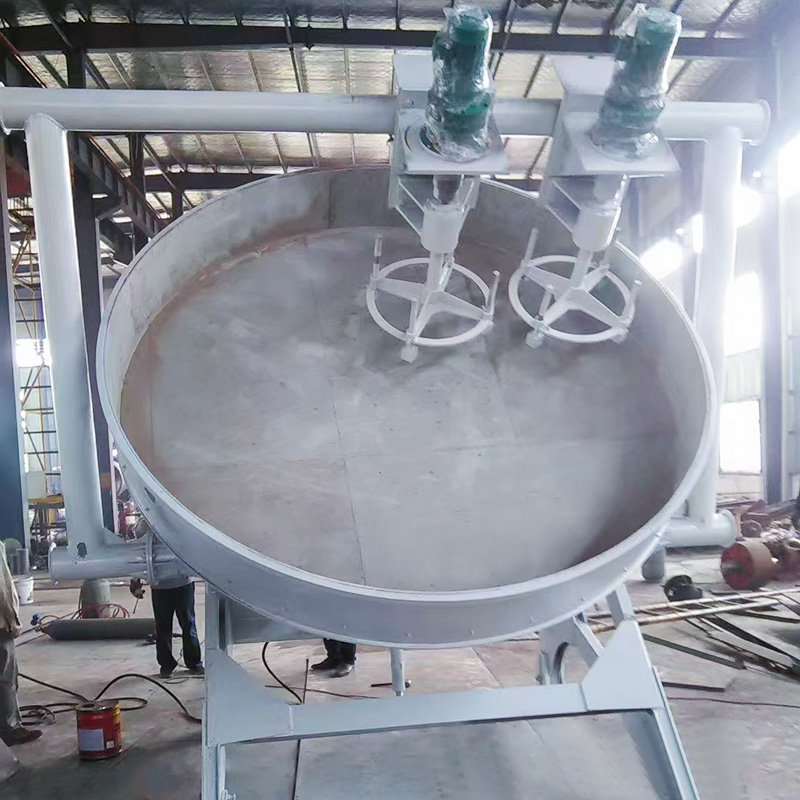
A fertilizer disc pelletizer works by rotating a tilted, shallow pan at a controlled angle and speed, causing moistened powder materials to roll and agglomerate into uniform spherical granules through a combination of centrifugal force, gravity, and surface tension. Also called a disc granulator or pan granulator, this machine is one of the most widely used granulation technologies in organic fertilizer, compound fertilizer, and NPK fertilizer production. It delivers granule uniformity rates of 90–95%, requires lower energy input than drum granulators, and allows real-time visual monitoring of the granulation process — making it a practical and cost-efficient choice for small to mid-scale fertilizer plants.
What Is a Fertilizer Disc Pelletizer and How Does It Differ from Other Granulators?
A fertilizer disc pelletizer is a wet granulation machine that uses an inclined rotating disc to convert powdered fertilizer materials into round, dense granules. Unlike drum granulators that operate as enclosed cylinders or extrusion granulators that force material through dies, the disc pelletizer operates as an open shallow pan — typically 1.0 m to 6.0 m in diameter — inclined at an angle between 40° and 55° to the horizontal.
As raw materials and a liquid binder (usually water or a liquid fertilizer solution) are fed onto the rotating disc, particles collide, layer, and grow progressively into granules. Because larger granules roll outward and discharge over the disc rim naturally, the disc granulator achieves a self-classifying effect — no additional screening is needed at the granulation stage for many applications.
The three key differences that distinguish a fertilizer disc pelletizer from competing technologies are:
- Open structure: The disc is fully visible, allowing operators to adjust moisture, feed rate, disc angle, and speed in real time without stopping production.
- Natural size classification: Granule size is controlled by the interplay of disc angle, speed, and moisture content, and oversized granules naturally discharge at the rim, reducing the recycle ratio.
- Lower capital and operating cost: A disc pelletizer for fertilizer typically costs 30–50% less to purchase and install than a comparable-capacity rotary drum granulator, and consumes significantly less power per ton of output.
| Granulator Type | Granule Shape | Uniformity Rate | Energy Use | Capital Cost | Best Application |
| Disc Pelletizer | Spherical | 90–95% | Low | Low–Medium | Organic / NPK / Small-Mid Scale |
| Rotary Drum Granulator | Spherical | 70–85% | Medium–High | High | Large-Scale Compound Fertilizer |
| Extrusion (Double Roller) Granulator | Pillow / Oval | 85–92% | Medium | Medium | Dry Granulation / No-Drying Lines |
| Flat Die Pellet Mill | Cylindrical | 95–99% | Medium | Low–Medium | Organic Fertilizer / Biomass |
| Spray Drying Granulator | Hollow Sphere | 95%+ | Very High | Very High | Water-Soluble Fertilizers |
Table 1: Comparison of fertilizer disc pelletizer against other common granulation technologies.
How Does a Disc Pelletizer for Fertilizer Production Actually Work?
The working principle of a fertilizer disc pelletizer relies on three simultaneous physical forces — centrifugal force, gravity, and particle adhesion — to progressively build spherical granules from fine powder.
Here is a step-by-step breakdown of the granulation process inside a disc granulator machine:
Step 1: Material Feeding
Powdered raw materials — which may include ammonium sulfate, urea, potassium chloride, superphosphate, organic matter, or compound fertilizer blends — are fed continuously onto the rotating disc via a belt conveyor or screw feeder. Feed rate is typically controlled to maintain a stable material bed depth of 10–25 cm on the disc surface.
Step 2: Binder Spraying
A liquid binder — most commonly water, a dilute molasses solution, or a liquid fertilizer — is sprayed uniformly onto the material bed through nozzles positioned above the disc. Moisture content is the most critical control variable: most fertilizer formulations granulate optimally at 10–15% moisture content by weight. Too little moisture produces dusty, friable granules; too much causes over-agglomeration and clumping.
Step 3: Rolling and Agglomeration
As the disc rotates, materials tumble continuously. Fine particles adhere to moist seed granules and progressively layer outward in a snowball effect. The combined action of centrifugal force (pushing particles outward) and gravity (pulling particles back down the inclined disc surface) creates a circular rolling motion that compacts and rounds each growing granule. Disc rotation speeds for fertilizer pan granulators typically range from 10 to 20 RPM, depending on disc diameter.
Step 4: Natural Classification and Discharge
As granules reach their target size — typically 2–5 mm in diameter for standard fertilizer applications — their increased mass causes them to migrate toward the outer edge of the disc and discharge over the rim by gravity into a collection chute. Undersized particles remain on the disc for further layering. This self-classifying behavior is one of the most valuable operational advantages of the disc pelletizer design.
Step 5: Post-Granulation Processing
Granules discharged from the disc still contain residual moisture and require drying in a rotary dryer to reduce moisture to below 2% for stable storage and handling. After drying, a cooling step and a screening step separate on-size product from any oversized or undersized fractions, which are returned to the process as recycle material.
Which Key Parameters Determine the Performance of a Fertilizer Disc Pelletizer?
Four parameters govern virtually all performance outcomes of a disc granulator: disc diameter, inclination angle, rotational speed, and edge height. Getting these right for your specific formula is essential to achieving consistent granule quality and high throughput.
Disc Diameter
Disc diameter directly determines production capacity. Common sizes range from 1.0 m to 6.0 m. A 1.5 m disc pelletizer typically handles 0.3–0.6 tonnes per hour (tph), while a 4.5 m disc granulator can process 8–15 tph. For commercial fertilizer plants targeting 20,000–50,000 tonnes annual output, two or three parallel 4.0 m disc pelletizers are a common configuration.
Inclination Angle
The disc angle is adjustable, typically between 40° and 55°. A steeper angle (closer to 55°) shortens the material residence time and produces smaller granules; a shallower angle (closer to 40°) increases residence time and favors larger granule formation. Most operators run between 45° and 50° as a starting point and adjust based on granule size feedback.
Rotational Speed
Speed affects the centrifugal-to-gravity force ratio acting on granules. Too fast and particles are thrown to the wall without rolling; too slow and granules fail to form. The optimal operating speed for a fertilizer disc pelletizer is approximately 60–80% of the critical speed — the speed at which centrifugal force would exactly balance gravity. For a 3.0 m disc, this corresponds to roughly 13–16 RPM.
Edge Height (Side Wall Height)
The height of the disc rim determines how deep the material bed can accumulate. Standard edge heights range from 200 mm to 450 mm. A deeper bed increases residence time and can help form larger, denser granules. The edge height is usually fixed at manufacture but can be adjusted by welding or bolting extension rings on some models.
| Disc Diameter | Capacity (tph) | Motor Power (kW) | Typical Speed (RPM) | Suitable Scale |
| 1.0 m | 0.1–0.3 | 1.5–2.2 | 22–28 | Lab / Pilot |
| 1.5 m | 0.3–0.6 | 3–5.5 | 18–24 | Small Farm / Startup |
| 2.0 m | 0.6–1.2 | 5.5–7.5 | 16–21 | Small Commercial |
| 3.0 m | 2.0–5.0 | 11–15 | 13–17 | Mid-Scale Plant |
| 4.5 m | 8.0–15.0 | 22–30 | 10–14 | Large Commercial Plant |
| 6.0 m | 15.0–25.0 | 37–55 | 8–12 | Industrial Scale |
Table 2: Fertilizer disc pelletizer capacity and power specifications by disc diameter.
What Raw Materials Are Suitable for a Fertilizer Disc Pelletizer?
A disc pelletizer for fertilizer is highly versatile and can process a wide range of organic, inorganic, and compound fertilizer raw materials, provided the feed is in fine powder form with particle size below 2 mm.
Suitable raw materials include:
- Organic materials: Composted animal manure (chicken, cow, pig, sheep), vermicompost, municipal sludge, biogas residue, humic acid powder, seaweed meal, and fish meal.
- Nitrogen sources: Urea (ground), ammonium sulfate, ammonium bicarbonate, ammonium chloride.
- Phosphorus sources: Single superphosphate (SSP), triple superphosphate (TSP), monoammonium phosphate (MAP), diammonium phosphate (DAP).
- Potassium sources: Potassium chloride (MOP), potassium sulfate (SOP).
- Compound fertilizer blends: Pre-mixed NPK powders for custom fertilizer formulas targeting specific crop or soil requirements.
- Soil conditioners and micronutrients: Bentonite, zeolite, dolomite, zinc sulfate, boron powder, chelated micronutrient blends.
Materials that are not suitable for disc pelletization without preprocessing include fibrous materials (raw straw, wood chips), materials with moisture above 30%, and highly viscous or sticky materials that would adhere to the disc surface and cause build-up. In such cases, a pre-drying or pre-crushing step is required before feeding into the disc granulator.
Why Is the Disc Pelletizer a Preferred Choice for Organic Fertilizer Production?
The disc pelletizer is the dominant granulation machine in organic fertilizer plants globally because it handles high-moisture, variable-composition organic materials more flexibly than any other granulator type.
Organic fertilizer raw materials — such as fermented animal manures and composted agricultural wastes — vary significantly in density, moisture content, and particle size between batches. The open disc design allows operators to immediately observe granule formation and make real-time corrections to water spray rate and disc speed, something that is impossible with an enclosed drum granulator. This operational flexibility translates directly into higher first-pass granule yield and less recycle material.
Additionally, the organic fertilizer disc pelletizer operates at relatively low temperatures (no heat required during granulation), which is critical for preserving beneficial microorganisms — such as Bacillus subtilis and mycorrhizal fungi — that are increasingly incorporated into biological fertilizer products. Studies show that bio-fertilizer populations can be reduced by up to 80% during high-temperature drying, but the granulation stage itself in a disc pelletizer introduces no harmful heat.
For organic fertilizer lines with capacities of 5,000 to 30,000 tonnes per year — which represents the majority of standalone organic fertilizer operations — a 2.5 m to 3.5 m disc pelletizer for organic fertilizer typically offers the optimal balance of throughput, granule quality, and equipment investment.
How to Choose the Right Fertilizer Disc Pelletizer for Your Plant
Selecting the correct disc pelletizer requires matching five key variables: required output capacity, raw material type and moisture, target granule size, available floor space, and budget.
1. Calculate Required Capacity First
Start with your annual production target and work backward. A plant targeting 10,000 tonnes per year running two 8-hour shifts, 300 days per year, needs approximately 2.1 tph of granulation capacity. Add a 20–25% buffer for planned maintenance and process variability, bringing the requirement to roughly 2.5–2.7 tph — comfortably served by a single 3.0 m disc pelletizer or two 2.0 m units in parallel.
2. Match Material Properties to Machine Specifications
High-moisture organic materials (above 20% moisture) require stainless steel disc surfaces and anti-stick coatings to prevent material build-up. For highly abrasive mineral fertilizer powders such as phosphate rock or potassium sulfate, select a disc pelletizer with wear-resistant liner plates (typically manganese steel or ceramic-coated) to extend service life and reduce maintenance intervals.
3. Define Your Target Granule Size Range
Most agricultural fertilizer markets require granules in the 2–4 mm range. However, specialty markets — such as slow-release fertilizers, fertigation-grade products, or export fertilizers — may require tighter tolerances of 3–5 mm. Your disc pelletizer supplier should be able to confirm achievable size distribution curves based on your specific material formulation.
4. Evaluate Drive System and Control Options
Modern fertilizer disc pelletizers come with either fixed-speed or variable frequency drive (VFD) motors. VFD-equipped machines offer continuous speed adjustment from the control panel, enabling precise granule size tuning without stopping the machine. Although VFD-equipped units carry a 15–25% higher upfront cost, they significantly reduce the learning curve for new operators and improve granule consistency across batches.
5. Assess Structural Build Quality
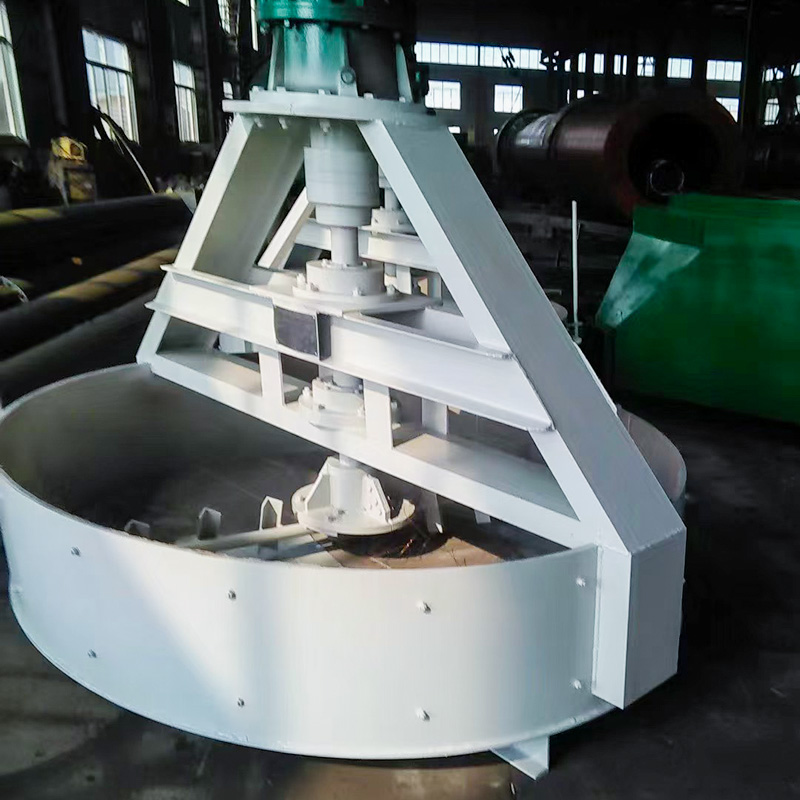
The disc support structure, drive shaft, and gearbox are the three most wear-prone components in a pan granulator. Key quality indicators include:
- Disc made from 6–10 mm thick steel plate with reinforced ribs (thinner discs warp under continuous load)
- Drive shaft supported by sealed spherical roller bearings rated for the disc's radial and axial loads
- Worm-gear or helical gearbox with at least a 2-year warranty on gear wear
- Full-length scraper blade assembly to prevent material build-up on the disc surface
What Does a Complete Fertilizer Disc Pelletizer Production Line Include?
A disc pelletizer is always deployed as part of a multi-stage production line; the granulator itself accounts for only 15–25% of the total equipment investment in a complete fertilizer plant.
A standard fertilizer disc pelletizer production line consists of the following unit operations in sequence:
| Stage | Equipment | Purpose | Key Specification |
| 1. Pre-Processing | Crusher / Hammer Mill | Reduce raw material to below 2 mm | Output fineness: 80–120 mesh |
| 2. Batching | Automatic Batching System | Weigh and proportion formula components | Accuracy: ±0.2% |
| 3. Mixing | Horizontal Ribbon Mixer | Homogenize blended powder | Mix uniformity: CV below 5% |
| 4. Granulation | Disc Pelletizer | Form spherical granules | Granule size: 2–5 mm, uniformity 90–95% |
| 5. Drying | Rotary Drum Dryer | Reduce moisture to below 2% | Inlet temp: 120–180°C |
| 6. Cooling | Rotary Drum Cooler | Reduce granule temp to near ambient | Output temp: below 40°C |
| 7. Screening | Rotary Drum Screen | Separate on-size, over-size, and fines | On-size yield: 85–95% |
| 8. Coating (Optional) | Coating Machine | Apply anti-caking or slow-release coating | Coating rate: 1–5% by weight |
| 9. Packaging | Auto Bagging Machine | Fill, seal, and palletize bags | Bag size: 25 kg or 50 kg |
Table 3: Equipment stages in a complete fertilizer disc pelletizer production line.
How to Maintain a Fertilizer Disc Pelletizer for Long-Term Reliability
Proper daily and periodic maintenance of a disc granulator can extend its service life beyond 10 years and reduce unplanned downtime by more than 60%.
Follow this structured maintenance schedule:
- Daily: Inspect scraper blade clearance (should be 1–3 mm from disc surface); clear any material build-up on the disc edge; check spray nozzle operation; listen for unusual bearing noise.
- Weekly: Lubricate all bearing housings per manufacturer specification; check gearbox oil level; inspect disc liner plates for wear and tighten any loose bolts.
- Monthly: Verify disc angle alignment; replace worn scraper blades; check drive belt or chain tension; inspect motor mounting bolts and electrical connections.
- Annually: Full gearbox oil change; replace main shaft seals; non-destructive testing (NDT) of disc weld seams; calibrate angle adjustment mechanism; inspect and re-torque all structural bolts.
The most common maintenance issue in fertilizer disc pelletizers is material build-up on the disc surface, which occurs when moisture content is too high or when the scraper blade wears out. A worn scraper blade should be replaced immediately — operating with inadequate scraping causes rapid build-up that can change effective disc diameter by up to 15%, distorting granule size and reducing output.
Frequently Asked Questions About Fertilizer Disc Pelletizers
Q: What is the difference between a disc pelletizer and a pan granulator?
They are the same machine. Disc pelletizer, disc granulator, and pan granulator are all common names for the same inclined rotating disc granulation technology. The terminology varies by region and application — pan granulator is more common in the ceramic and mining industries, while disc pelletizer and disc granulator are the standard terms in fertilizer manufacturing.
Q: Can a disc pelletizer granulate urea directly?
Granulating pure urea in a disc pelletizer is technically possible but requires significant care. Urea is highly hygroscopic and its granulation window (optimal moisture for granule formation without dissolution) is very narrow. Most commercial urea granulation uses prilling towers or fluid bed granulators for large-scale production. For NPK blends containing urea, the disc pelletizer works well when urea is pre-mixed with other components that provide structural support to the granule matrix.
Q: What granule size can a fertilizer disc pelletizer produce?
A standard fertilizer disc pelletizer produces granules in the range of 1 mm to 8 mm, depending on disc parameters and material properties. The most common target range for agricultural fertilizers is 2–5 mm. Granule size is adjusted by changing the disc inclination angle, rotational speed, and moisture spray rate — making the disc granulator one of the most adjustable granulation technologies available.
Q: How much does a fertilizer disc pelletizer cost?
Pricing varies widely by disc diameter, material specification, and country of manufacture. As a general reference, a 1.5 m disc pelletizer for small-scale organic fertilizer production typically costs USD 2,000–5,000; a 3.0 m industrial disc granulator ranges from USD 8,000–18,000; and a 5.0 m large-scale unit can reach USD 30,000–60,000 FOB. These figures do not include freight, installation, or auxiliary equipment for the complete production line.
Q: What is the recycle ratio in disc pelletizer granulation?
The recycle ratio represents the proportion of material returned to the granulation stage after screening — typically including undersized and oversized fractions that are crushed and re-fed. For a well-optimized disc pelletizer fertilizer production line, the recycle ratio should be between 20% and 40%. A recycle ratio exceeding 50% indicates a process problem — commonly excessive moisture, incorrect disc angle, or an unsuitable binder — that should be diagnosed and corrected to improve line efficiency.
Q: Is a disc pelletizer suitable for slow-release fertilizer production?
Yes. The disc pelletizer is well-suited to producing the substrate granules used in slow-release fertilizer products. After granulation and drying, granules are coated with a polymer, sulfur, or resin coating in a separate coating drum to achieve the desired nutrient release profile. The spherical shape and smooth surface produced by disc pelletization are ideal for uniform coating adhesion, which is critical to consistent slow-release performance.
Summary: Key Takeaways for Choosing and Operating a Fertilizer Disc Pelletizer
The fertilizer disc pelletizer remains one of the most practical, cost-effective, and operator-friendly granulation solutions in the fertilizer industry. Its open design enables real-time process control, its self-classifying granule discharge reduces screening load, and its flexibility across diverse raw material types makes it equally valuable in organic fertilizer, compound NPK, and specialty fertilizer production.
To summarize the key decision points:
- Select disc diameter based on your required hourly throughput, adding a 20–25% design buffer for operational flexibility
- Choose piston or bag-in-bottle mechanism based on formula chemistry — apply the same material compatibility logic to disc surface and liner material selection
- Verify material moisture content before commissioning; maintain 10–15% moisture at the granulation stage for most formulas
- Invest in VFD-equipped drive systems for production lines running multiple formulations or requiring tight granule size control
- Budget for the full production line — the disc pelletizer is the heart of the system, but dryer, cooler, screener, and packaging equipment represent the majority of total capital expenditure
- Implement a preventive maintenance schedule from day one, paying particular attention to scraper blade condition, bearing lubrication, and gearbox oil levels
With the right disc granulator specification and a properly designed supporting production line, fertilizer producers can achieve consistent granule quality, low operating costs, and the production flexibility needed to respond to evolving market demand.