 En
En
 English
  Français
  русский
  中文简体
中文简体  عربى
عربى  Español

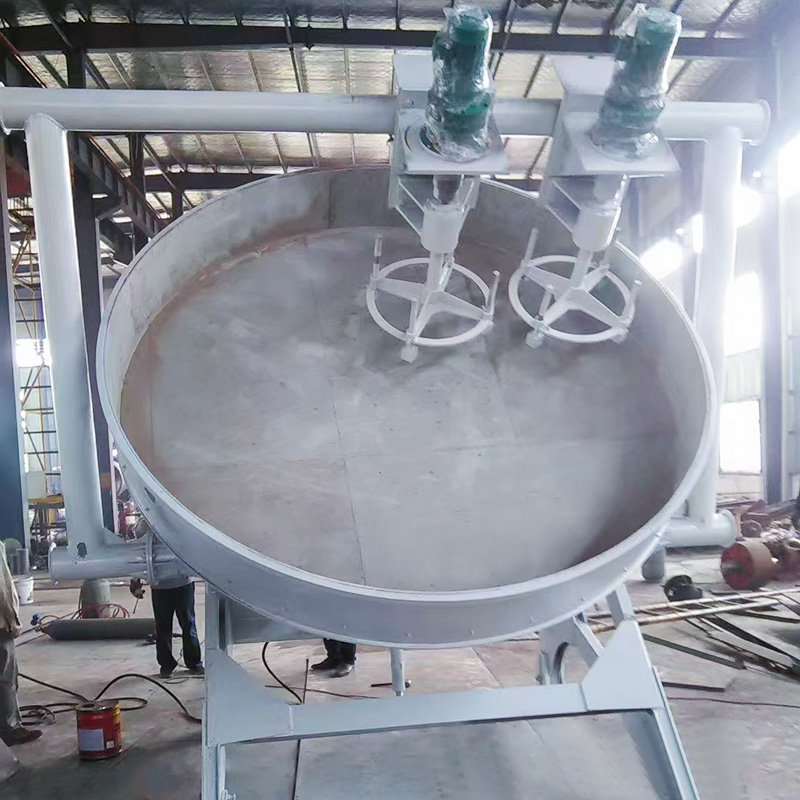
The disc pelletizer — also known as a pan granulator or disc granulator — is one of the most versatile agglomeration machines in industrial manufacturing today. Its primary applications span fertilizer production, iron ore processing, chemical granulation, and waste recycling, making it indispensable across dozens of sectors worldwide. With a global pelletizing equipment market valued at over USD 680 million in 2023 and projected to grow at a CAGR of 5.4% through 2030, understanding where and how to deploy a disc pelletizer correctly is a critical business decision.
How Does a Disc Pelletizer Work and Why Is It So Widely Used?
A disc pelletizer works by rotating a shallow, inclined pan at controlled speed while liquid binder is sprayed onto fine powder feedstock, causing particles to nucleate and grow into uniform spherical pellets. The angle of inclination (typically 40°–55°), rotational speed (5–20 rpm), and moisture content are the three primary variables operators adjust to control pellet size and density.
Compared to drum granulators and pressure roll compactors, the disc pelletizer offers a unique self-classifying action: smaller nuclei remain at the bottom of the disc while fully grown pellets discharge over the rim automatically. This eliminates the need for separate screening equipment in many operations, reducing capital expenditure by up to 15–25% in greenfield projects.
| Feature | Disc Pelletizer | Drum Granulator | Pressure Roll Compactor |
| Pellet Shape | Near-spherical | Irregular | Irregular / slab |
| Size Uniformity | High (CV < 10%) | Medium | Low |
| Self-Classification | Yes | No | No |
| Moisture Sensitivity | Medium | Medium | Low |
| Capital Cost (relative) | Low–Medium | Medium–High | High |
| Typical Throughput | 0.5–50 t/h | 2–100 t/h | 1–60 t/h |
Table 1: Comparison of disc pelletizer versus competing granulation technologies across key performance parameters.
Which Industries Rely Most Heavily on Disc Pelletizer Applications?
The five sectors with the highest commercial dependence on disc pelletizer technology are fertilizer manufacturing, iron ore pelletizing, cement and lime production, chemical processing, and solid waste recycling. Each industry exploits different aspects of the machine's capabilities, from precise size control to high-throughput continuous operation.
1. Fertilizer Manufacturing: The Largest Application Segment
Disc pelletizers account for roughly 38% of all granulation equipment installed in compound fertilizer plants globally. In NPK (nitrogen-phosphorus-potassium) fertilizer lines, the disc pelletizer converts powdered raw materials — including ammonium sulfate, urea, single superphosphate, and muriate of potash — into free-flowing, dust-free granules between 2–5 mm in diameter.
Key advantages in this segment include:
- Flexible formulation switching: Operators can change binder ratios and pan angles between batches without major mechanical reconfiguration, enabling production of 10+ different NPK grades on a single machine.
- Organic-mineral blends: Disc pelletizers handle sticky, moisture-rich organic materials — such as composted manure or biosolids — that would clog drum granulators. Organic fertilizer plants processing 20–80 t/h routinely use 3–5 m diameter discs.
- Slow-release coatings: After pelletization, the spherical pellets produced by disc pelletizers accept polymer or sulfur coatings more uniformly than irregular granules, improving controlled-release performance by up to 30%.
2. Iron Ore Pelletizing: High-Tonnage Heavy Industry
In the steel industry, disc pelletizers transform fine iron ore concentrate (typically < 0.15 mm particle size) into indurated pellets of 9–16 mm, which are the preferred blast furnace and DRI (direct reduced iron) feed material.
A single large-scale iron ore disc pelletizer — with disc diameters reaching 7.5 m — can produce 120–140 tonnes of green pellets per hour. These green pellets then pass through a travelling grate or rotary kiln for thermal hardening, achieving compressive strengths above 200 N/pellet. The disc pelletizer's continuous discharge mechanism is critical here because even 30-second residence time deviations affect pellet diameter distribution and, consequently, blast furnace permeability.
The global iron ore pellet market exceeded 500 million tonnes in 2023, with disc pelletizers being the dominant forming technology in North America, South America, and India, while drum pelletizers are more common in certain European installations.
3. Cement, Lime, and Construction Materials
Disc pelletizers are widely used in cement and lime plants to pelletize kiln dust, fly ash, and raw meal, preventing airborne dust emissions and improving material handling efficiency by 40–60%.
Specific applications include:
- Cement kiln dust (CKD) pelletizing: CKD generated at 10–30 kg per tonne of clinker can be reintroduced into the kiln as pellets, recovering alkalis and reducing raw material costs by 3–8%.
- Lightweight aggregate production: Fly ash and bottom ash from power stations are pelletized with cement binder to produce lightweight aggregates (LWA) with bulk densities of 600–900 kg/m³, used in structural concrete.
- Soil amendment pellets: Agricultural lime (CaCO₃) and dolomite powders are pelletized for easier spreading, reducing dust losses from 15% in powder form to under 2%.
4. Chemical and Pharmaceutical Processing
Chemical manufacturers deploy disc pelletizers for granulating catalysts, detergent powders, pigments, and specialty chemicals where precise, narrow particle size distribution is non-negotiable.
In catalyst manufacturing, for example, alumina or silica carriers must be formed into pellets of 3–6 mm ± 0.3 mm to ensure uniform pressure drop and reactant contact time in fixed-bed reactors. Disc pelletizers equipped with variable-frequency drives (VFDs) and automated moisture dosing systems can maintain this tolerance at throughputs of 500 kg/h to 5 t/h.
Detergent powder pelletizing is another significant niche: converting spray-dried base powder into denser granules (bulk density increasing from ~350 g/L to ~700 g/L) reduces packaging volume and improves dosing accuracy for consumers.
5. Waste Recycling and Environmental Applications
Environmental regulations are driving rapid growth in disc pelletizer applications for waste treatment, with municipal solid waste (MSW) fines, sewage sludge, and mine tailings increasingly processed into pellets for safer handling and resource recovery.
In sewage sludge processing, dewatered sludge at 20–35% dry solids content can be mixed with lime or clay and pelletized using a disc pelletizer, producing pellets suitable for landfill covering, mine reclamation, or — after pathogen testing — agricultural application. Plants handling 50,000–200,000 tonnes/year of wet sludge have reported reductions in transportation costs of over 40% after converting to pellet output due to higher bulk density and improved load consolidation.
How to Select the Right Disc Pelletizer for Your Application
Selecting the optimal disc pelletizer requires matching five core parameters — disc diameter, inclination angle, rotational speed, binder system, and material moisture — to your specific feedstock characteristics and production targets.
| Parameter | Typical Range | Effect on Pellet Quality | Recommended Setting (General Use) |
| Disc Diameter | 0.6 m – 7.5 m | Controls capacity (t/h) | Size to 80% of max capacity target |
| Inclination Angle | 40° – 55° | Steeper = smaller pellets, faster discharge | 45° – 50° |
| Rotational Speed | 5 – 20 rpm | Higher speed = denser, harder pellets | 50–75% of critical speed |
| Feed Moisture | 8% – 20% w/w | Too wet = oversized, sticky; too dry = fines | 10% – 14% (material-dependent) |
| Rim Height | 10% – 20% of diameter | Taller rim = larger average pellet size | Adjustable; start at 15% |
Table 2: Key operating parameters for disc pelletizer selection and their influence on output quality.
Binder Selection for Different Applications
The binder system is the single most influential factor in determining final pellet strength, and each industry uses fundamentally different binder chemistries.
- Bentonite clay (0.5–1.5% by weight): Standard in iron ore pelletizing; provides green strength but adds silica impurities to the fired pellet.
- Carboxymethyl cellulose (CMC) (0.05–0.3%): Organic binder used when silica contamination is unacceptable; decomposes cleanly during sintering.
- Molasses (2–5%): Low-cost binder for fertilizer and agricultural pellets; adds minor nutritional value.
- Sodium silicate / waterglass (1–4%): Used in chemical and catalyst pelletizing for high initial wet strength.
- Cement or lime (3–8%): Self-hardening binders for construction waste or sludge pellets that cure without a separate drying step.
Why Proper Maintenance of Your Disc Pelletizer Directly Impacts Production Output
Neglecting disc pelletizer maintenance causes pellet size drift, unplanned downtime, and reduced disc lifespan — with repair costs that can reach USD 50,000–200,000 per major incident. A structured preventive maintenance (PM) schedule is essential.
Critical Maintenance Checkpoints
- Disc surface wear (daily): Material build-up on the disc pan alters the effective pan depth, shifting pellet residence time. Scraper blade clearance should remain at 2–5 mm; adjust or replace blades weekly in abrasive applications.
- Drive gear and trunnion lubrication (weekly): Insufficient lubrication is responsible for an estimated 65% of unplanned stoppages in disc pelletizer operations. Use high-viscosity EP (extreme pressure) grease conforming to NLGI Grade 2 or higher.
- Spray nozzle inspection (daily): Blocked binder nozzles are the #1 cause of moisture non-uniformity and must be cleared or replaced at first sign of partial blockage.
- Structural bolt torque check (monthly): Disc vibration loosens fasteners over time; re-torque to OEM specifications to prevent pan misalignment.
- Full overhaul (annually): Inspect and replace rim liner, disc backing plate, and bearing seals. Estimated downtime: 3–5 days for a 4 m disc.
What New Technologies Are Transforming Disc Pelletizer Performance?
The integration of IoT sensors, machine learning process control, and advanced wear-resistant alloys is delivering 15–30% productivity gains in next-generation disc pelletizer installations.
Smart Process Control
Modern disc pelletizer installations increasingly incorporate real-time particle size analyzers (using laser diffraction or machine vision cameras) mounted at the disc discharge. These feed size data back to PLC-controlled binder spray valves and VFD-driven rotation motors, closing the loop in under 15 seconds. Early adopters in the iron ore sector report pellet size standard deviation reductions of up to 35% versus manual operation.
Advanced Liner Materials
Traditional mild steel disc liners in iron ore applications wear out every 4–6 months, causing production interruptions. New chromium carbide overlay (CCO) liners and ceramic composite tiles are extending service intervals to 18–24 months, dramatically reducing total cost of ownership despite a 2–3× higher initial material cost.
Energy Efficiency Improvements
Variable-frequency drives (VFDs) on disc pelletizer motors reduce energy consumption by 18–22% compared to direct-on-line starters by matching motor output to actual load. In a 30 t/h fertilizer plant operating 8,000 hours/year, this translates to savings of approximately USD 12,000–18,000 per year at industrial electricity rates.
Frequently Asked Questions About Disc Pelletizer Applications
Q1: What is the typical output pellet size range of a disc pelletizer?
Most disc pelletizers produce pellets in the range of 1–30 mm, with the majority of industrial applications targeting 3–16 mm. Pellet size is controlled primarily by disc inclination, speed, and moisture content. Dedicated micro-pelletizing disc systems can produce pellets down to 0.5 mm for pharmaceutical and specialty chemical use.
Q2: Can a disc pelletizer process materials with high clay or moisture content?
Yes, but with limitations. Feed moisture above 20–22% typically causes over-agglomeration and disc coating. For high-moisture materials such as sewage sludge or filter cake, pre-drying to 15–18% moisture or blending with dry carrier materials (e.g., sawdust, dry compost) is recommended before feeding to the disc pelletizer.
Q3: What is the disc pelletizer capacity range for commercial operations?
Commercial disc pelletizers range from 0.1 t/h (laboratory scale, 0.6 m disc) to over 140 t/h (heavy industrial, 7.5 m disc). For fertilizer plants, the most common installation size is 2.5–4 m in diameter, handling 5–30 t/h. Multiple discs operating in parallel are standard in high-capacity iron ore and fertilizer facilities.
Q4: How does a disc pelletizer differ from an extruder for pellet production?
Disc pelletizers form pellets through wet agglomeration (layering of fine particles around a nucleus), while extruders force material through a die to produce cylindrical pellets. Disc pelletizers yield spherical pellets with a wide size range and excel with mineral, fertilizer, and ore feedstocks. Extruders are preferred for plastic, animal feed, and biomass applications where a cylindrical shape or specific density is required. Disc pelletizers generally have lower capital and operating costs for mineral processing applications.
Q5: What is the typical return on investment (ROI) period for a disc pelletizer installation?
ROI varies significantly by application. In fertilizer production, disc pelletizer installations typically achieve payback in 18–36 months through improved product value (granular fertilizer sells at 20–40% premium over powder), reduced dust losses, and lower packaging costs. In iron ore processing, the premium for pellet feed over lump ore of USD 30–60 per tonne in recent years has driven ROI periods well under 24 months for new pellet plant investments.
Q6: Does disc pelletizer application work for biomass or coal dust?
Disc pelletizers can process coal fines and biomass dust, but specialized considerations apply. Coal slurry pelletizing typically uses starch or bitumen emulsion as binder at 1–3% addition rate, producing pellets used in coal power plants and coking operations. However, for biomass (sawdust, agricultural residues), ring-die pellet mills or flat-die presses are more commonly used due to the fibrous nature of the material, which responds better to compressive forming than wet agglomeration.
Conclusion: Why the Disc Pelletizer Remains a Cornerstone of Industrial Processing
The application of disc pelletizer technology continues to expand precisely because it solves a fundamental industrial problem: converting fine, dusty, or difficult-to-handle powders into uniform, strong, free-flowing pellets that are easier to transport, process, and sell at higher value. Whether you are producing NPK fertilizers in Southeast Asia, iron ore pellets in Brazil, catalyst carriers in Germany, or recycled aggregate in the United States, the disc pelletizer offers a well-proven, cost-effective granulation pathway.
As the technology evolves with IoT integration, advanced wear materials, and closed-loop process control, the performance gap between legacy drum granulators and modern smart disc pelletizers will continue to widen. For new plant investments in 2024 and beyond, specifying a variable-speed disc pelletizer with integrated particle size feedback is the recommended standard for any application where pellet uniformity is commercially critical.
With the right binder system, properly sized disc, and a disciplined preventive maintenance program, a quality disc pelletizer installation will deliver 20+ years of reliable production — making it one of the highest-ROI capital equipment investments available in mineral and agro-chemical processing today.