 En
 English
 Français
 русский
 中文简体
 عربى
 Español


An industrial dust collector works by pulling dusty air out of a process, separating the particles from that air, storing them as dry solids, and returning clean air to the building or to atmosphere. The whole system runs under negative pressure: the fan sits downstream of the filter, so every hood, duct joint and inspection door is held tight by the pressure difference instead of being blown open by it.
Four blocks do the actual work — a capture hood at the dust source, ductwork that carries the dust-laden air, a collector body that separates particles from air, and a fan plus discharge device that keeps the loop running. Everything else, including filter media, cleaning mechanism and controls, exists to keep those four blocks in balance.
What an Industrial Dust Collector Actually Is
An industrial dust collector is a fixed separation system sized on volumetric airflow, usually cubic metres per hour, not on the suction power of a workshop vacuum. A unit serving a crushing stage or a granulation line commonly handles 5,000 to 100,000 m³/h and runs continuously for years, which is why the design conversation starts with air volume and dust load rather than with motor size.
Performance is judged by three numbers: capture efficiency at the hood, meaning whether dust is intercepted before it escapes into the building; outlet concentration, commonly specified somewhere between 10 and 30 mg/m³ depending on local rules; and pressure drop across the filter, typically 800–1,500 Pa for a pulse-jet baghouse. If any one of those drifts, the symptom shows up somewhere else in the plant — as visible dust on beams, as a fan running hot, or as a hopper that keeps bridging.
The Five Stages of the Working Cycle
1. Capture at the Hood
Efficiency is won or lost here. Air has to arrive at the dust source quickly enough to overcome the particles' own momentum, which for fine mineral or fertilizer dust means a capture velocity of roughly 0.5–1.0 m/s at the hood face. Enclosing the transfer point — a belt discharge, a crusher outlet, a bagging spout — usually costs far less than doubling airflow, because capture velocity falls off sharply with distance. Moving a plain open hood from 200 mm to 400 mm away from the source can require several times the air volume to do the same job.
2. Convey Through the Ductwork
Captured dust has to stay airborne all the way to the filter. Duct velocities are selected for exactly that: about 18–20 m/s for mineral dust and 12–15 m/s for light fumes. Below the transport velocity, particles settle in horizontal runs and elbows and the duct slowly plugs. Well above it, abrasion at bends and fan power consumption climb quickly, so a sound design uses the lowest velocity that still keeps material moving.
3. Separate the Particles
In a baghouse or cartridge unit, the filter media does not do all the filtering. Within minutes of start-up a dust cake builds on the media surface, and that cake — not the fabric — becomes the primary filter layer. It is why a new collector often performs better after a day of operation than in its first hour, and why pre-coating with a sacrificial powder is used when process dust is sticky or oily.
4. Clean the Filter
Cleaning happens while the collector keeps running. A pulse-jet system fires short compressed-air pulses, typically 0.2–0.6 MPa for 50–100 ms, down Venturi-equipped blowpipes in sequential rows, triggered by a timer or by differential pressure. Each pulse flexes the bag and drops a sheet of cake into the hopper. Controllers usually begin cleaning around 1,000–1,200 Pa and stop at a lower set point, so the media is never cleaned more than necessary and the protective cake stays partly intact.
5. Discharge the Collected Dust
Dust leaves the hopper through a rotary airlock, a screw conveyor, or a humidifier that wets it before transport. This stage is the quiet failure point. A worn airlock or a badly sealed inspection door lets outside air into a negative-pressure system, and every cubic metre that leaks in is a cubic metre that never reaches the hood. A 10% airlock leak can visibly reduce capture at the far end of a long duct run, long before anyone notices a hole in a bag.
Collector Types and What Each One Is Good At
Each separation principle has a natural working range, and mixing them up is the most common specification error. The table below compares the mainstream options on the basis of how they separate dust rather than on brand or price.
| Type | How it separates dust | Typical use | Main limit |
|---|---|---|---|
| Pulse-jet baghouse | Fabric bags with a dust cake; compressed-air pulses clean in sequence | Highest efficiency for fine dust, stable flow, high dust load | Media temperature and moisture limits; needs dry air |
| Cyclone | Centrifugal force throws particles to the wall | Coarse pre-cleaning ahead of a baghouse; high temperature | Poor capture of particles under about 10 µm |
| Cartridge collector | Pleated media with high surface area in a compact housing | Space-limited indoor units at welding, cutting or mixing points | Pleats clog with sticky or fibrous dust |
| Wet scrubber | Water droplets capture particles, which are then drained as slurry | Hot, humid or fire-prone dust; soluble fumes | Water treatment and corrosion management |
| Electrostatic precipitator | Charged particles migrate to collecting plates | Very large gas volumes with low dust concentration | Large footprint, sensitivity to dust resistivity |
Design Numbers That Decide Whether It Works
Sizing is not guesswork; a handful of ratios governs how the collector behaves over its service life. In a pulse-jet baghouse, air-to-cloth ratio is the single most influential figure, because it sets both the face velocity through the media and the pressure drop the fan must overcome.
| Parameter | Typical range | What it controls |
|---|---|---|
| Air-to-cloth ratio | 0.8�C1.2 m/min | Filter velocity, pressure drop and bag life |
| Can velocity | Below 1.0–1.5 m/s | Whether dust re-entrains instead of falling into the hopper |
| Inlet dust load | 5–100 g/m³ | Cleaning frequency and the need for pre-separation |
| Operating pressure drop | 800–1,500 Pa | Fan energy and the cleaning set points |
| Outlet concentration | 10–30 mg/m³ | Compliance with emission limits |
Where Dust Collection Designs Fail Early
Most premature failures are decided at the specification stage rather than on the shop floor. The recurring ones look like this:
- No pre-separation of coarse dust. Sending heavy grit straight into the bags adds abrasion and shock loading; a cyclone ahead of the baghouse removes the bulk of it cheaply.
- Moisture ignored. Any gas stream cooled below its dew point wets the media, blinds the cake and corrodes the housing. Hygroscopic fertilizer salts are especially unforgiving, so insulated or heat-traced housings are often the cheaper decision.
- Wrong media for the temperature. Standard polyester bags have a limited continuous service temperature; a hot process needs high-temperature media or upstream cooling.
- Combustible dust treated as ordinary dust. Fine organic dust demands grounding, explosion venting or isolation, and spark detection — not a standard housing with a bigger fan.
- Hopper and airlock undersized. Bridging and leakage both reduce effective airflow, and both are invisible on a pressure gauge until capture has already dropped.
- No margin in the filter area. A collector running at the top of its air-to-cloth range has nowhere to go when the process runs wet or dusty; 10–15% extra cloth is cheap insurance.
The same logic applies well beyond the dust collector itself: where collection is designed into a full organic fertilizer production line, the hoods, duct runs and discharge points are settled during process layout, not retrofitted afterwards.
Matching the Collector to Your Process
There is no universally correct configuration — only one that fits the dust, the temperature and the discharge route. Our dust collection equipment range is built around that idea, covering baghouses, cyclones and specialised variants for high temperature, coal grinding and desulfurisation duty.
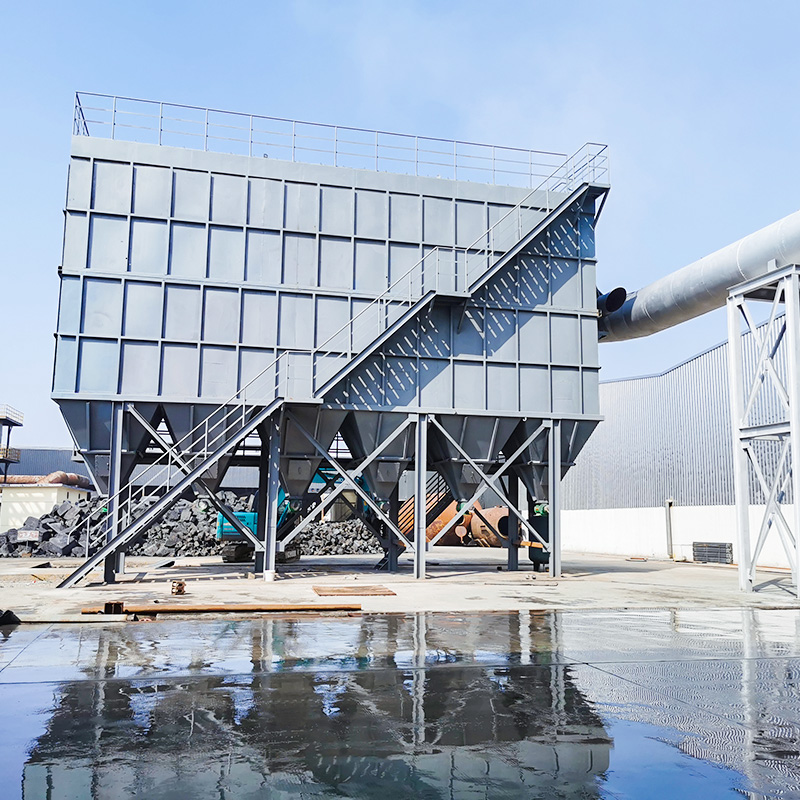
For most dry, free-flowing dust at moderate temperature, an air-box pulse baghouse is the workhorse choice: offline compartment cleaning lets one chamber rest while the others keep filtering, which holds pressure drop steady on large air volumes.
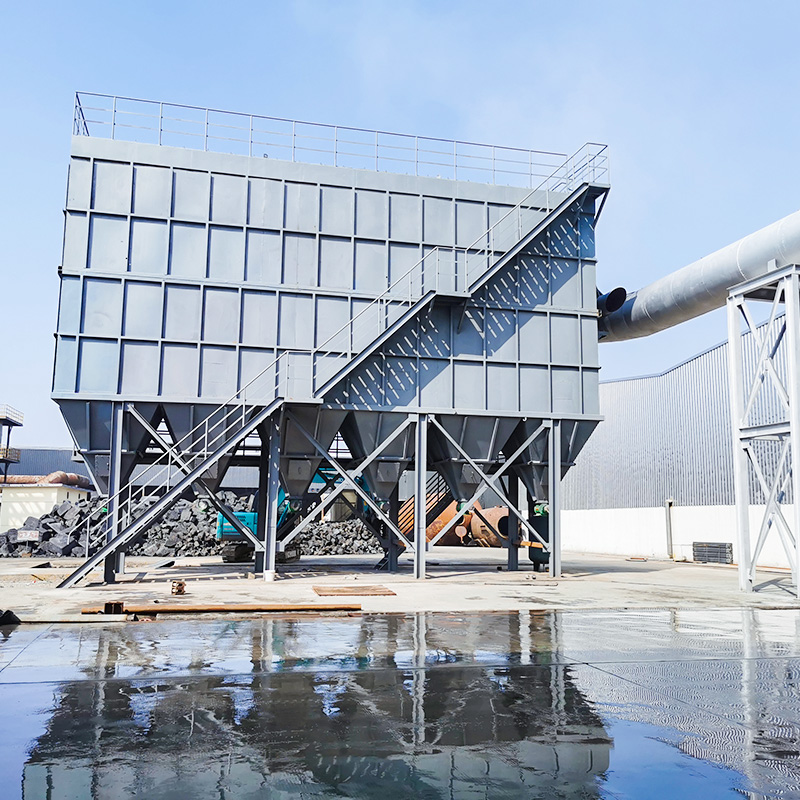 PPC Series Air-Box Pulse Bag Dust CollectorFor moderate-temperature, free-flowing dust and large air volumes, this compartmented baghouse offers offline cleaning to help hold pressure drop steady.View Product →
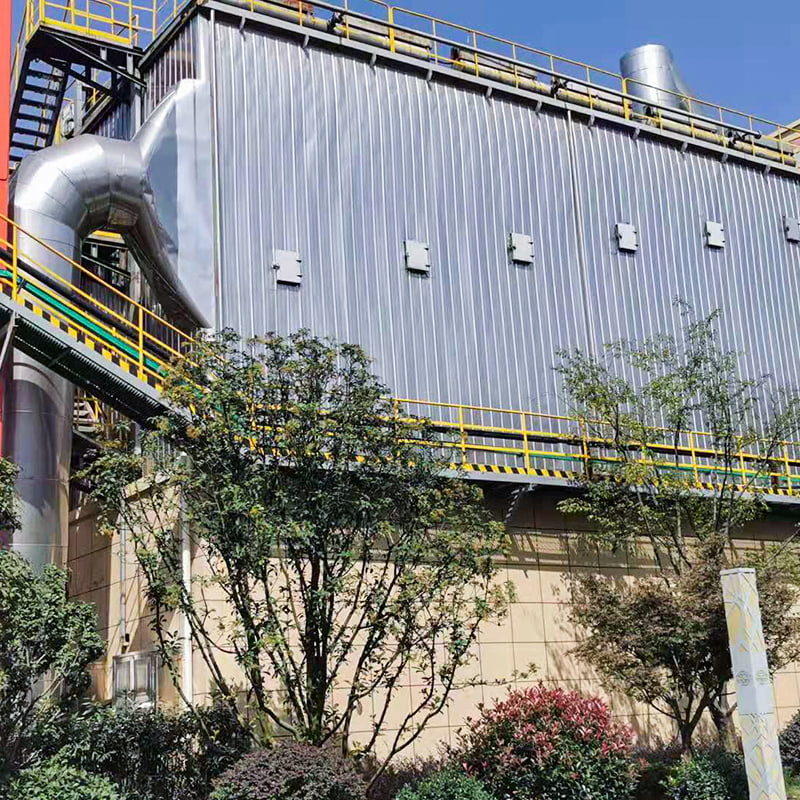
Where airflow is moderate and the budget tighter, a single pulse-jet unit with sequential online cleaning covers granulation, mixing and conveying vents without the extra compartments.
 TDMC Chambered Pulse-Jet Bag Dust CollectorA single pulse-jet unit for moderate airflow and tighter budgets, using chambered online cleaning to cover granulation, mixing, and conveying vents.View Product →
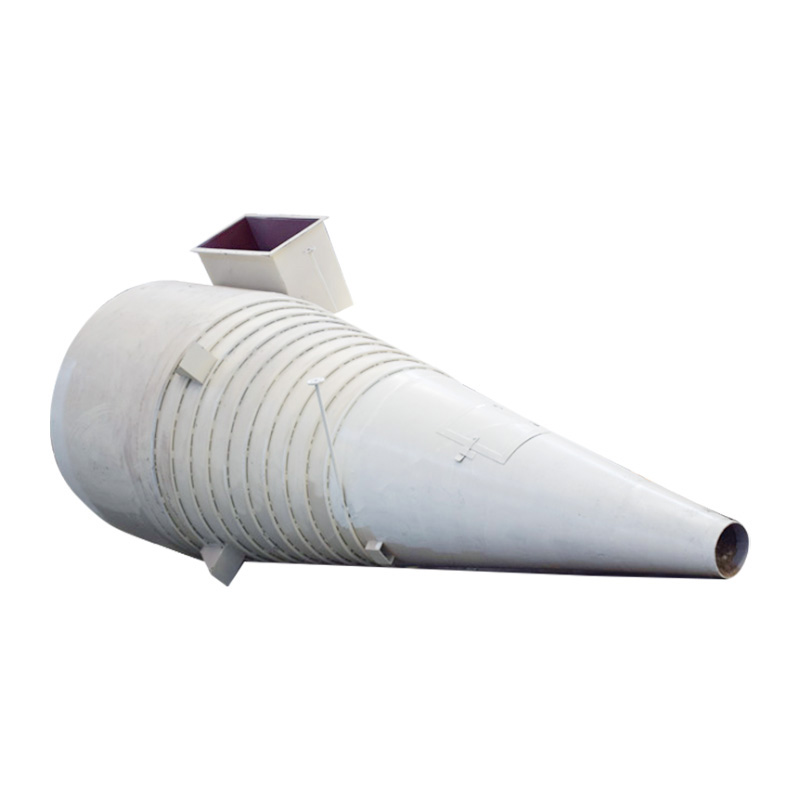
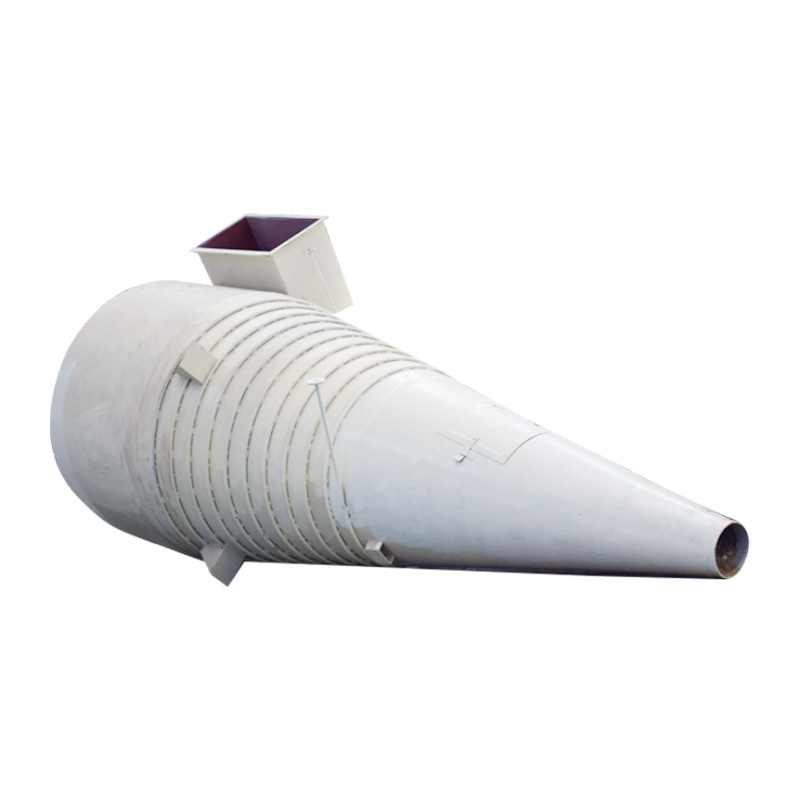
And where the gas stream carries a heavy coarse fraction, a cyclone used as a pre-cleaner protects the downstream bags and cuts the load they have to handle.
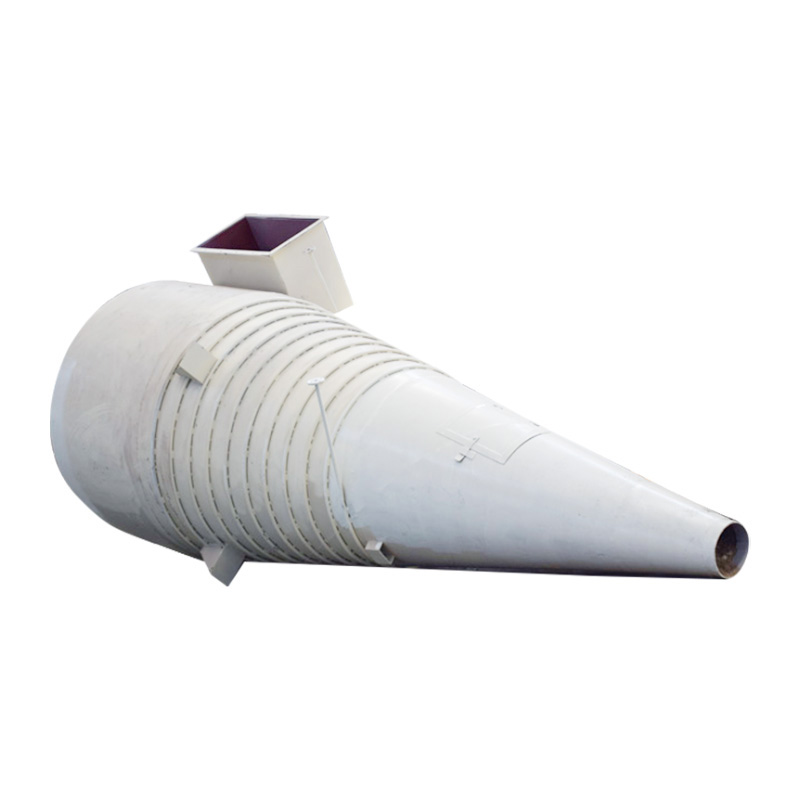 XFCC Cyclone Dust Collector for Pre-CleaningWhere inlet dust is heavy or coarse, this centrifugal pre-cleaner removes abrasive material before bags, helping extend media life and reduce cleaning cycles.View Product →
Frequently Asked Questions
Does an industrial dust collector need a cyclone ahead of the baghouse?
Only when the inlet dust load is high or contains a significant coarse fraction. A cyclone removes the abrasive, easy-to-catch material before it reaches the media, extending bag life and reducing cleaning cycles. For light, fine dust at low concentration, it adds pressure drop for little benefit.
How often do filter bags need replacing?
Service life depends far more on cleaning strategy and moisture control than on the calendar. Under stable conditions with correct air-to-cloth ratio and no condensation, multi-year life is normal; a system running wet or over-cleaned may need a full change in a single season.
Can one collector serve both fertilizer dust and mineral dust?
Mechanically yes, practically with care. Fertilizer salts are hygroscopic and can be corrosive, so the housing, hopper and media must be chosen for that duty, and the two dust streams should not be mixed in a way that creates sticky deposits. Separate hoods feeding a common collector are workable if the gas conditions match.
What information is needed to quote an industrial dust collector?
Air volume in m³/h, gas temperature, moisture content, inlet dust concentration, target outlet concentration, dust characteristics such as stickiness, abrasiveness and combustibility, available floor space, and how the collected dust will be discharged and transported away.
Is a dust collector safe where combustible dust is present?
It can be, but only when designed for it — grounding and bonding, explosion venting or chemical isolation, spark detection, and media selected to avoid static build-up. A standard collector installed on a combustible dust stream is a fire and explosion risk, not a control measure.
In short, an industrial dust collector is a chain, and the chain is only as strong as its quietest link: an undersized hood, a settling duct, a leaking airlock or a wetted bag will each undermine a well-built housing. Get the capture velocity, the transport velocity and the air-to-cloth ratio right at the start, and the rest of the system becomes a matter of routine maintenance rather than constant troubleshooting.