
 En
En
 English
  Français
  русский
  中文简体
中文简体  عربى
عربى  Español
alisen
alisen
alisen
alisen
alisen
alisen
alisen
alisen
alisen
alisen
alisen
alisen

What is an Organic Fertilizer Production Line and How Does It Work?
With the increasing global demand for sustainable agriculture, organic fertilizers have emerged as a vital solution to improve soil fertility, boost crop yields, and reduce environmental pollution caused by chemical fertilizers. At the heart of large-scale organic fertilizer manufacturing is the Organic Fertilizer Production Line, a fully automated system designed to transform organic waste into high-quality fertilizer products.
Understanding the Organic Fertilizer Production Line
An Organic Fertilizer Production Line is a complete set of machinery that processes raw organic materials into nutrient-rich fertilizer suitable for crops. Unlike chemical fertilizers, organic fertilizers are derived from natural sources, including livestock manure, poultry droppings, crop residues, food waste, and other biodegradable materials.
The production line integrates multiple machines to automate the entire workflow—from composting raw materials to granulation, drying, cooling, screening, and packaging. This not only increases production efficiency but also ensures consistent quality in the final fertilizer products.
Key Objectives of an Organic Fertilizer Production Line
-
Efficient Waste Management: Transform agricultural and food waste into valuable fertilizer.
-
Soil Enrichment: Produce fertilizers that enhance soil fertility and microbial activity.
-
Sustainable Production: Reduce dependence on chemical fertilizers and support eco-friendly farming.
-
Economic Value: Enable manufacturers to produce high-quality products at scale, improving profitability.
Raw Materials Used in Organic Fertilizer Production
The first and most crucial step in an Organic Fertilizer Production Line is sourcing the right raw materials. The quality of the input materials directly affects the nutrient content and effectiveness of the fertilizer. Common raw materials include:
-
Animal Manure: Cow, pig, chicken, and horse manure are rich in nitrogen, phosphorus, and potassium (NPK).
-
Crop Residues: Corn stalks, wheat straw, rice husks, and vegetable waste provide organic matter and trace minerals.
-
Food Waste: Fruit peels, vegetable scraps, and leftover food can be recycled into organic fertilizer after composting.
-
Other Organic Waste: Brewery waste, paper sludge, and garden waste can be valuable sources of nutrients.
Proper handling of raw materials ensures that pathogens and harmful microorganisms are eliminated during the composting process.
Main Components of an Organic Fertilizer Production Line
A typical Organic Fertilizer Production Line consists of several interconnected machines, each serving a specific purpose in the production workflow:
1. Composting Equipment
Composting is the foundation of organic fertilizer production. Composting equipment may include:
-
Fermentation Tanks: Enclosed systems that accelerate microbial decomposition.
-
Windrow Compost Turners: Open-air systems that aerate the compost piles for faster decomposition.
The goal is to convert raw organic waste into nutrient-rich humus while reducing harmful pathogens.
2. Crusher
A crusher breaks down large chunks of composted material into uniform sizes, improving the efficiency of subsequent processes. Crushers can be:
-
Double-shaft Crushers: For crushing fibrous or high-moisture materials.
-
Hammer Crushers: Suitable for soft, dry materials.
3. Mixer
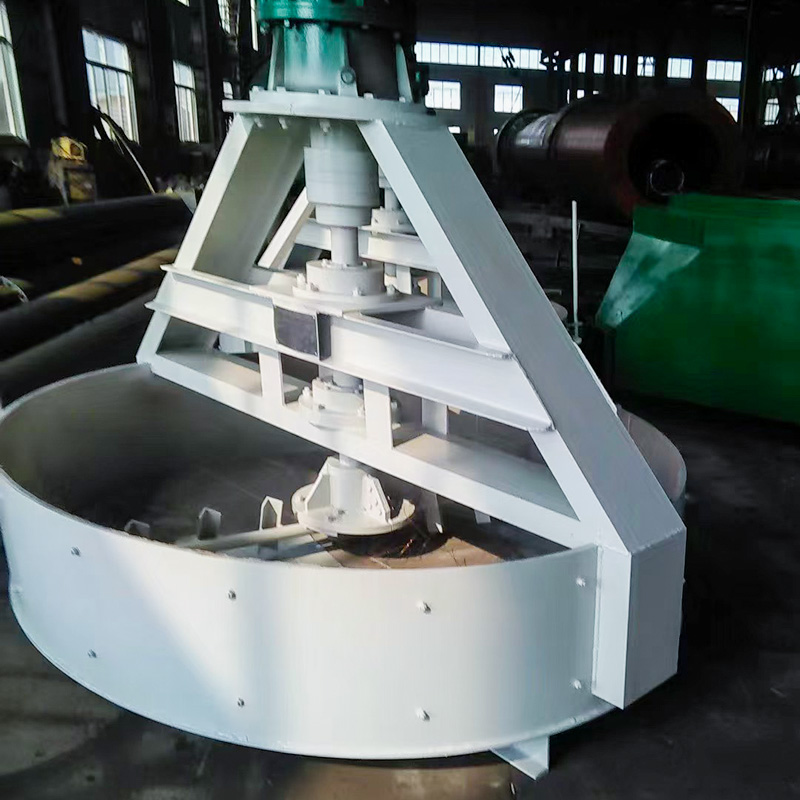
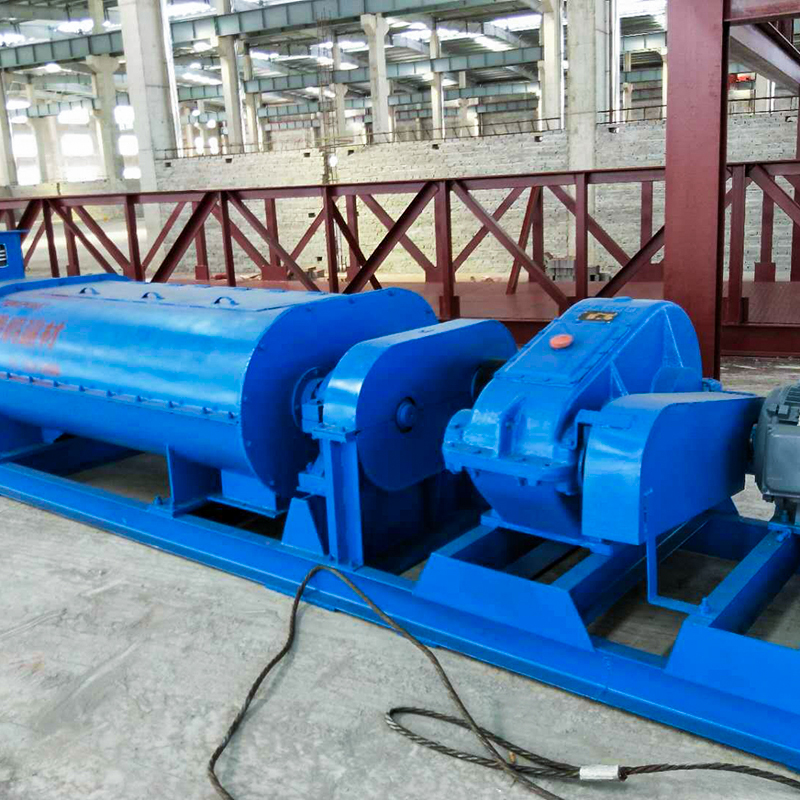
Mixing ensures uniformity of nutrients across all batches. Different ingredients, such as nitrogen-rich manure and phosphorus-rich crop residues, are blended to produce a balanced organic fertilizer.
4. Granulator
The granulator shapes the mixed compost into granules for easier handling, storage, and application. Common types include:
-
Rotary Drum Granulators: Large-scale production with high output.
-
Flat Die Granulators: Ideal for smaller batches or specialized fertilizer.
-
New Type Organic Fertilizer Granulators: Designed for high moisture content and better granule quality.
5. Dryer and Cooler
After granulation, the fertilizer granules are still moist and warm. The dryer reduces moisture content to 10–12%, while the cooler brings granules to ambient temperature for safe storage.
6. Screening Machine
A screening machine separates fine powder and oversized granules from the final product. This ensures that only uniform, high-quality granules are packaged.
7. Packing Machine
Finally, the packing machine automatically fills bags with the finished organic fertilizer and seals them for transportation. Advanced systems can also label, weigh, and palletize the product.
How an Organic Fertilizer Production Line Works
The production process can be divided into several key steps:
-
Raw Material Collection and Composting
Organic waste is collected and fermented to create nutrient-rich compost. Microbial activity during composting breaks down organic matter while eliminating pathogens. -
Crushing and Mixing
Compost is crushed into smaller particles and blended evenly to ensure a balanced nutrient composition. -
Granulation
The mixed material is granulated into uniform pellets using a granulator. Granules are easier to store, transport, and apply. -
Drying and Cooling
Granules are dried to reduce moisture content, preventing spoilage, and then cooled to room temperature. -
Screening and Packaging
Oversized or undersized particles are removed, and high-quality granules are packed into bags for distribution.
Advantages of Using an Organic Fertilizer Production Line
Investing in an Organic Fertilizer Production Line offers several significant benefits:
-
Sustainable Production: Reduces chemical fertilizer use and promotes eco-friendly farming practices.
-
Soil Improvement: Enhances soil structure, increases water retention, and promotes beneficial microorganisms.
-
High Efficiency: Automates labor-intensive processes and ensures consistent product quality.
-
Cost Savings: Converts agricultural and food waste into valuable products.
-
Market Competitiveness: Organic fertilizers are in growing demand worldwide, offering strong business potential.
Market Applications of Organic Fertilizer
The applications of organic fertilizer are vast, including:
-
Crop Farming: For vegetables, fruits, grains, and cash crops.
-
Orchards and Vineyards: Improves fruit quality and tree health.
-
Landscaping and Gardening: Provides nutrients for lawns, parks, and green spaces.
-
Greenhouses: Supports soil fertility and healthy plant growth under controlled environments.
Environmental and Economic Impact
The Organic Fertilizer Production Line not only benefits farmers but also contributes to environmental sustainability:
-
Waste Recycling: Converts livestock manure, crop residues, and food waste into valuable fertilizer.
-
Reduced Pollution: Minimizes chemical runoff into water systems and reduces greenhouse gas emissions.
-
Circular Economy: Promotes a sustainable model where waste is reused and transformed into resources.
Economically, organic fertilizer production opens opportunities for rural development, employment, and business growth.
Future Trends in Organic Fertilizer Production
The global market for organic fertilizers is expanding due to growing environmental awareness and stricter regulations on chemical fertilizers. Future trends include:
-
Automation and Smart Technology: Use of AI, IoT, and sensors to optimize production efficiency.
-
High-Quality Granules: Improved granulation techniques to meet market demand for uniform and soluble fertilizers.
-
Integration with Renewable Energy: Solar-powered drying systems and energy-efficient machinery to reduce carbon footprint.
-
Custom Fertilizer Formulations: Tailoring nutrient content to specific crops, soil types, and climate conditions.
What Equipment is Essential for a Complete Organic Fertilizer Production Line?
The global demand for sustainable agriculture has driven a surge in organic fertilizer production, making the establishment of a high-efficiency Organic Fertilizer Production Line more important than ever. But what equipment is truly essential to ensure a complete and smooth production process? Understanding the machinery involved can help investors, manufacturers, and agricultural entrepreneurs optimize their production and maximize output.
1. Raw Material Handling Equipment
The first step in any Organic Fertilizer Production Line is managing raw materials. Organic fertilizers are made from animal manure, crop residues, compost, and other organic waste. Efficient handling of these materials requires:
-
Conveyors: Belt conveyors or chain conveyors are used to transport raw materials to storage or processing units.
-
Hoppers and Feeders: These devices regulate the flow of raw materials into fermenters or grinders, ensuring consistent processing.
Proper raw material handling reduces production delays and maintains product quality.
2. Fermentation Equipment
Fermentation is the core process that transforms organic waste into nutrient-rich fertilizer. Essential equipment includes:
-
Compost Turners: Machines like semi-trailer compost turners or groove-type compost turners help aerate the compost piles, speeding up microbial decomposition.
-
Fermentation Tanks: For more controlled fermentation, tanks with temperature and moisture control are often used, ensuring optimal microbial activity.
This step is critical for creating high-quality organic fertilizers free from pathogens.
3. Crushing and Screening Machines
After fermentation, raw materials need to be crushed and screened to achieve uniform particle size. Key equipment includes:
-
Hammer Crushers or Crusher Machines: These machines reduce clumps into fine, manageable granules suitable for further processing.
-
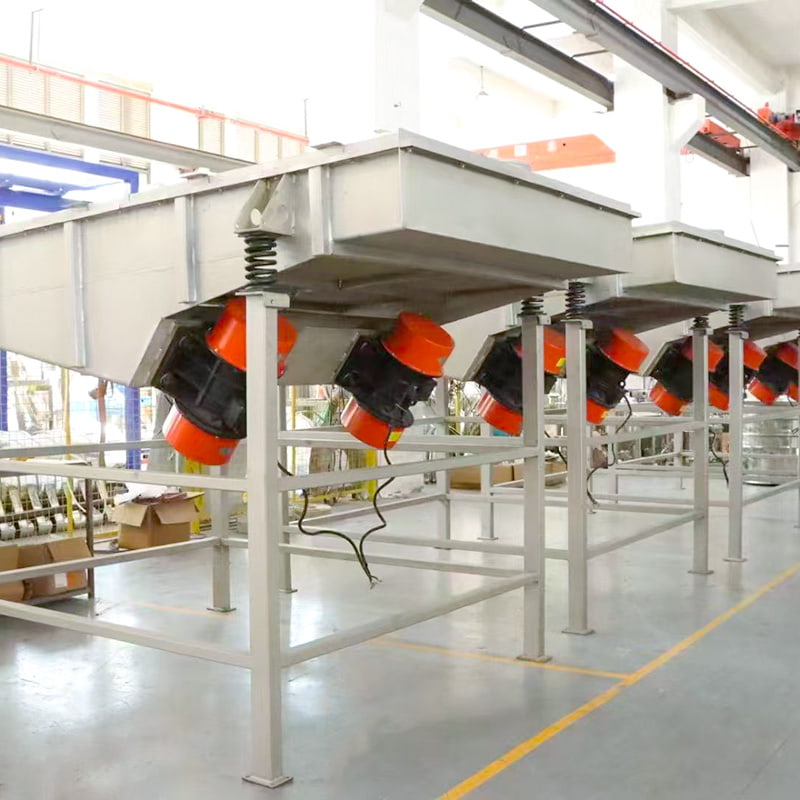
Vibrating Screens: Ensure that only appropriately sized particles move forward, while oversized materials are returned for reprocessing.
Uniform granule size is essential for effective fertilizer spreading and absorption by plants.
4. Granulation Equipment
Granulation is the process of forming organic materials into pellets or granules. Depending on the production scale, there are several options:
-
Disc Granulators: Suitable for small to medium-scale production, these machines create granules by rotating a disc that forms materials into pellets.
-
Rotary Drum Granulators: Ideal for large-scale Organic Fertilizer Production Lines, these machines produce high-capacity, uniform granules.
-
New Type Organic Fertilizer Granulators: Advanced granulators offer higher granule strength and better durability.
Granulation improves storage, transport, and application efficiency.
5. Drying and Cooling Equipment
Granules often contain high moisture, making drying and cooling essential. Typical machines include:
-
Rotary Dryers: Reduce moisture content to prevent caking and maintain long shelf life.
-
Rotary Coolers: Quickly reduce granule temperature, ensuring structural integrity.
Drying and cooling guarantee that the final fertilizer is stable and ready for packaging.
6. Screening and Coating Machines
After drying and cooling, granules are screened again to remove oversized or undersized particles. Coating machines can then be used to enhance fertilizer properties:
-
Rotary Screening Machines: Separate granules by size for uniform quality.
-
Coating Machines: Add anti-caking agents or micronutrients to improve product performance.
This step ensures consistent quality and enhances the fertilizer’s commercial value.
7. Packaging Equipment
The final stage of a complete Organic Fertilizer Production Line is packaging. Automated equipment ensures efficiency and hygiene:
-
Automatic Bagging Machines: Measure and pack fertilizer into bags of standard weight.
-
Sealing and Labeling Machines: Guarantee secure packaging and professional presentation for retail or wholesale distribution.
Packaging automation reduces labor costs and protects product quality during transport.
8. Auxiliary Equipment
To maintain smooth operation, several auxiliary machines are also essential:
-
Dust Collectors: Reduce air pollution during crushing and granulation.
-
Elevators and Conveyors: Facilitate smooth material flow between production stages.
-
Storage Silos: Store raw materials and finished products safely.
These machines improve efficiency and environmental compliance.




GET IN
TOUCH WITH US
TOUCH WITH US
-
 No.68, Shuanglou Road, Qutang Town, Haian City, Nantong, Jiangsu
 -
Tel:
 +86-13914355558/18994158908
 -
E-mail:
 sales@tp-machinery.com
COPYRIGHT © 2025 Nantong Alisen Environmental Protection Technology Co., Ltd.
ALL RIGHTS RESERVED.
China fertilizer machinery manufacturer wholesale fertilizer machinery factory
