 En
En
 English
  Français
  русский
  中文简体
中文简体  عربى
عربى  Español

The disc pelletizer process works by continuously rotating a shallow, inclined pan that tumbles moist powder feed into progressively larger, uniformly sized spherical pellets through a combination of centrifugal force, gravity, and controlled liquid addition. It is one of the most efficient and widely used agglomeration methods in industries ranging from iron ore processing and fertilizer production to mining, chemicals, and waste treatment — delivering consistent pellet quality at high throughput with relatively low energy input.
What Is a Disc Pelletizer and How Does It Differ from Other Pelletizing Methods?
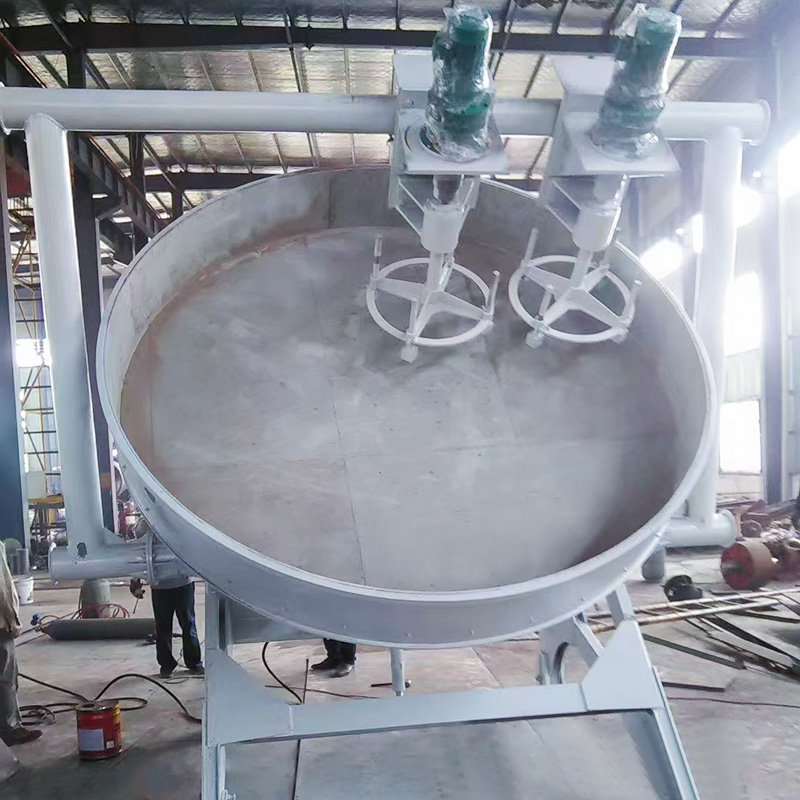
A disc pelletizer — also called a pan pelletizer or pelletizing disc — is a circular, rotating, inclined plate that agglomerates fine powder or moist material into round, dense pellets through tumbling action. Unlike drum pelletizers or extruder-based systems, the open disc design allows operators to visually monitor pellet formation in real time and make immediate adjustments to angle, speed, or binder addition.
The disc pelletizer process is a form of wet agglomeration: fine dry or semi-wet feed material is introduced onto the rotating disc, liquid binder (typically water or a chemical solution) is sprayed onto the material, and the rolling action causes particles to collide and bond, growing from fine nuclei into finished pellets over several minutes.
The key structural components of a disc pelletizer include:
- The disc pan — a flat or slightly concave circular plate, typically 1–7.5 meters in diameter, made from carbon steel or wear-resistant alloy
- The rim or side wall — retains material in the rolling bed and controls pellet residence time
- The drive system — electric motor and gearbox assembly that controls disc rotation speed (typically 5–20 RPM)
- The tilt adjustment mechanism — allows the disc angle to be set between 40° and 60° from horizontal, controlling the classification and discharge of finished pellets
- Scrapers — fixed blades that prevent material from caking on the disc surface and maintain a consistent rolling bed
- Spray system — nozzles positioned above the disc that deliver controlled amounts of binder liquid to the rolling material
How Does the Disc Pelletizer Process Work Step by Step?
The disc pelletizer process follows a continuous, self-classifying cycle in which small particles grow into finished pellets and are automatically discharged over the rim without interrupting the feed stream. This self-classification is one of the disc pelletizer's most important advantages over batch pelletizing systems.
Stage 1 — Feed Introduction
Dry or pre-conditioned fine powder is fed continuously onto the lower section of the rotating disc, typically via a belt conveyor or screw feeder. The feed rate is metered precisely — usually measured in tonnes per hour (tph) — and must be matched to the disc capacity and target pellet size to maintain a stable rolling bed.
Stage 2 — Binder Liquid Addition
Simultaneously, a binder liquid — most commonly water, but sometimes bentonite slurry, molasses solution, or chemical binders — is sprayed onto the rolling bed. The moisture content of the rolling bed is critical: too little liquid results in powdery, unbonded material; too much creates oversized, fragile pellets or "wet" agglomerates. For most iron ore disc pelletizing processes, the target moisture range is 8.5% to 10.5% by weight.
Stage 3 — Nucleation and Growth
As the disc rotates, individual fine particles collide and stick together due to liquid surface tension and capillary forces, forming tiny seed clusters called "nuclei." These nuclei tumble continuously through the rolling bed, collecting additional particles on their surface in a process called layering. The disc rotation creates a helical rolling pattern that ensures every particle passes through the active spray zone multiple times per revolution.
Stage 4 — Self-Classification and Growth Differentiation
This is the defining characteristic of the disc pelletizer process. As pellets grow larger and heavier, centrifugal force and the inclined disc geometry cause them to migrate toward the upper rim of the disc. Smaller, lighter particles remain lower on the disc in the active growth zone. This natural size segregation means the disc continuously sorts pellets by size without any additional screening equipment.
Stage 5 — Pellet Discharge
When pellets reach the target size — typically 8 mm to 16 mm for iron ore, 2 mm to 10 mm for fertilizers — they crest the rim of the disc and discharge onto a conveyor belt for subsequent processing (drying, firing, screening, or cooling). Because discharge is gravity-driven and size-selective, the output stream has a naturally narrow size distribution, often achieving over 85% of pellets within ±2 mm of the target diameter without secondary screening.
Which Pelletizing Method Is Best: Disc Pelletizer vs. Drum Pelletizer vs. Extruder?
The disc pelletizer process delivers superior size uniformity and real-time process control compared to drum pelletizers, while extruders excel at non-spherical, high-density forms that neither pan nor drum pelletizers can produce. The right choice depends on feed characteristics, target pellet geometry, production volume, and downstream process requirements.
| Criteria | Disc Pelletizer | Drum Pelletizer | Extruder Pelletizer |
| Pellet Shape | Spherical | Roughly spherical | Cylindrical / varied |
| Size Uniformity | Excellent (self-classifying) | Moderate (requires screening) | Excellent (die-controlled) |
| Process Visibility | Full (open design) | None (enclosed drum) | Limited |
| Throughput Capacity | Moderate (up to ~200 tph per unit) | High (up to 500+ tph) | Low–Moderate |
| Footprint | Compact | Large | Moderate |
| Feed Moisture Sensitivity | High (narrow range) | Moderate | Low (dry or wet capable) |
| Capital Cost | Lower | Moderate | Higher |
| Ease of Adjustment | Very easy (angle, speed, spray) | Moderate | Die change required |
| Typical Industries | Iron ore, fertilizer, mining, chemicals | Potash, aggregate, biomass | Plastics, food, pharma |
Table 1: A comparative analysis of disc pelletizers, drum pelletizers, and extruder pelletizers across nine operational and economic criteria.
What Are the Key Process Variables That Control Disc Pelletizer Performance?
Disc pelletizer performance is governed primarily by five interdependent variables: disc angle, rotation speed, feed rate, moisture content, and binder type — and optimizing all five simultaneously is what separates high-performing pelletizing operations from struggling ones.
1. Disc Inclination Angle
The tilt angle of the disc — typically set between 40° and 60° from horizontal — is the most powerful lever for controlling pellet size. A steeper angle shortens pellet residence time on the disc, producing smaller pellets. A shallower angle allows pellets to spend more time in the rolling bed, enabling larger, more rounded pellets to form. Most commercial disc pelletizing operations fine-tune angle in increments of 1–2° to achieve their target product size.
2. Disc Rotation Speed
Rotation speed, measured in RPM, controls the centrifugal force applied to the rolling bed. Higher speeds increase the centrifugal force, which improves pellet roundness and density but can reduce residence time. Optimal speed is typically expressed as a percentage of critical speed — the RPM at which material would be pinned to the disc wall by centrifugal force. Most disc pelletizers operate at 50–75% of critical speed for best results.
3. Moisture Content and Binder Addition Rate
Moisture is the most time-sensitive variable in the disc pelletizer process. The ideal moisture window is narrow — typically just 1–2 percentage points wide — and varies by material. Automated spray control systems using real-time moisture sensors can maintain binder addition within ±0.2% moisture, dramatically improving consistency compared to manual spray control.
4. Feed Rate and Feed Particle Size Distribution
The incoming feed must be fine enough to bond effectively — generally below 200 microns (0.2 mm) for most applications, with at least 80% passing 100 mesh (150 microns) for iron ore pelletizing. Coarser feed produces weaker pellets with rougher surfaces. Consistent feed rate — avoiding surges or gaps — is equally critical for maintaining a stable rolling bed depth and uniform pellet growth rate.
5. Disc Rim Height
The height of the retaining rim controls the volume of material held on the disc at any moment (the "bed depth"). A deeper bed extends residence time and allows larger pellets to form. Rim height is usually fixed at installation but can be modified with adjustable rim extension rings during commissioning and scale-up trials.
Why Is the Disc Pelletizer Process Used Across So Many Industries?
The disc pelletizer process is industry-agnostic because its core physics — tumble agglomeration on an inclined rotating surface — applies to any fine, moistenable powder that needs to be converted into a free-flowing, dense, consistently sized granule.
| Industry | Material Pelletized | Typical Pellet Size | Purpose |
| Iron Ore / Steel | Iron ore concentrate | 8–16 mm | Blast furnace / DRI feed |
| Fertilizers | NPK, urea, DAP, MAP | 2–6 mm | Uniform soil application |
| Mining / Minerals | Copper, nickel, chromite fines | 6–20 mm | Heap leach / smelter feed |
| Cement / Lime | Kiln dust, fly ash | 5–15 mm | Dust recycling, soil amendment |
| Waste Treatment | Sewage sludge, biosolids | 3–10 mm | Landfill reduction, biofuel |
| Agricultural Lime | Calcitic / dolomitic limestone | 2–8 mm | Soil pH correction |
| Ceramics / Refractories | Alumina, silica, bauxite | 5–25 mm | Pressing, sintering feed |
Table 2: Industrial applications of the disc pelletizer process, showing typical materials processed, pellet size ranges, and downstream purposes across seven major industries.
How Is the Disc Pelletizer Process Used in Iron Ore Pelletizing Plants?
Iron ore pelletizing using disc pelletizers is one of the most technologically demanding and commercially significant applications of the process, producing billions of tonnes of blast furnace and direct reduction (DRI) grade pellets annually.
In a typical iron ore disc pelletizing plant, the process flow proceeds as follows:
- Feed preparation — Iron ore concentrate is mixed with a binder, most commonly bentonite clay at 0.5–1.0% by weight, in a high-intensity mixer to homogenize moisture and binder distribution before reaching the disc.
- Disc pelletizing — The conditioned concentrate is fed onto large-diameter discs (typically 5–7.5 meters) rotating at approximately 6–10 RPM with a disc angle of 45–50°, producing green (unfired) pellets of 9–16 mm diameter.
- Green pellet screening — Discharged pellets pass over a roller screen or vibrating screen to remove undersize (returned to disc) and oversize (crushed and recycled).
- Induration (firing) — Screened green pellets are fired in a traveling grate, grate-kiln, or shaft furnace at temperatures of 1,250–1,350°C to sinter and harden them into finished iron ore pellets with compressive strength exceeding 2,500 N per pellet.
- Cooling and product screening — Fired pellets are cooled, screened to the final product size (typically 9–16 mm for blast furnace feed), and conveyed to stockpile or direct loading.
Global iron ore pellet production exceeded 500 million tonnes per year as of 2023, with disc pelletizers accounting for a significant share of total pelletizing capacity, particularly in Brazil, Sweden, and Canada where fine ore concentrates are abundant.
What Are the Advantages and Limitations of the Disc Pelletizer Process?
The disc pelletizer process offers exceptional size control, process transparency, and operational flexibility, but it requires careful moisture management and is less suited to very high throughput applications where drum pelletizers have an edge.
Key Advantages
- Self-classifying discharge — Eliminates or greatly reduces the need for post-pelletizing screening equipment, saving capital and operating costs. The size distribution from a well-tuned disc is naturally narrower than that from a drum pelletizer.
- Real-time visual process monitoring — Operators can directly observe the rolling bed and immediately identify and correct problems such as overwetting, feed surges, or scraper buildup — impossible with drum pelletizers.
- Easy and rapid parameter adjustment — Disc angle, rotation speed, and spray rate can all be changed while the disc is running, allowing product size to be shifted within minutes without stopping production.
- Lower capital cost per unit — Disc pelletizers are mechanically simpler and more compact than drum pelletizers of equivalent capacity, requiring less civil structure and simpler foundations.
- Energy efficiency — The disc pelletizer process typically consumes 1–3 kWh per tonne of product, which is competitive with drum pelletizing and far below extruder systems for equivalent throughput.
- Scalability through parallel units — Rather than scaling up a single large unit (which increases risk), capacity is typically increased by adding additional discs in parallel, allowing modular, phased capital investment.
Key Limitations
- Narrow moisture operating window — The disc pelletizing process is sensitive to moisture fluctuations. Variations of more than ±1% in feed or spray moisture can shift pellet size significantly or cause bed instability.
- Limited maximum throughput per unit — A single disc pelletizer is generally limited to approximately 100–200 tph depending on disc diameter and material density, compared to drum pelletizers which can exceed 500 tph per unit.
- Open design requires dust control — Because the disc is open to the atmosphere, dusty feeds require enclosures, local exhaust ventilation, and sometimes misting systems to control fugitive dust emissions.
- Abrasive wear on disc surface and scrapers — Hard, abrasive materials (iron ore, bauxite, chromite) wear disc liners and scraper blades. Liner replacement is a regular maintenance cost that must be factored into operational budgets.
How to Troubleshoot Common Problems in the Disc Pelletizer Process
Most disc pelletizer process problems trace back to one of four root causes: moisture imbalance, feed irregularity, scraper misalignment, or incorrect disc geometry settings. Knowing which symptom maps to which cause allows operators to resolve issues quickly without shutting down production.
| Symptom | Likely Cause | Corrective Action |
| Pellets too small / powdery discharge | Insufficient moisture or steep disc angle | Increase spray rate; reduce disc angle by 2–3° |
| Pellets too large / lumping | Excess moisture or shallow disc angle | Reduce spray; increase disc angle by 2°; check feed moisture |
| Material caking on disc surface | Scraper wear or misalignment | Inspect and adjust scraper blade gap; replace worn scrapers |
| Irregular / non-spherical pellets | Coarse feed, low RPM, or low moisture | Check feed grind fineness; increase RPM slightly; increase spray |
| Unstable rolling bed / surging | Inconsistent feed rate | Calibrate feeder; install surge hopper or variable-speed drive |
| Excessive dust from disc | Feed too dry or spray nozzle blocked | Check nozzle operation; pre-humidify feed; add enclosure |
Table 3: Common disc pelletizer process problems, their most probable causes, and recommended corrective actions for plant operators.
Frequently Asked Questions About the Disc Pelletizer Process
Q: What is the difference between a disc pelletizer and a pan granulator?
The terms disc pelletizer, pan pelletizer, and pan granulator all refer to the same basic equipment — an inclined rotating disc that agglomerates fine material into spherical pellets or granules. "Pelletizer" is more common in iron ore and mining industries; "granulator" is more frequently used in fertilizer and chemical processing contexts. The underlying disc pelletizing process is identical.
Q: What binders are used in the disc pelletizer process?
The most widely used binder in disc pelletizing is bentonite clay, typically at 0.5–1.5% by weight. Other binders include organic binders (carboxymethyl cellulose, guar gum), lime, molasses, sodium silicate, and purpose-engineered synthetic binders. The choice depends on the end-use requirements — for example, blast furnace iron ore pellets require low silica contamination, so organic or low-silica synthetic binders are preferred over bentonite in some operations.
Q: How large can a disc pelletizer be?
Commercial disc pelletizers range from small laboratory units of 0.5–1.0 m diameter to large industrial discs of 7.5 m or more in diameter. A 7.5 m disc processing iron ore concentrate can produce approximately 150–200 tonnes of green pellets per hour. For most fertilizer applications, discs of 3–5 m diameter are standard, producing 20–80 tph depending on the material and target size.
Q: Can the disc pelletizer process handle sticky or hygroscopic materials?
Sticky and hygroscopic materials can be processed on disc pelletizers but require modified disc liner materials, more aggressive scraper designs, and tighter environmental humidity control. Highly sticky feeds (such as high-clay content ores or fertilizer blends containing urea) may require anti-stick coatings on the disc surface or the addition of dry conditioning agents to the feed before it reaches the disc.
Q: How is pellet strength measured after the disc pelletizer process?
Green (unfired) pellet strength is measured by the drop number test and compressive strength test. The drop number test counts how many times a single pellet survives a 45 cm drop onto a steel plate before breaking — typical targets are 5 or more drops. Compressive strength of green pellets is typically 1–3 kg per pellet. Fired (indurated) pellets are measured by compressive strength alone, with blast furnace grade pellets requiring a minimum of 2,500 N (approximately 250 kg) per pellet.
Q: Is the disc pelletizer process suitable for continuous 24/7 industrial operation?
Yes, disc pelletizers are designed for continuous around-the-clock industrial operation, with planned maintenance intervals typically of 3–6 months for disc liner inspection and scraper replacement. Many iron ore pelletizing plants run their disc pelletizer circuits 330+ days per year with minimal unplanned downtime, as the simple mechanical design — no complex internals, no enclosed rotating pressure vessels — makes maintenance accessible and fast.
Q: What recent innovations are being applied to the disc pelletizer process?
The most impactful recent innovations in disc pelletizing are real-time moisture control automation, machine vision pellet sizing systems, and digital twin simulation. Automated spray control using near-infrared (NIR) moisture sensors can maintain feed moisture within ±0.1%, dramatically reducing off-spec product. Machine vision cameras positioned above the disc can monitor pellet size distribution in real time and feed data back to the control system. Digital twin models allow operators to simulate disc behavior before making physical parameter changes — reducing trial-and-error downtime.
Conclusion: Why the Disc Pelletizer Process Remains Indispensable in Industrial Manufacturing
The disc pelletizer process has remained at the heart of global industrial agglomeration for over seven decades because it delivers a combination of capabilities no other single technology can match: continuous self-classifying size control, real-time process visibility, energy efficiency, and broad material compatibility.
From producing hundreds of millions of tonnes of iron ore pellets that feed the world's steel industry, to creating the uniformly sized fertilizer granules that improve crop yields across every continent, the disc pelletizing process quietly underpins some of the most important material flows in the global economy.
As industries increasingly focus on process efficiency, waste reduction, and digital optimization, the disc pelletizer is evolving — integrating real-time sensor data, automated control systems, and digital twin simulation to achieve levels of consistency and efficiency that were impossible even a decade ago. For engineers, plant managers, and process designers evaluating agglomeration technology, understanding the fundamentals of the disc pelletizer process is not just useful — it is essential.