 En
En
 English
  Français
  русский
  中文简体
中文简体  عربى
عربى  Español

A disc pelletizer — also called a pan granulator or disc granulator — can process virtually all major categories of fertilizer materials, including organic, inorganic, compound, and bio-based fertilizers. This broad material compatibility, combined with low energy consumption and a simple mechanical structure, makes the all fertilizer disc pelletizer one of the most widely adopted granulation solutions in both large-scale fertilizer manufacturing plants and small-to-medium agricultural processing facilities worldwide.
This guide explains how a disc pelletizer works, which fertilizer types it handles best, how it compares with alternative granulation equipment, and what operational parameters determine pellet quality — with specific data and examples throughout to help manufacturers and investors make well-informed equipment decisions.
How Does a Fertilizer Disc Pelletizer Work?
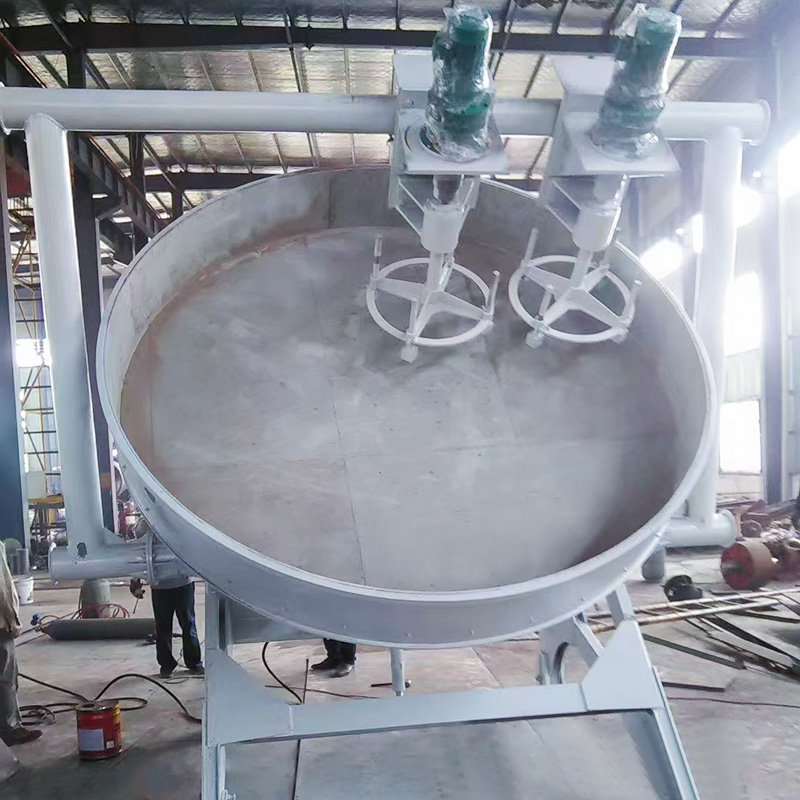
A fertilizer disc pelletizer works by rotating a large inclined disc at a controlled speed while raw material powder is continuously fed onto its surface and sprayed with a liquid binder. The rotating motion causes fine particles to collide, adhere, and roll into increasingly larger spherical granules — a process known as agglomeration or wet granulation. Once granules reach the target diameter (typically 2–6 mm for commercial fertilizers), centrifugal force causes them to discharge over the disc rim automatically.
Core Mechanical Components
- Inclined Disc Pan: The primary working surface, typically 1,000–6,000 mm in diameter depending on production capacity. The inclination angle (usually adjustable between 38° and 55°) directly controls granule residence time and final size.
- Drive System: An electric motor connected through a reduction gearbox rotates the disc at 10–20 RPM. Variable frequency drives (VFDs) allow operators to fine-tune rotational speed without changing mechanical components.
- Scraper Blade: A fixed scraper prevents material from sticking to the disc surface and ensures consistent layer thickness, which is critical for uniform granule formation.
- Spray Nozzle System: Water, liquid binder, or liquid fertilizer solution is sprayed uniformly across the disc surface. Nozzle positioning and spray rate are two of the most important quality control variables.
- Disc Rim: The adjustable rim height (typically 100–300 mm) determines the maximum granule size before automatic discharge. Higher rims allow larger granules to form before exiting.
The Granulation Process Step by Step
- Step 1 — Feed: Powdered raw fertilizer material is fed continuously onto the rotating disc via a belt conveyor or screw feeder, typically at a controlled rate of 1–30 tons per hour depending on disc diameter.
- Step 2 — Nucleation: Fine particles contact the moist disc surface and begin clustering around seed nuclei, either naturally occurring larger particles or deliberately added seed granules.
- Step 3 — Growth: Continued rolling motion causes nuclei to accumulate additional layers of material, growing steadily in size over a residence time of approximately 5–20 minutes.
- Step 4 — Discharge: Granules that exceed the rim height automatically discharge into a collection conveyor leading to the drying and screening stage.
- Step 5 — Screening: Discharged granules pass through a rotary drum screen or vibrating screen to separate on-size product (2–4 mm) from oversized and undersized material, which is returned to the disc for reprocessing.
What Types of Fertilizers Can a Disc Pelletizer Handle?
The disc pelletizer is uniquely versatile because its granulation mechanism relies on physical agglomeration rather than chemical reaction or high-pressure compaction, making it compatible with nearly every category of fertilizer feedstock available in modern agricultural production.
Organic Fertilizer Materials
Disc pelletizers are the industry-standard granulation machine for organic fertilizer production lines. Commonly processed organic materials include:
- Composted Animal Manure: Cattle, poultry, pig, and sheep manure that has been fermented and composted to moisture content below 30% granulates efficiently. A disc with a diameter of 2,500 mm typically processes 1–3 tons of composted manure per hour.
- Biosolids and Sewage Sludge: Dried and processed municipal biosolids (moisture below 35%) can be granulated into slow-release organic fertilizer pellets with disc technology.
- Crop Residue-Based Composts: Straw, rice hull, corn stover, and other lignocellulosic composts, typically mixed with a nitrogen source for nutrient balancing before granulation.
- Vermicompost: Worm castings, valued for their microbial richness, are readily granulated with minimal binder since their natural sticky texture promotes particle adhesion.
- Fish Meal and Blood Meal: High-nitrogen organic amendments often blended with bulking agents before pan granulation to improve flow properties and reduce dust generation.
Inorganic and Chemical Fertilizer Materials
While drum granulators and compaction granulators are also used for chemical fertilizers, disc pelletizers offer advantages for certain inorganic materials:
- Urea Powder: Finely ground urea (particle size below 0.5 mm) granulates effectively on a disc with water as the binder. Granulation rate for urea on a 3,000 mm disc typically reaches 3–5 tons per hour.
- Ammonium Sulfate: A commonly used nitrogen-sulfur fertilizer that granulates well due to its moderate hygroscopicity and good binding properties when slightly moistened.
- Diammonium Phosphate (DAP) and Monoammonium Phosphate (MAP): Phosphatic fertilizers with fine particle sizes are excellent candidates for disc granulation, often achieving on-size yields above 85% in optimized conditions.
- Potassium Chloride (MOP) and Potassium Sulfate (SOP): Potash-based fertilizers granulate on disc systems when blended with appropriate binders such as lignosulfonate or bentonite at 1–3% inclusion rates.
- Calcium Superphosphate (SSP) and Triple Superphosphate (TSP): Phosphate rock-based single superphosphate is a particularly well-suited material for disc granulation, historically one of the first materials processed industrially with pan granulators.
Compound and NPK Fertilizer Blends
Compound NPK fertilizer production is one of the largest application areas for disc pelletizers globally. Multiple raw materials — nitrogen sources, phosphate sources, and potash sources — are blended in precise ratios and then co-granulated on the disc to produce uniform mixed-nutrient granules. Common formulations processed include NPK 15-15-15, 20-10-10, 10-26-26, and customized blends for specific crops or soil types. The disc pelletizer is particularly preferred for NPK production when a spherical granule shape and gentle processing temperature (ambient, without heat input) are required.
Bio-Based and Specialty Fertilizers
- Humic Acid Fertilizers: Granulated humic acid — derived from leonardite, lignite, or vermicompost — is produced on disc pelletizers to create slow-release soil amendment products with high commercial value.
- Microbial/Bio-Fertilizers: Carrier-based biofertilizers, where beneficial microorganisms are mixed into organic carrier materials (peat, biochar, vermiculite) before granulation, can be processed at low temperatures on a disc system to preserve microbial viability.
- Slow-Release Coated Granules: While the coating process itself uses a separate drum coater, the core granules for slow-release fertilizers are typically produced on disc granulators because of their consistent spherical shape, which provides uniform coating thickness.
Why Choose a Disc Pelletizer Over Other Granulation Methods?
Disc pelletizers compete primarily with drum granulators, extrusion granulators, and compaction (roller press) granulators in industrial fertilizer production. Each has distinct strengths, but the disc pelletizer offers the best combination of pellet quality, operational flexibility, and low capital cost for most organic and compound fertilizer applications.
| Criteria | Disc Pelletizer | Drum Granulator | Extrusion Granulator | Compaction Granulator |
| Granule Shape | Spherical (excellent) | Near-spherical (good) | Cylindrical | Irregular / Pillow |
| Pellet Size Control | High (visual monitoring) | Moderate | Fixed by die hole | Fixed by roll gap |
| Suitable Moisture Range | 25–35% | 30–40% | 20–30% | Below 15% (dry) |
| Capacity per Unit (t/h) | 0.5–30 | 1–50 | 0.3–5 | 0.5–10 |
| Energy Consumption | Low | Moderate | Moderate–High | High |
| Capital Cost | Low–Moderate | Moderate–High | Moderate | High |
| Granulation Rate (on-size) | 85–93% | 70–85% | 90–98% | 85–95% |
| Binder Requirement | Low (water sufficient for organics) | Moderate | None (pressure-based) | None (pressure-based) |
| Operator Visibility | Excellent (open disc) | Poor (enclosed drum) | Moderate | Moderate |
Table 1: Comparative analysis of disc pelletizers versus three alternative fertilizer granulation technologies across nine performance and operational criteria.
Key Technical Specifications of Industrial Disc Pelletizers
Industrial disc pelletizer specifications vary significantly by disc diameter, which is the primary determinant of production capacity. The table below summarizes standard specifications across the most common disc sizes used in commercial fertilizer production lines.
| Disc Diameter (mm) | Capacity (t/h) | Motor Power (kW) | Disc Speed (RPM) | Inclination Angle | Typical Application Scale |
| 1,000 | 0.5–1.0 | 1.5–3 | 18–22 | 38–55 deg | Small farm / trial production |
| 1,500 | 1.0–2.0 | 3–5.5 | 16–20 | 38–55 deg | Small commercial plant |
| 2,000 | 2.0–5.0 | 5.5–11 | 14–18 | 38–55 deg | Medium organic fertilizer plant |
| 2,500 | 5.0–8.0 | 11–15 | 13–16 | 38–55 deg | Standard NPK compound line |
| 3,000 | 8.0–15 | 15–22 | 11–14 | 38–55 deg | Large compound fertilizer plant |
| 4,000 | 15–25 | 22–37 | 10–13 | 38–55 deg | Industrial-scale NPK production |
| 6,000 | 25–30+ | 37–55 | 8–11 | 38–55 deg | High-capacity export-grade plants |
Table 2: Standard technical specifications of industrial disc pelletizers by disc diameter, including capacity, motor power, rotational speed, and typical deployment scale.
How to Optimize Disc Pelletizer Performance for Different Fertilizers
Achieving consistent, high-quality granulation on a disc pelletizer requires precise control of four interdependent variables: material moisture content, disc inclination angle, disc rotational speed, and binder spray rate. Different fertilizer materials have different optimal settings for each parameter.
Moisture Content Control
Moisture is the single most critical variable in disc pelletizer operation. For organic fertilizers, the optimal feed moisture before granulation is typically 25–35%. Material that is too dry (below 20%) will not form stable nuclei and produces excessive dust. Material that is too wet (above 40%) creates oversized, irregular clumps rather than round granules. In practice, operators adjust the binder spray rate in real time — typically spraying 50–200 liters of water per ton of fertilizer processed — to maintain this optimal moisture window.
Inclination Angle Adjustment
The disc inclination angle determines how long material stays on the disc before discharging. A steeper angle (closer to 55°) results in shorter residence time and smaller final granule size. A shallower angle (closer to 38°) extends residence time, allowing granules to grow larger before discharging. For standard 2–4 mm fertilizer granules, most operators find that angles between 42° and 50° deliver the best balance of granule size distribution and throughput.
Rotational Speed Optimization
Disc speed affects the centrifugal force applied to granules as they tumble across the disc surface. Too slow a speed results in material sliding to the disc bottom without rolling (poor granule formation). Too fast a speed throws material against the disc rim before granules have developed adequately, reducing sphericity. For most fertilizer applications, operating the disc at 60–75% of the critical speed — the speed at which centrifugal force equals gravity — produces the highest proportion of on-size, spherical granules.
Binder Selection by Fertilizer Type
- Organic Fertilizers: Plain water is usually sufficient as a binder for composted organic materials, leveraging the natural adhesive properties of organic matter and humic substances.
- Inorganic/Chemical Fertilizers: Bentonite clay (1–3% w/w), lignosulfonate (1–2% w/w), or molasses solutions (2–5% w/w) are commonly used to improve inter-particle bonding for crystalline inorganic materials that lack natural adhesive properties.
- NPK Blends: A dilute solution of one of the liquid fertilizer components (such as dissolved urea or ammonium sulfate solution) can double as both binder and a nutrient contribution, reducing the need for inert binder additions.
- Bio-Fertilizers: Low-concentration carboxymethyl cellulose (CMC) or starch solution (0.5–1.5% w/w) is preferred for biofertilizer granulation because these binders are biodegradable and do not harm the microbial payload in the final product.
What Does a Complete Disc Pelletizer Production Line Include?
A complete fertilizer granulation line built around a disc pelletizer includes several upstream and downstream process stages. The disc pelletizer itself is the granulation heart of the line, but surrounding equipment is equally important for producing market-ready fertilizer pellets with correct moisture, strength, and appearance.
- 1. Raw Material Crushing: A chain crusher or cage mill reduces oversized clumps in the input material to the fine powder (particle size below 2 mm) required for effective disc granulation. Typically consumes 7.5–22 kW depending on material hardness.
- 2. Batching and Mixing: A horizontal ribbon mixer or twin-shaft paddle mixer blends multiple raw material streams (N, P, K sources, additives) to achieve homogeneous feedstock before the disc. Blending time of 3–5 minutes per batch is standard for most NPK formulations.
- 3. Disc Pelletizer (Granulation): The core granulation unit where powdered feedstock is converted into wet granules with a target moisture of 25–35% and preliminary diameter of 2–6 mm.
- 4. Rotary Drum Dryer: Wet granules enter a counter-current or co-current rotary drum dryer heated by a natural gas, coal, or biomass burner, reducing moisture from approximately 30% to below 10% (the standard specification for bagged fertilizer). Outlet temperature is typically held at 60–90°C to avoid nutrient volatilization.
- 5. Rotary Drum Cooler: Hot granules (typically 60–80°C post-drying) are cooled to within 5–10°C of ambient temperature before screening and bagging. Cooling prevents caking in storage bags and reduces moisture re-absorption.
- 6. Vibrating or Rotary Drum Screen: Separates finished product (on-size: typically 2–4 mm or 3–5 mm) from oversized granules (returned to crusher) and undersized fines (returned directly to disc feed). Modern screens achieve separation efficiency above 95%.
- 7. Coating Drum (Optional): For slow-release, anti-caking, or colored fertilizer products, a rotary coating drum applies a thin polymer, sulfur, or anti-caking agent layer to the finished granules before packaging.
- 8. Automatic Packaging Machine: Finished granules are weighed and filled into 25 kg, 40 kg, or 50 kg woven polypropylene bags at rates of 300–1,200 bags per hour depending on the level of automation.
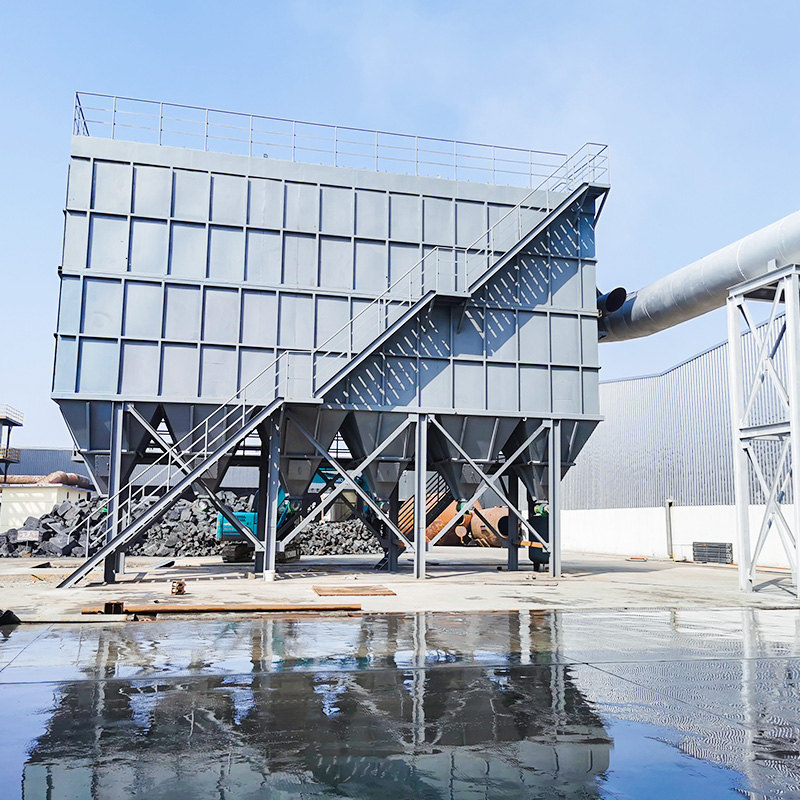
- 9. Dust Collection System: Cyclone separators and bag-filter dust collectors capture airborne fines generated during granulation, drying, and screening, typically achieving dust removal efficiency above 99.5% to meet environmental regulations.
Frequently Asked Questions About All Fertilizer Disc Pelletizers
Q1: What is the granulation rate (on-size yield) I can expect from a disc pelletizer?
A well-tuned disc pelletizer typically achieves an on-size granulation rate of 85–93% for organic fertilizers and 80–90% for chemical fertilizer materials, assuming feedstock particle size, moisture, and operating parameters are correctly controlled. Oversized and undersized fractions are recycled back into the process, so effective material utilization approaches 100% — none of the input material is wasted, only re-processed.
Q2: How long does a disc pelletizer last and what maintenance does it need?
A quality disc pelletizer constructed from carbon steel with wear-resistant liner plates typically has an operational lifespan of 10–15 years under normal production conditions. Key maintenance tasks include: weekly inspection of the scraper blade for wear (replacement every 3–6 months), monthly lubrication of gearbox and drive bearings, and annual inspection of the disc pan surface and rim for wear or corrosion. Planned maintenance downtime of approximately 8–12 hours per month is typical for a continuously operated unit.
Q3: Can one disc pelletizer handle both organic and inorganic fertilizers?
Yes, the same physical disc pelletizer unit can process both organic and inorganic fertilizer materials — the machine itself is material-agnostic. However, switching between organic and inorganic materials requires a thorough cleaning of the disc surface, scraper blade, and spray nozzles to prevent cross-contamination. For plants that need to produce both organic-certified and chemical NPK products, most operators maintain separate disc pelletizer units or schedule production runs in dedicated blocks with full sanitation between runs.
Q4: What particle size should the raw material be before entering the disc pelletizer?
For optimal granulation, raw material fed to a disc pelletizer should have a particle size below 2 mm, with 80% or more of particles below 1 mm (approximately 0.5 mm average). Coarser particles act as oversized seed nuclei, creating granules with uneven internal structure and lower crush strength. If the raw material contains particles above 2 mm, a pre-crushing step using a chain crusher or hammer mill is required before granulation. Particle size measurement using a standard vibrating screen is recommended during quality control.
Q5: How is disc pelletizer capacity calculated when planning a new production line?
Disc pelletizer capacity is typically rated in tons per hour of wet granule output. To calculate required disc size for a target annual production, apply this simplified formula: Required hourly output = Annual target (tons) / (Operating days x Daily operating hours). For example, a plant targeting 10,000 tons per year, operating 300 days at 20 hours per day, needs: 10,000 / (300 x 20) = 1.67 tons per hour — a 1,500 mm disc with 15 kW motor would be adequate. A 20–30% safety buffer on capacity is always recommended to accommodate raw material variation and cleaning downtime.
Q6: What is the typical granule strength produced by a disc pelletizer?
Granule crush strength (compressive strength) for disc-pelletized fertilizers typically ranges from 15–35 N (Newtons) for organic fertilizer granules and 20–50 N for compound inorganic fertilizer granules, measured after drying. These values meet international commercial fertilizer standards, which generally require a minimum crush strength of 10–15 N for granules to withstand transportation and mechanical spreading without excessive breakage. Granule strength can be increased by using binders such as bentonite (adding approximately 5–10 N to crush strength at 2% inclusion) or by reducing final moisture to below 8%.
Q7: Is a disc pelletizer suitable for small-scale farm-based fertilizer production?
Yes, disc pelletizers are one of the most accessible granulation technologies for small-scale operations. Entry-level 1,000 mm disc units with 1.5 kW motors are available at relatively low capital cost, require no specialized installation infrastructure beyond a level concrete pad and electrical connection, and can be operated by a single trained worker. For a small farm processing its own animal manure into organic fertilizer granules, a 1,000–1,500 mm disc unit producing 0.5–2 tons per hour is typically sufficient, with a full payback period of 12–24 months based on the value of produced fertilizer versus purchased alternatives.
What Are the Limitations of a Disc Pelletizer?
Despite its broad versatility, the disc pelletizer is not the best solution for every fertilizer granulation scenario. Understanding its limitations is important for making the right equipment selection.
- Not Suitable for Dry Compaction: The disc pelletizer requires moisture (typically 25–35%) to form granules through agglomeration. It cannot process dry, non-cohesive powders without adding liquid binder, making it unsuitable for formulations that cannot tolerate moisture — in those cases, a roller compactor or flat die extruder is the correct choice.
- Lower Capacity per Unit than Drum Granulators: For very high throughput requirements above 30 tons per hour from a single granulation unit, a large rotary drum granulator may be more practical, as scaling a disc pelletizer beyond 6,000 mm diameter creates mechanical complexity without proportional capacity gains.
- Requires Skilled Operator Attention: The open disc design that provides excellent visibility also means the granulation process is more sensitive to operator intervention than enclosed systems. Variations in feed rate, moisture, or material characteristics require prompt adjustments that demand trained, attentive operators.
- Weather Sensitivity in Open-Air Installations: Disc pelletizers installed without weather protection in humid climates can absorb atmospheric moisture during operation, disrupting granule formation. Indoor installation or covered sheds are strongly recommended for consistent performance in humid tropical environments.
Conclusion: Why the All Fertilizer Disc Pelletizer Remains the Industry Standard
The all fertilizer disc pelletizer earns its reputation as the most versatile granulation solution in the fertilizer industry through a combination of broad material compatibility, low operating cost, excellent granule quality, and unmatched operator visibility. From composted animal manure and humic acid to compound NPK blends and inorganic phosphate fertilizers, no other single granulation technology handles such a wide range of inputs with comparable efficiency.
For fertilizer plant investors, agricultural processors, and farmers evaluating on-site granulation options, the disc pelletizer offers a proven, scalable, and cost-effective starting point. Matching disc diameter to required production capacity, selecting appropriate binders for the target material, and investing in proper upstream crushing and downstream drying infrastructure are the three most important decisions that determine long-term operational success.
As global demand for customized fertilizer formulations, organic-certified products, and locally produced agricultural inputs continues to grow, the fertilizer disc pelletizer is well positioned to remain the cornerstone of flexible, efficient fertilizer granulation for years to come.