 En
En
 English
  Français
  русский
  中文简体
中文简体  عربى
عربى  Español

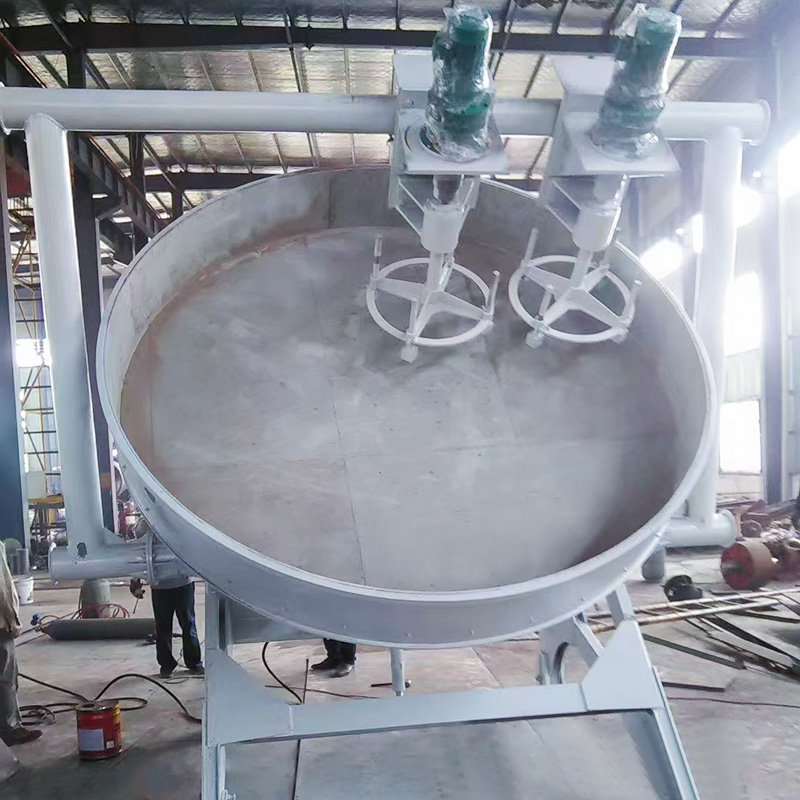
A disc pelletizer — also known as a pan pelletizer or disc granulator — is a rotating, inclined circular pan that agglomerates fine powder or moist material into uniform, spherical pellets through a combination of centrifugal force, gravity, and liquid binder addition. It is one of the most widely used size-enlargement machines in fertilizer manufacturing, iron ore processing, mining, and chemical industries worldwide.
This guide explains exactly how a disc pelletizer works, what its key components are, how different types compare, which industries rely on it, and what parameters matter most when selecting or operating one.
How Does a Disc Pelletizer Work?
A disc pelletizer works by feeding fine, moistened powder onto a rotating inclined pan where particle collision, rolling, and liquid bridging cause the material to progressively grow into dense, round pellets that self-classify by size and discharge over the rim automatically.
The pelletization mechanism unfolds in four sequential stages:
- Nucleation: Fine feed particles contact the liquid binder (water, solution, or slurry sprayed by nozzles above the pan). Surface tension causes small clusters of particles to form initial seed nuclei, typically 0.5–2 mm in diameter.
- Coalescence and growth: Rotating pan motion causes seed nuclei to roll through the powder bed repeatedly. Each pass picks up additional fine particles, growing the pellet layer by layer. The process is analogous to rolling a snowball — each revolution adds mass.
- Densification: As pellets grow larger and travel up the pan wall under centrifugal force, internal voids are compressed by the rolling action. Pellet density increases from approximately 55–65% of theoretical density during early growth to 70–85% in mature pellets near discharge.
- Self-classification and discharge: Larger, heavier pellets migrate to the outer rim of the pan and discharge over the edge continuously. Smaller, lighter particles remain in the center of the pan for further growth. This built-in classification is one of the key advantages of the pan pelletizer design over drum-based alternatives — no external screening is needed to separate oversized from undersized product during operation.
The result is a continuous, self-regulating process that produces pellets of remarkably consistent size. A well-tuned disc granulator can achieve a target size distribution of ±1–2 mm around the desired diameter with yields above 85% on-specification product.
Key Components of a Disc Pelletizer
Every disc pelletizer shares six core components whose design and adjustment directly determine pellet quality, throughput, and operational stability.
1. The Pan (Disc)
The circular pan is the defining component. It is fabricated from carbon steel or wear-resistant manganese steel plate, with diameters ranging from 0.5 m (laboratory scale) to 7.5 m (industrial iron ore lines). The pan interior is typically lined with replaceable wear plates or fitted with raised edge ribs to prevent smooth-surface slippage of the material bed. Pan depth (the height of the side wall above the pan floor) is a critical design parameter — shallow pans produce smaller pellets with shorter residence time; deeper pans allow larger pellets and longer growth cycles.
2. The Drive System
The pan is driven by a variable-speed electric motor through a gearbox and pinion-ring gear arrangement. Pan rotational speed — expressed as a percentage of critical speed — is the single most influential operating variable. Most disc pelletizers operate at 50–70% of critical speed (the speed at which centrifugal force would pin material to the pan wall). Typical operating speeds range from 5 to 20 RPM depending on pan diameter — larger pans rotate more slowly in absolute RPM but at equivalent peripheral velocities.
3. The Inclination Mechanism
The pan is mounted on a tilted axis, typically adjustable between 40° and 60° from horizontal. Inclination angle controls residence time and the rolling path of growing pellets across the pan surface. Steeper angles reduce residence time and produce smaller pellets; shallower angles increase residence time and promote larger pellet growth. The ability to adjust inclination without stopping the machine is a significant operational advantage of modern pan pelletizer designs.
4. The Liquid Binder Spray System
One or more spray nozzles positioned above the pan deliver liquid binder at a controlled flow rate. Binder type and addition rate are material-specific: iron ore pelletizing typically uses bentonite clay (0.5–1.0% by weight) with water; fertilizer granulation uses concentrated nutrient solutions; pharmaceutical and food applications use aqueous polymer solutions. Uniform spray coverage across the active bed area is essential — uneven wetting produces bimodal pellet size distributions and reduces yield.
5. The Scraper System
Fixed or adjustable scrapers mounted inside the pan prevent material buildup on the pan floor and walls. In sticky or fine materials, pan buildup can quickly reduce effective pan volume, alter the material bed geometry, and disrupt the self-classification mechanism. Scrapers are typically fabricated from hardened steel or polyurethane and require periodic inspection and replacement — scraper maintenance is one of the highest-frequency service tasks on a disc granulator.
6. The Feed System
Feed material is delivered to the pan center by a screw conveyor, belt conveyor, or vibratory feeder at a consistent, controlled rate. Feed rate stability directly affects pellet size consistency — surges in feed rate produce sudden changes in bed depth and moisture distribution that create off-specification product. Gravimetric (loss-in-weight) feeders are used in precision applications where feed rate must be controlled to within ±1% of set point.
Types of Disc Pelletizers
Disc pelletizers are broadly classified by pan size, drive configuration, and whether they are designed for batch or continuous operation — with continuous, variable-speed industrial units dominating most commercial applications.
Laboratory / Pilot Scale Disc Pelletizers (0.5–1.2 m diameter)
Used for formulation development, binder optimization, and process parameter determination before scale-up. Pan diameters of 0.5–1.2 m, throughputs of 5–200 kg/hour. Results from laboratory-scale pan pelletizers are scalable to industrial units using established geometric similarity rules, though liquid addition rate, inclination angle, and rotational speed require re-optimization at each scale step.
Industrial Disc Pelletizers (1.5–7.5 m diameter)
The workhorses of fertilizer and iron ore industries. A single 7.5 m diameter disc pelletizer in an iron ore pelletizing plant can process 150–200 tonnes per hour of iron ore concentrate, producing green pellets of 8–16 mm diameter for subsequent induration (hardening) in a traveling grate or rotary kiln. Multiple large-diameter pans are installed in parallel to match plant throughput targets of 1–5 million tonnes per year.
Specialized Pan Pelletizers for Fertilizer and Chemicals
Fertilizer-grade pan pelletizers are designed for corrosion resistance (stainless steel or epoxy-coated pans) and compatibility with nitrogen, phosphate, and potassium raw materials. Throughputs typically range from 1 to 30 tonnes per hour per unit for NPK compound fertilizer lines. In the chemical and pharmaceutical sectors, fully enclosed disc granulators with dust extraction and solvent recovery systems are used for containment of hazardous or high-value materials.
Disc Pelletizer vs. Drum Pelletizer vs. Roller Press: Which Granulation Method Is Best?
The disc pelletizer, rotary drum pelletizer, and roller press granulator are the three dominant industrial granulation technologies — each with fundamentally different operating principles, product characteristics, and ideal application ranges.
| Parameter | Disc Pelletizer | Rotary Drum Pelletizer | Roller Press Granulator |
|---|---|---|---|
| Pellet shape | Highly spherical | Mostly spherical | Irregular / pillow-shaped |
| Size distribution control | Excellent (self-classifying) | Moderate (requires screening) | Moderate (depends on roll gap) |
| Typical throughput | 1–200 t/h per unit | 5–500 t/h per unit | 1–50 t/h per unit |
| Binder moisture requirement | 8–15% (wet basis) | 8–20% (wet basis) | 2–6% (dry binding possible) |
| Pellet density | Medium–High | Medium | Very High |
| Visual process monitoring | Excellent (open pan) | Limited (enclosed drum) | Limited |
| Capital cost (mid-scale) | Medium | Medium–High | High |
| Best application | Iron ore, NPK fertilizer, fine ores | High-volume fertilizer, aggregates | Pharmaceuticals, specialty chemicals |
Table 1: Side-by-side comparison of disc pelletizer, rotary drum pelletizer, and roller press granulator across eight key performance and operational parameters.
Where Are Disc Pelletizers Used? Key Industry Applications
Disc pelletizers are deployed wherever fine, dusty, or powdery raw materials must be converted into free-flowing, uniformly sized spherical pellets for downstream processing, transportation, or end-use application.
Iron Ore Pelletizing
Iron ore pelletizing is the largest single application of disc pelletizers globally. Iron ore concentrate — ground to 80% passing 45 µm — is too fine to be charged directly into a blast furnace or direct reduction reactor without causing excessive pressure drop and gas flow disruption. The pan pelletizer converts this concentrate into 8–16 mm green pellets that are then hardened by firing at 1,250–1,350°C in a traveling grate or rotary kiln. Global iron ore pellet production exceeded 500 million tonnes in 2023, the vast majority produced on large-diameter disc pelletizers.
Fertilizer Manufacturing
NPK (nitrogen-phosphorus-potassium) compound fertilizers are produced by granulating mixtures of powdered raw materials — urea, ammonium sulfate, single superphosphate, potassium chloride — on a disc granulator. The resulting 2–5 mm spherical granules are free-flowing, dust-free, and apply evenly through mechanical spreaders. Disc pelletizers are preferred over drum granulators in fertilizer lines producing specialty grades in smaller batches, because product changeover requires only a pan wash rather than full drum cleaning.
Mining and Mineral Processing
Copper concentrate, manganese ore fines, chromite, and bauxite are all pelletized using pan pelletizers to enable heap leaching, smelting, or sintering at acceptable bed permeability. In heap leach operations, uniform pellet size is critical: undersized fines cause compaction and reduced acid percolation; oversized pellets create channeling. A well-operated disc granulator maintains the tight size distribution that optimizes leach pad performance and metal recovery rates.
Waste Treatment and Environmental Applications
Industrial waste dusts — electric arc furnace (EAF) dust, blast furnace sludge, fly ash, and lime kiln dust — are pelletized for safe disposal or recycling. EAF dust pelletizing is a significant application: the zinc- and iron-rich dust is mixed with cement binder and pelletized on a disc pelletizer to produce a stable, landfill-acceptable or metallurgically recoverable product. Biosolids (sewage sludge) pelletization for use as soil amendment is a growing application, with disc granulators chosen for their open, easily cleaned design.
Cement, Lime, and Building Materials
Raw meal pelletizing in the Lepol kiln cement process uses large-diameter pan pelletizers to produce green pellets fed to a traveling grate preheater. Lightweight aggregate production — converting fly ash or expanded clay into graded aggregate pellets — also relies on disc pelletization to achieve the target specific gravity and size distribution required by building codes.
Critical Operating Parameters of a Disc Pelletizer
Five operating parameters — pan speed, inclination angle, moisture content, feed rate, and binder type — interact to determine pellet size, strength, and yield on a disc pelletizer.
| Parameter | Typical Range | Effect of Increasing | Effect of Decreasing |
|---|---|---|---|
| Pan Speed (% critical) | 50–70% | Shorter residence time, smaller pellets, faster discharge | Longer residence time, larger pellets, risk of bed slippage |
| Inclination Angle | 40°–60° | Faster discharge, smaller pellets, reduced residence time | Longer residence time, larger pellets, risk of pan overflow |
| Moisture / Binder Rate | 8–15% (wet basis) | Faster growth, weaker green pellets, agglomeration risk | Slower growth, harder pellets, lower yield below minimum |
| Feed Rate | Design specific | Larger bed depth, potential size distribution broadening | Thinner bed, reduced throughput, increased fines fraction |
| Feed Particle Size (d₈₀) | < 100 µm (typical) | Coarser product, lower pellet strength, more binder needed | Finer feed → stronger pellets, higher specific surface area |
Table 2: Key operating parameters of a disc pelletizer, their typical ranges, and the directional effect of increasing or decreasing each variable on pellet product quality.
Advantages and Limitations of Disc Pelletizers
The disc pelletizer's open-pan design and self-classifying mechanism give it unique advantages in pellet quality and process visibility, while its sensitivity to feed variability and moisture is its primary operational challenge.
Advantages
- Self-classifying discharge: Built-in size separation eliminates the need for a separate screening circuit to remove fines during operation, reducing capital cost and footprint compared to drum-based systems.
- Superior pellet sphericity: The rolling action on an open pan produces more uniformly round pellets than drum pelletizers, which is critical for blast furnace burden permeability and direct reduction reactor performance.
- Real-time process visibility: Operators can visually observe the pellet bed at all times — monitoring size distribution, moisture, and product color — and make immediate adjustments. Drum pelletizers are enclosed and provide no visual feedback.
- Fast product changeover: Switching grades or formulations requires only pan cleaning and parameter re-setting. A typical changeover on a fertilizer disc granulator takes 30–90 minutes, versus several hours for a drum pelletizer requiring full interior washout.
- Flexible scale-up: Disc pelletizer performance scales predictably with pan diameter according to well-established geometric similarity rules, enabling reliable pilot-to-production scale-up with fewer surprises than drum systems.
Limitations
- Sensitivity to feed variability: A pan pelletizer is more sensitive to fluctuations in feed moisture, particle size, and chemistry than a drum pelletizer. Even a 1–2% swing in feed moisture can shift the pellet size distribution significantly, requiring immediate operator response.
- Open design generates dust: The open pan creates a dusty working environment around the machine. Dust extraction hoods and enclosures add capital cost, and are mandatory for toxic, carcinogenic, or explosive materials.
- Lower maximum throughput per unit: The largest disc pelletizers cap at approximately 200 t/h per unit. Large drum pelletizers can achieve 500 t/h in a single unit, making them preferable for very-high-volume commodity applications where multiple large pans would be required.
- Scraper wear and maintenance: Pan scrapers in abrasive materials (iron ore, silica, heavy mineral sands) wear rapidly and require replacement every 2–8 weeks, depending on material abrasivity. This is a recurring maintenance cost that must be factored into total cost of ownership calculations.
Frequently Asked Questions About Disc Pelletizers
Q: What is the difference between a disc pelletizer, a pan pelletizer, and a disc granulator?
There is no technical difference — all three terms describe the same machine. "Disc pelletizer" and "pan pelletizer" are the most common terms in mining and iron ore industries; "disc granulator" is more frequently used in the fertilizer and chemical sectors. The choice of terminology varies by geography and industry convention, not by any difference in design or operating principle. All three produce spherical pellets on a rotating, inclined pan using a binder liquid.
Q: What pellet sizes can a disc pelletizer produce?
A disc pelletizer can produce pellets ranging from approximately 1 mm to 30 mm in diameter, with the target size determined by pan design, operating parameters, and feed characteristics. Iron ore pelletizing targets 8–16 mm; fertilizer granulation typically targets 2–5 mm; some specialty applications produce larger pellets of 20–30 mm. Pellets smaller than 1 mm are generally more efficiently produced by fluidized bed granulation, which provides better control at very fine sizes.
Q: Why are my pellets too small or too large on a disc pelletizer?
Pellet size on a disc pelletizer is primarily controlled by residence time, moisture content, and pan inclination angle. Pellets that are consistently too small indicate excessive pan speed (reducing residence time), too steep an inclination angle, or insufficient binder moisture. Pellets that are too large indicate the opposite — too slow a pan speed, too shallow an inclination, or excessive moisture causing rapid uncontrolled growth. The correct diagnostic sequence is: check moisture content first (the most sensitive variable), then adjust inclination angle, and finally fine-tune pan speed. Changing multiple parameters simultaneously makes root-cause diagnosis very difficult.
Q: Can a disc pelletizer handle sticky or high-clay-content materials?
Yes, but sticky or high-clay materials require more aggressive scraper systems, coarser pan surface texturing, and careful moisture control to prevent pan buildup. Materials with clay content above 15–20% tend to form sheets on the pan floor rather than rolling into discrete pellets. Mitigation strategies include pre-drying the feed to reduce plasticity before pelletizing, adding a coarser diluent material to reduce clay concentration, and using ribbed or textured pan liners to disrupt sheet formation. Some very sticky materials — such as certain filter cakes — may be better suited to drum granulation, where the enclosed tumbling action better manages buildup.
Q: How do I scale up from a laboratory disc pelletizer to an industrial unit?
Scale-up of a disc pelletizer from laboratory to industrial scale uses geometric similarity principles, with peripheral velocity (not RPM) held constant between scales. The key scale-up rule: maintain the same ratio of pan depth to pan diameter, the same inclination angle, and match peripheral velocity (m/s) rather than rotational speed (RPM). For example, if a 0.6 m laboratory pan runs at 18 RPM to achieve a peripheral velocity of 0.57 m/s, a 3.0 m industrial pan should run at approximately 3.6 RPM to achieve the same peripheral velocity. Moisture content, binder type, and feed particle size distribution are kept identical. Even with careful geometric scale-up, at least one intermediate pilot scale (1.5–2.0 m pan) is strongly recommended for materials that have not been pelletized before, to validate green pellet strength and size distribution before full industrial investment.
Q: What maintenance does a disc pelletizer require?
Routine maintenance on a disc pelletizer focuses on four areas: scraper inspection and replacement, pan liner wear monitoring, spray nozzle cleaning, and gearbox/bearing lubrication. Scrapers in abrasive service should be inspected weekly and replaced when wear exceeds 30–40% of original thickness — worn scrapers allow buildup that disrupts bed dynamics and reduces yield. Pan liner wear rates depend strongly on feed abrasivity; in iron ore service, manganese steel liners typically last 6–18 months before replacement. Spray nozzles should be cleaned or replaced whenever flow rate deviates more than 10% from design, as uneven liquid distribution is the most common cause of sudden pellet size distribution problems. Gearbox oil changes every 4,000–8,000 operating hours (per manufacturer specification) and bearing re-greasing every 500–1,000 hours are standard preventive maintenance intervals.
Conclusion: Is a Disc Pelletizer the Right Granulation Solution?
The disc pelletizer — whether called a pan pelletizer or disc granulator — remains one of the most reliable and widely deployed granulation technologies in heavy industry and process manufacturing. Its combination of self-classifying discharge, excellent pellet sphericity, real-time process visibility, and scalable design makes it the preferred choice for iron ore pelletizing, NPK fertilizer production, mineral processing, and waste treatment applications worldwide.
Choosing between a disc pelletizer, a rotary drum pelletizer, or a roller press requires a clear understanding of your target pellet size, required throughput, feed material characteristics, and downstream process requirements. For applications demanding tight size distribution, high sphericity, and the flexibility to change products quickly, the disc granulator consistently delivers the best balance of pellet quality, operational simplicity, and total cost of ownership.