
 En
En
 English
  Français
  русский
  中文简体
中文简体  عربى
عربى  Español
alisen
alisen
alisen
alisen
alisen
alisen
alisen
alisen
alisen
alisen
alisen
alisen
Industry News
What Are Grinding Ball Mills and How Do They Optimize Industrial Grinding Efficiency?

Grinding ball mills are cylindrical rotating machines that use steel or ceramic balls as grinding media to crush and grind materials into fine powders through impact and attrition mechanisms. These essential industrial machines serve as the backbone of size reduction processes across mining, cement production, chemical processing, and pharmaceutical industries. By understanding how grinding ball mills operate and implementing proper optimization strategies, facilities can achieve significant improvements in throughput, energy efficiency, and product quality while reducing operational costs.
What Exactly Are Grinding Ball Mills?
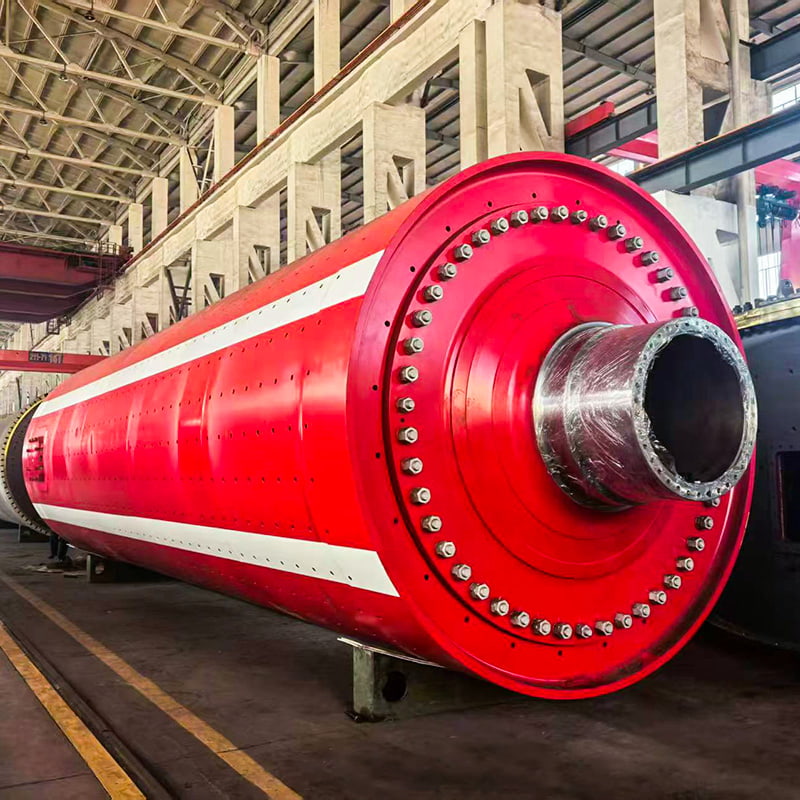
Grinding ball mills are horizontal or vertical rotating cylindrical chambers partially filled with grinding media (steel balls, ceramic balls, or cylpebs) that tumble and cascade to break down materials through mechanical forces. The fundamental design consists of a hollow drum supported by trunnion bearings, driven by a motor through a gearbox and girth gear arrangement. As the cylinder rotates at a fraction of its critical speed (typically 65-80%), the grinding media is lifted along the rising side and then cascades or cataracts down, creating impact forces that fracture the feed material.
The versatility of grinding ball mills makes them indispensable across multiple sectors. In mining operations, they reduce ore particle sizes to liberate valuable minerals for subsequent flotation or leaching processes. Cement plants rely on grinding ball mills to pulverize clinker and additives into the fine powder that constitutes Portland cement. Pharmaceutical manufacturers use specialized ball mills to achieve precise particle size distributions for drug formulations, while ceramic producers depend on them for preparing homogeneous glaze and body materials.
Modern grinding ball mills range from small laboratory units processing grams of material to massive industrial installations handling thousands of tons per day. The scale and configuration vary based on application requirements, with diameters spanning from 0.5 meters to over 12 meters for large semi-autogenous grinding circuits.
How Do Grinding Ball Mills Work?
Grinding ball mills operate through three primary size reduction mechanisms: impact breakage from falling grinding media, attrition from particle-to-particle and particle-to-liner friction, and abrasion from surface grinding actions. The effectiveness of these mechanisms depends critically on maintaining the proper rotational speed relative to the mill's critical speed—the theoretical speed at which centrifugal force would pin the grinding media against the shell, preventing any cascading action.
The critical speed calculation follows the formula: Nc = 42.3 / √(D-d) rpm, where D represents the mill diameter in meters and d represents the ball diameter in meters. [^18^] Operating at 70-80% of critical speed maximizes the cascading action where balls fall in parabolic trajectories, delivering optimal impact energy to the material. Below 60% of critical speed, the media slides without effective lifting; above 90%, centrifugal effects reduce grinding efficiency dramatically.
The grinding process involves complex particle dynamics. Feed material enters through a trunnion or feed chute and encounters the tumbling grinding media. Large particles experience point-contact impacts from spherical grinding balls, while smaller particles undergo attrition between balls and mill liners. The continuous rotation ensures progressive size reduction as material moves from the feed end toward the discharge end, with residence time controlled by the mill's length-to-diameter ratio and discharge mechanism design.
Types of Grinding Ball Mills: A Comprehensive Comparison
Grinding ball mills are classified based on discharge mechanism, grinding mode, and mill geometry, with each configuration offering distinct advantages for specific applications. Understanding these variations enables engineers to select the optimal mill type for their processing requirements.
By Discharge Mechanism
| Type | Description | Best Applications |
| Overflow Ball Mill | Material discharges through hollow trunnion when pulp level reaches the discharge opening. Higher pulp level increases residence time. | Fine grinding, regrind circuits, Carbon-in-Leach (CIL) processes |
| Grate Discharge Ball Mill | Grate with slots at discharge end allows rapid material removal while retaining grinding media. Lower pulp level reduces over-grinding. | Coarse grinding, primary grinding stages, high throughput requirements |
| Peripheral Discharge | Material exits through ports along the mill shell, enabling rapid removal and reduced residence time. | Rod mills, applications requiring minimal fines generation |
By Grinding Mode
Wet grinding ball mills utilize water or solvents as the grinding medium, while dry grinding ball mills operate with air or inert gas atmospheres. Wet grinding generally achieves finer particle sizes (sub-micron to nanometer range) with better temperature control, making it essential for heat-sensitive materials and applications requiring ultra-fine products.The liquid medium prevents particle agglomeration and serves as a coolant, though it increases media wear rates and requires subsequent drying operations.
Dry grinding offers simpler operation without slurry handling or drying requirements, making it preferable for moisture-sensitive materials like cement clinker or certain pharmaceuticals. However, dry grinding generates more dust and heat, requiring robust dust collection and temperature management systems.
By Length-to-Diameter Ratio
| Mill Category | L/D Ratio | Primary Function |
| Short Mills | Less than 2:1 | Coarse grinding, single-stage reduction |
| Medium Mills | Approximately 3:1 | General purpose grinding, two-compartment designs |
| Long Mills (Tube Mills) | Greater than 4:1 | Fine grinding, multi-compartment cement mills |
Grinding Ball Mills vs Rod Mills: Key Differences
While both grinding ball mills and rod mills serve size reduction functions, they differ fundamentally in grinding media geometry, resulting particle characteristics, and optimal application scenarios. Understanding these distinctions enables proper equipment selection for specific process requirements.
Rod mills utilize long steel rods (length approaching the mill cylinder length) that create line-contact grinding surfaces. This geometry produces a selective grinding effect where coarse particles experience preferential breakage while fines escape through rod gaps, minimizing over-grinding. [^3^] Rod mills excel in coarse grinding applications (producing 1-3mm products) with uniform particle size distribution and reduced slime generation. Their typical length-to-diameter ratio ranges from 1.5:1 to 2.5:1, significantly longer than ball mills.
Grinding ball mills employ spherical media creating point-contact impacts, generating more random breakage patterns suitable for fine and ultra-fine grinding (achieving 0.074-0.4mm products). Ball mills achieve higher reduction ratios (up to 200:1 in closed circuits) but produce broader particle size distributions with increased fines generation.
| Parameter | Grinding Ball Mills | Rod Mills |
| Grinding Media | Steel balls (diameter <100mm) | Steel rods (length near cylinder length) |
| Contact Mechanism | Point contact impact | Line contact compression |
| Media Filling Rate | 35-45% | 30-35% |
| Rotational Speed | 70-80% of critical | 60-75% of critical |
| Product Size | 0.074-0.4mm (fine grinding) | 1-3mm (coarse grinding) |
| Over-grinding Risk | Higher | Lower (selective grinding) |
| Energy Consumption | Higher (33-40 kWh/t cement) | Lower |
Selection guidance: Choose grinding ball mills for fine grinding applications requiring high reduction ratios, such as cement finish grinding, flotation feed preparation, or fine chemical processing. Select rod mills for coarse grinding where minimizing over-grinding and maintaining uniform particle size are priorities, such as preparing feed for gravity concentration or open-circuit grinding of brittle ores.
Grinding Ball Mills vs SAG and AG Mills
Semi-autogenous (SAG) and autogenous (AG) mills represent alternative grinding technologies that compete with or complement grinding ball mills in mineral processing circuits, particularly for primary grinding duties in large-scale mining operations.
AG mills eliminate grinding media entirely, relying on the ore itself to act as grinding media through autogenous breakage. This approach suits moderately hard ores with low clay content where rock-on-rock grinding is effective. SAG mills represent a hybrid approach, utilizing both ore and a small percentage (typically 4-15%) of steel balls to enhance grinding efficiency.
Grinding ball mills differ from SAG/AG mills in several critical aspects. Ball mills typically feature higher length-to-diameter ratios (optimized for fine grinding with longer retention times), while SAG/AG mills employ short, wide designs (large diameter-to-length ratios) capable of handling feed sizes up to 300mm. Ball mills operate with higher media filling rates (35-45% vs. 8-15% for SAG mills) and achieve finer product sizes (P80 of 75-200μm vs. 1-3mm for SAG mills).
| Feature | Grinding Ball Mills | SAG Mills | AG Mills |
| Grinding Media | Steel/ceramic balls (35-45% fill) | Ore + steel balls (8-15% ball charge) | Ore only (no steel media) |
| Maximum Feed Size | ≤25mm | Up to 250-300mm | Up to 300mm |
| Typical Product Size | 0.074-0.89mm (P80) | 1-3mm (P80) | 0.5-5mm |
| Mill Geometry | Long and narrow (high L/D) | Short and wide (low L/D) | Short and wide (low L/D) |
| Specific Energy | Medium (33-40 kWh/t cement) | High | Low (when ore suitable) |
| Capital Cost | Low | High | Medium-High |
Modern large-scale mineral processing often employs SAG mills for primary grinding followed by grinding ball mills for secondary and tertiary grinding stages, creating efficient multi-stage comminution circuits that optimize energy utilization across particle size ranges.
Critical Components and Material Selection
Grinding ball mill performance depends heavily on proper selection of liners, grinding media, and shell materials, with choices driven by ore characteristics, product purity requirements, and economic considerations.
Mill Liner Materials
Liner selection significantly impacts grinding efficiency, product contamination, and maintenance intervals. For applications where product purity is critical—such as battery cathode materials, pharmaceutical APIs, or electronic ceramics—ceramic liners (alumina, zirconia, silicon carbide, or silicon nitride) eliminate metal contamination risks. [^8^] Alumina ceramics (Mohs hardness 9) offer the best cost-performance balance for most high-purity applications, while zirconia provides superior toughness for more demanding grinding conditions.
For coarse grinding applications where purity is not a concern, high-chromium cast iron or manganese steel liners provide excellent impact resistance and lower capital costs. Manganese steel work-hardens under impact, increasing surface hardness during service. [^10^] Poly-Met liners combining rubber and metallic inserts offer noise reduction and improved wear life in specific applications.
Grinding Media Specifications
Grinding media selection involves balancing hardness, toughness, density, and cost. Forged steel balls (high carbon or alloy steel) offer excellent wear resistance for general mining applications. Cast high-chromium iron balls provide superior hardness for abrasive ores but are more brittle. Ceramic balls (alumina, zirconia, silicon nitride) are essential for contamination-sensitive applications despite higher costs.
Media size distribution critically affects grinding efficiency. The Bond formula guides initial top ball size selection: B = ((F80 × Wi)/(K × Cs × S × D^0.5))^0.5, where F80 represents feed size, Wi is the work index, Cs is critical speed percentage, S is specific gravity, and D is mill diameter. [^17^] An optimized charge contains graded sizes from the calculated top size down to smaller balls, ensuring efficient grinding as particles reduce in size.
Optimization Strategies for Grinding Ball Mills
Systematic optimization of grinding ball mills can reduce specific energy consumption by 15-25% while maintaining or improving throughput and product quality. Key optimization variables include mill speed, ball charge level, feed rate, and classification efficiency.
Mill speed optimization requires maintaining operation at 70-80% of critical speed to maximize cascading action. Speeds below 65% reduce impact energy, while speeds above 85% increase centrifugal effects and reduce grinding efficiency. Variable frequency drives enable real-time speed adjustment based on load conditions and ore characteristics.
Ball charge optimization typically targets 28-35% of mill volume for efficient grinding. Undercharged mills waste energy lifting air instead of grinding material; overcharged mills restrict media motion and reduce impact effectiveness. Regular monitoring and topping up of ball charge maintains optimal grinding conditions. Media recharge should follow disciplined schedules based on wear rates rather than fixed time intervals.
Circuit configuration significantly impacts efficiency. Closed-circuit operation with high-efficiency classifiers (achieving 65-75% efficiency versus 40-50% for static separators) reduces recirculating load and can save 6-10 kWh/t. Upgrading from first-generation to third-generation separators typically delivers the highest return on investment for existing ball mill circuits.
Grinding aids—chemical additives dosed at 0.01-0.1% of feed weight—can reduce specific energy consumption by 5-10% by preventing particle agglomeration and maintaining effective ball-to-particle contact. These additives adsorb onto freshly fractured surfaces, neutralizing electrostatic charges that cause fine particles to coat grinding media and liners.
Maintenance Best Practices
Proactive maintenance of grinding ball mills prevents catastrophic failures, extends component life, and maintains grinding efficiency at design levels. Without proper maintenance, ball mills can lose 1-2% efficiency monthly, accumulating 8-15% energy waste over six-month operating campaigns.
Trunnion bearing maintenance is critical—80% of bearing failures are lubrication-related rather than fatigue-related. Maintain oil temperature at 40-50°C using ISO VG 680 or VG 1000 oils with EP additives. Implement offline filtration to achieve ISO 18/16/13 cleanliness codes. Monitor bearing temperature continuously, with alarms at 65°C and automatic trips at 75°C.
Liner replacement scheduling should follow thickness monitoring rather than fixed time intervals. Replace liners when remaining thickness reaches 25-30% of original to prevent shell damage. Typical liner life ranges from 8,000-12,000 operating hours depending on ore abrasiveness and liner material. Ultrasonic thickness testing monthly enables predictive replacement scheduling.
Drive system maintenance requires monthly vibration analysis to detect gear mesh problems and bearing defects weeks before failure. Measure girth gear backlash quarterly and analyze lubricants for metallic particles indicating wear. Laser alignment checks should occur annually to prevent pitting and scoring from misalignment.
Daily operational checks should include monitoring mill sound (steady grinding noise indicates proper operation; knocking or metallic impacts indicate problems), vibration levels, bearing temperatures, motor current stability, and product size distribution. Document all readings to establish trending baselines that enable early problem detection.
Frequently Asked Questions About Grinding Ball Mills
What factors most significantly affect grinding ball mill efficiency?
The six primary factors controlling grinding ball mill efficiency are: (1) feed grindability and moisture content, (2) mill charge and media grading, (3) separator/classifier efficiency, (4) ventilation and mill internals condition, (5) product fineness targets, and (6) operational speed relative to critical speed. Optimizing all six factors as a system typically delivers 15-25% energy savings, while single-variable optimization yields 3-5% improvements.
How is critical speed calculated for grinding ball mills?
Critical speed (Nc) is calculated using the formula: Nc = 42.3 / √(D-d) rpm, where D is the mill inside diameter in meters and d is the ball diameter in meters. Alternatively, Nc = (1/2π) × √(g/(R-r)) where g is gravitational acceleration (9.81 m/s²), R is mill radius, and r is ball radius. Practical operating speed ranges from 65-80% of critical speed, with 75% being optimal for most applications.
What is the optimal ball charge for grinding ball mills?
Optimal ball charge typically occupies 28-35% of mill volume for efficient grinding. The charge should contain a graded distribution of sizes: approximately 25-30% large balls (for coarse grinding), 25-30% medium balls, and 45-50% small balls (for fine grinding). Regular topping-up maintains charge levels as media wears. Bond's formula helps determine the required top ball size based on feed characteristics.
When should wet grinding be preferred over dry grinding in ball mills?
Wet grinding is preferred when: (1) targeting sub-micron or nanometer particle sizes, (2) processing heat-sensitive materials requiring temperature control, (3) preventing particle agglomeration during fine grinding, (4) achieving uniform dispersions for slurry-based processes, or (5) handling materials that generate hazardous dust when dry. Dry grinding is preferable for moisture-sensitive materials, simpler operations without drying requirements, and applications where dust control is manageable.
How often should grinding ball mill liners be replaced?
Liner replacement typically occurs every 8,000-12,000 operating hours depending on ore abrasiveness, mill speed, and liner material. [^1^] High-chrome iron liners in cement grinding average 9,000-10,000 hours. Monitor liner thickness monthly using ultrasonic testing and schedule replacement at 25% remaining thickness to prevent shell damage. Ceramic liners in fine grinding applications may require replacement based on different wear patterns.
What causes excessive vibration in grinding ball mills?
Common vibration causes include: trunnion bearing wear (low frequency <2x RPM), gear mesh problems (gear mesh frequency sidebands), loose or broken liners (impact pulses), mill imbalance (1x RPM), and foundation issues (structural resonance). Frequency analysis identifies specific sources. Acceptable vibration levels remain below 4.5 mm/s RMS; immediate shutdown is required above 11.2 mm/s to prevent catastrophic failure.
Can grinding ball mills achieve nanometer particle sizes?
Yes, specialized high-energy grinding ball mills—particularly planetary ball mills and stirred media mills—can achieve nanometer particle sizes. This requires wet grinding conditions, high energy input, appropriate media selection (small ceramic balls), and extended grinding times. Planetary ball mills achieve higher energy intensities through complex multi-axis motion, making them suitable for nanoparticle synthesis in research and specialized industrial applications.
What is the difference between grate discharge and overflow discharge ball mills?
Grate discharge mills feature a grate with slots at the discharge end that allows rapid material removal while retaining grinding media. This design produces lower pulp levels, reduces over-grinding, and achieves higher throughput for coarse grinding applications. Overflow discharge mills allow material to exit through hollow trunnions when the pulp level reaches the discharge opening, creating higher residence times ideal for fine grinding and regrind circuits where maximum particle size reduction is required.
Conclusion
Grinding ball mills remain the most versatile and widely deployed size reduction equipment across industrial minerals processing, cement manufacturing, and chemical production. Understanding their operating principles—from critical speed calculations to media selection and liner materials—enables engineers to optimize performance, reduce energy consumption, and extend equipment life.
The choice between grinding ball mills and alternative technologies (rod mills, SAG mills, vertical roller mills) depends on feed size requirements, product specifications, energy constraints, and capital availability. For fine grinding applications requiring high reduction ratios, grinding ball mills continue to deliver unmatched flexibility and proven reliability.
Implementing systematic optimization strategies—including proper speed control, ball charge management, classifier upgrades, and proactive maintenance—can recover 15-25% of wasted energy while maintaining production targets. As industries face increasing pressure to reduce carbon footprints and operational costs, maximizing grinding ball mill efficiency represents a high-impact opportunity for sustainable process improvement.


GET IN
TOUCH WITH US
TOUCH WITH US
-
 No.68, Shuanglou Road, Qutang Town, Haian City, Nantong, Jiangsu
 -
Tel:
 +86-13914355558/18994158908
 -
E-mail:
 sales@tp-machinery.com
COPYRIGHT © 2025 Nantong Alisen Environmental Protection Technology Co., Ltd.
ALL RIGHTS RESERVED.
China fertilizer machinery manufacturer wholesale fertilizer machinery factory
