
 En
En
 English
  Français
  русский
  中文简体
中文简体  عربى
عربى  Español
alisen
alisen
alisen
alisen
alisen
alisen
alisen
alisen
alisen
alisen
alisen
alisen
Industry News
What equipment typically is included in a complete Compound Fertilizer Production Line?

A Compound Fertilizer Production Line is a complex system designed to transform raw materials into high-quality compound fertilizers efficiently and consistently. These production lines are essential in modern agriculture, providing balanced nutrients to crops and enhancing soil fertility. Understanding the equipment involved helps manufacturers optimize production, reduce costs, and maintain product quality.
Main Components of a Compound Fertilizer Production Line
A full-scale Compound Fertilizer Production Line typically includes multiple types of equipment, each serving a specific function in the fertilizer production process. The main equipment categories include:
1. Raw Material Handling and Storage Equipment
Raw materials such as ammonium sulfate, urea, potassium chloride, and phosphate are stored and handled before processing. Key equipment includes:
- Silos: Used for storing granular and powdered raw materials, ensuring consistent feed into the production line.
- Conveyors: Belt or screw conveyors transfer materials from storage to processing units efficiently.
- Hoppers and Feeders: Precisely control the flow of materials into crushers or mixers.
2. Crushing and Grinding Equipment
To ensure uniform particle size and improve granulation quality, raw materials often require crushing. Typical equipment includes:
- Hammer Crushers: Break down larger particles quickly.
- Roller Crushers: Produce fine and uniform powder, suitable for dense materials.
- Grinding Mills: Such as vertical mills or ball mills, to further refine raw materials for optimal blending.
3. Mixing and Blending Equipment
Uniform mixing of raw materials is critical for the quality of the compound fertilizer. Key machinery includes:
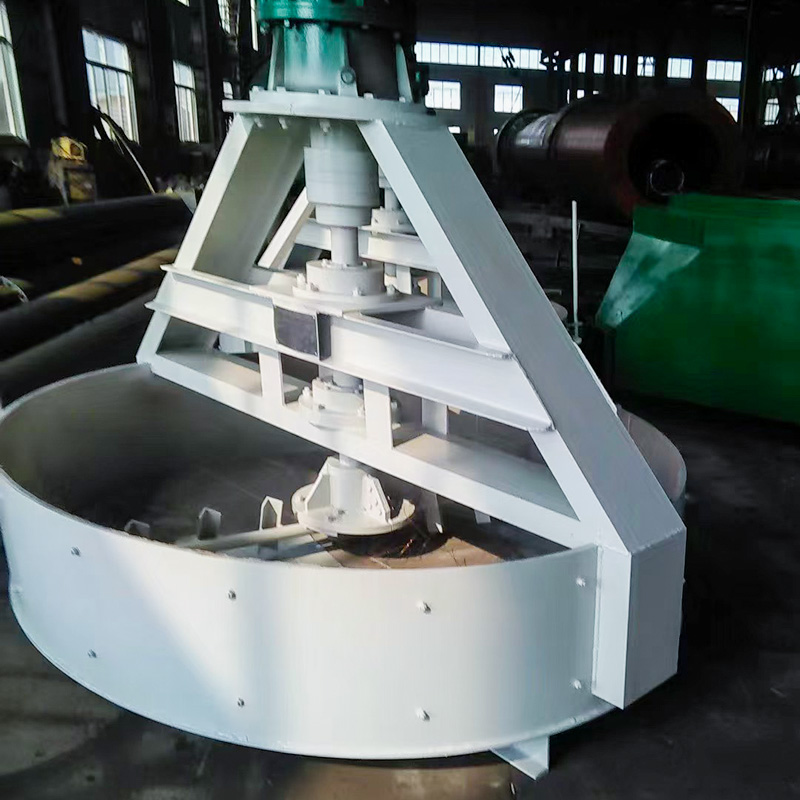
- Rotary Drum Mixers: Ensure even distribution of different raw components.
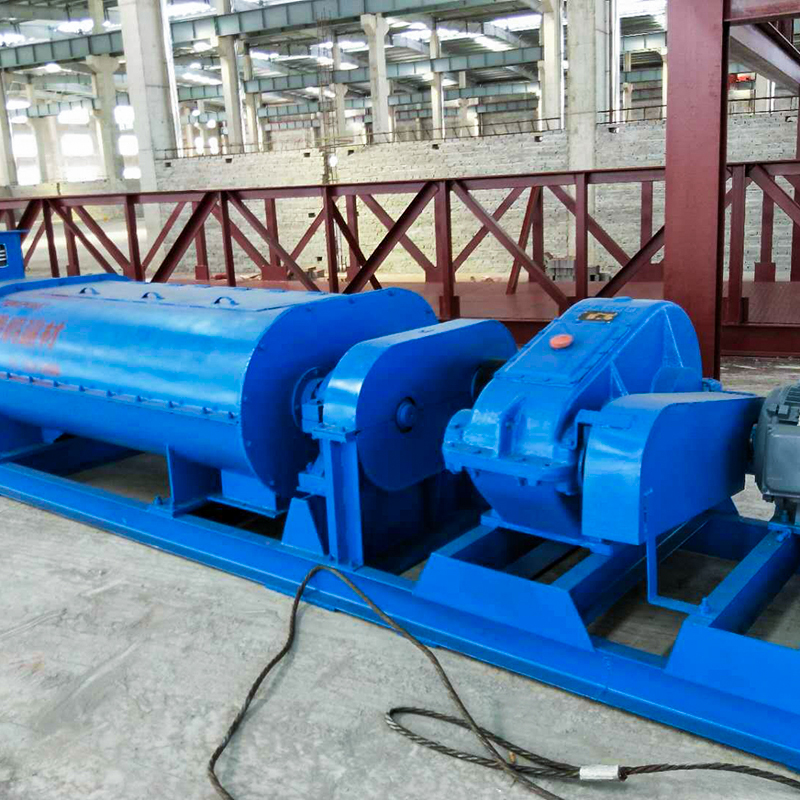
- Double Shaft Mixers: Efficient for sticky or high-moisture materials.
- Batch Mixers: Allow precise proportioning for specialty fertilizers.
4. Granulation Equipment
Granulation transforms powdered raw materials into uniform granules suitable for application. Major options include:
- Rotary Drum Granulators: Commonly used in large-scale production, producing high output with consistent granule size.
- New Type Organic Fertilizer Granulators: Provide high granulation efficiency with low energy consumption.
- Extrusion Granulators: Ideal for producing special-shaped granules for specific market demands.
5. Drying and Cooling Equipment
Granules must be dried to remove moisture and cooled to prevent caking. Essential equipment includes:
- Rotary Dryers: Remove excess water efficiently, preparing granules for storage.
- Fluidized Bed Coolers: Rapidly reduce granule temperature, enhancing storage stability.
6. Screening and Packaging Equipment
Final steps involve screening, separating oversized or undersized granules, and packaging for shipment:
- Vibrating Screens: Sort granules according to size and quality standards.
- Automatic Packing Machines: Weigh and pack fertilizers into bags for transport.
- Bagging Conveyors: Streamline the flow from production to storage or shipping.
Optional Supporting Equipment
Some modern Compound Fertilizer Production Lines include additional systems to improve efficiency and product quality:
- Dust Collectors: Maintain a clean production environment and reduce material loss.
- Temperature and Humidity Control Systems: Ensure consistent granulation and storage quality.
- Automated Control Systems: Monitor and adjust the production process in real-time, increasing productivity and reducing labor costs.
Comparison Between Different Production Lines
Not all Compound Fertilizer Production Lines are the same. Key differences include:
| Feature | Small-Scale Line | Large-Scale Line |
|---|---|---|
| Output | 1–5 tons/hour | 10–50 tons/hour or more |
| Equipment | Compact, fewer machines, often manual operation | Full set, automated, advanced monitoring |
| Investment | Lower initial cost | Higher capital investment, higher efficiency |
| Flexibility | Suitable for small farms or pilot production | Ideal for industrial-scale fertilizer production |
Key Considerations for Choosing Equipment
When selecting equipment for a Compound Fertilizer Production Line, several factors should be considered:
- Material Compatibility: Ensure the equipment can handle specific raw materials, moisture content, and particle size.
- Output Capacity: Align the machinery with production goals to avoid underperformance.
- Energy Efficiency: Choose energy-saving designs to reduce operational costs.
- Automation Level: Higher automation can reduce labor costs and improve consistency.
- Maintenance and Durability: Durable, easy-to-maintain equipment ensures long-term productivity.
Frequently Asked Questions (FAQ)
Q1: What is the difference between a dry and wet granulation process?
Dry granulation involves compacting powdered materials without water, while wet granulation uses moisture to form granules. Wet granulation is more suitable for uniform particle size, while dry granulation reduces energy and drying requirements.
Q2: Can a production line handle multiple types of fertilizers?
Yes, modern Compound Fertilizer Production Lines can be designed for flexibility, allowing the production of NPK, NP, or specialty fertilizers with minor adjustments in raw material ratios and processing settings.
Q3: How long does it take to install a complete production line?
Installation time depends on line size and complexity. Small-scale lines may be installed in 1–2 months, whereas large-scale industrial lines may take 3–6 months, including commissioning and testing.
Q4: What maintenance is required for optimal performance?
Regular maintenance includes lubrication of moving parts, cleaning dust and residue, checking conveyor belts, monitoring motor function, and timely replacement of worn components. Preventive maintenance ensures stable operation and reduces downtime.
Conclusion
A Compound Fertilizer Production Line is an integrated system consisting of raw material handling, crushing, mixing, granulation, drying, cooling, screening, and packaging equipment. Each component plays a critical role in producing high-quality fertilizers efficiently. Selecting the right combination of equipment, considering production capacity, raw material characteristics, and automation requirements, is essential for maximizing productivity and ensuring consistent fertilizer quality. Proper maintenance and optimization further enhance the reliability and longevity of the production line.




GET IN
TOUCH WITH US
TOUCH WITH US
-
 No.68, Shuanglou Road, Qutang Town, Haian City, Nantong, Jiangsu
 -
Tel:
 +86-13914355558/18994158908
 -
E-mail:
 sales@tp-machinery.com
COPYRIGHT © 2025 Nantong Alisen Environmental Protection Technology Co., Ltd.
ALL RIGHTS RESERVED.
China fertilizer machinery manufacturer wholesale fertilizer machinery factory
