
 En
En
 English
  Français
  русский
  中文简体
中文简体  عربى
عربى  Español
alisen
alisen
alisen
alisen
alisen
alisen
alisen
alisen
alisen
alisen
alisen
alisen
Industry News
What Is the Basic Production Process of a Compound Fertilizer Production Line?

Quick Answer: A Compound Fertilizer Production Line follows a core sequence of six to eight key stages: raw material batching → mixing → granulation → drying → cooling → screening → coating → packaging. The exact steps may vary depending on whether the line uses a drum granulation, extrusion, or rotary drum process, but these fundamentals remain consistent across most industrial configurations.
What Is a Compound Fertilizer Production Line?
A Compound Fertilizer Production Line is an integrated set of industrial machinery and equipment designed to manufacture compound (or complex) fertilizers—fertilizers that contain two or more primary nutrients, typically nitrogen (N), phosphorus (P), and potassium (K)—in granular or powdered form. These lines are widely used in agricultural production to ensure crops receive a balanced supply of nutrients in a single application.
Unlike single-nutrient fertilizer systems, a compound fertilizer manufacturing line must handle multiple raw materials simultaneously, balance chemical reactions during granulation, and maintain consistent particle size and nutrient content across every batch. This makes process design and equipment selection critically important.
Step-by-Step: The Basic Production Process
Below is a detailed walkthrough of each major stage in a standard compound fertilizer production line:
Step 1: Raw Material Batching & Proportioning
The process begins with the accurate measurement and proportioning of raw materials. Common inputs include urea, ammonium sulfate, monoammonium phosphate (MAP), diammonium phosphate (DAP), potassium chloride, and various fillers or micronutrient additives. Automatic batching systems equipped with electronic weighing scales ensure that each ingredient is delivered in the correct ratio according to the target NPK formula.
Precise batching directly determines the final nutrient composition, making this one of the most critical quality-control points in the entire compound fertilizer production process.
Step 2: Mixing
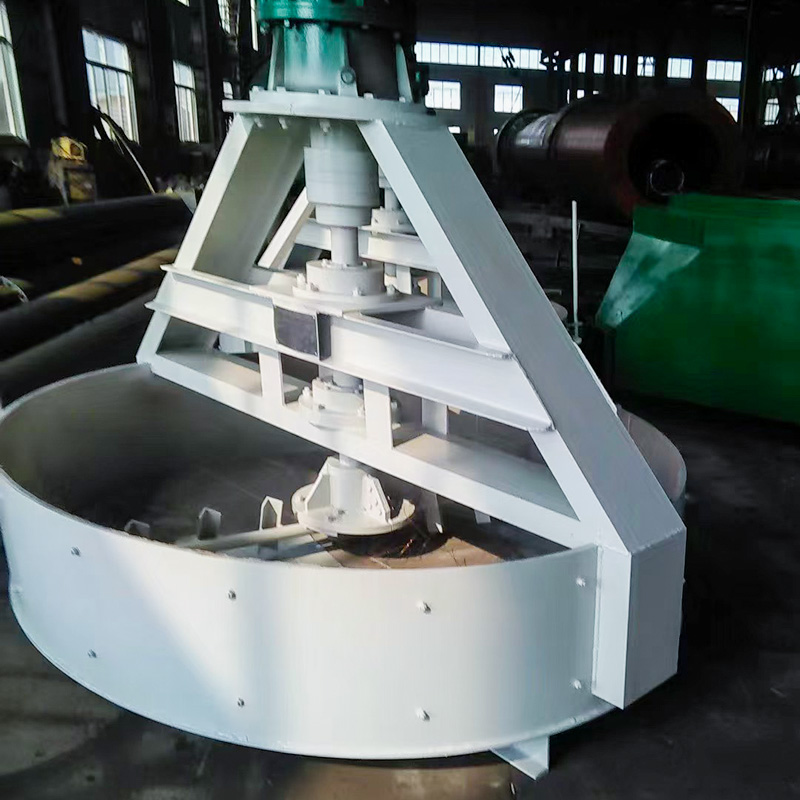
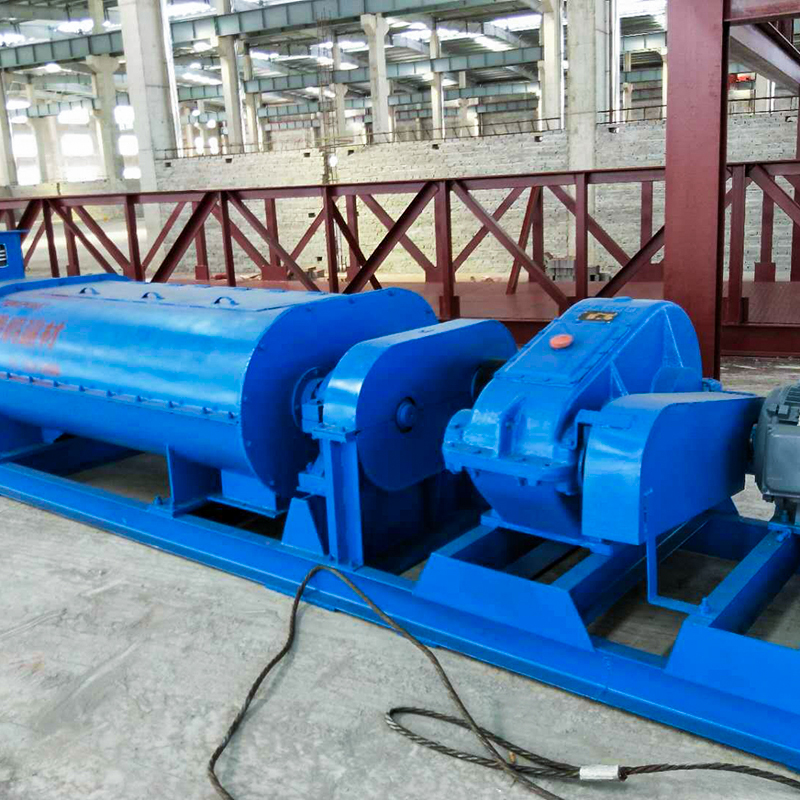
Once weighed, all raw materials are fed into a horizontal mixer or chain crusher mixer. The objective is to achieve a homogeneous blend before granulation. Thorough mixing prevents nutrient segregation in the final granules and ensures uniform chemical reactions during the subsequent granulation stage.
Mixing time and rotational speed are carefully controlled. In some formulations, small amounts of liquid binders (such as water or steam) are introduced at this stage to facilitate the granulation process.
Step 3: Granulation
Granulation is the heart of any compound fertilizer production line. The mixed material is converted from powder into uniform, rounded granules using one of several techniques. The most common granulation methods are:
- Rotary Drum Granulation: Material is tumbled in a large rotating drum where particles agglomerate around nuclei using steam or liquid injection. This is the most widely used method for large-scale NPK fertilizer production.
- Double Roller Extrusion Granulation: Dry material is pressed between two counter-rotating rollers under high pressure, forming sheets that are then crushed and screened into granules. No drying is required, making it energy-efficient and suitable for heat-sensitive materials.
- Disc (Pan) Granulation: Material is fed onto a tilted rotating disc with liquid addition; the rolling motion causes particles to grow into spherical granules. Best suited for small to medium production volumes.
- Rotary Drum Slurry Granulation: Nutrients dissolved in liquid slurry are sprayed onto seed granules in a drum, allowing layered growth. Used for high-purity, high-analysis compound fertilizers.
Comparison of Granulation Methods in a Compound Fertilizer Production Line:
| Method | Drying Needed | Output Capacity | Energy Use | Best For |
| Rotary Drum | Yes | High (10–30 t/h) | Medium–High | Large-scale NPK lines |
| Double Roller Extrusion | No | Medium (1–8 t/h) | Low | Heat-sensitive formulas |
| Disc (Pan) | Yes | Low–Medium (0.5–5 t/h) | Low–Medium | Specialty & small runs |
| Slurry / Pipe Reactor | Yes | High | High | High-analysis NPK |
Step 4: Drying
After granulation (in wet-process lines), the granules contain excess moisture and must be dried to the target moisture content—typically below 2%—to ensure stability, prevent caking, and meet storage and transport standards. A rotary drum dryer is the standard equipment for this step. Hot air is circulated through the rotating drum, carrying away moisture while gentle tumbling prevents granule breakage.
Temperature control is critical: excessive heat can destroy nitrogen compounds such as urea or ammonia salts, reducing nutrient content and causing harmful emissions.
Step 5: Cooling
Freshly dried granules are at high temperature (often 70–90°C) and must be cooled before coating or packaging. A rotary drum cooler uses ambient or chilled air to reduce granule temperature to near-ambient levels. Proper cooling prevents condensation and caking during storage, and is especially important for hygroscopic formulas containing urea or ammonium nitrate.
Step 6: Screening & Classification
The cooled granules are fed onto a rotary drum screener or vibrating screen to separate them by particle size:
- On-size granules (e.g., 2–4 mm): move forward to coating and packaging.
- Oversized granules: are returned to a crusher and then recycled back into the granulator.
- Undersized granules (fines): are directly recycled into the granulator as seed material.
This closed-loop recycling system minimizes material waste and ensures that the final product consistently meets the specified particle size distribution.
Step 7: Coating
To improve appearance, reduce dust, prevent caking, and optionally add slow-release properties, on-size granules are conveyed to a coating drum. A thin film of coating agent—such as mineral oil, polymer resin, or anti-caking powder—is applied uniformly to the granule surface. Coated granules have better flowability, longer shelf life, and enhanced marketability.
For premium slow-release compound fertilizers, polymer coating forms a semi-permeable membrane that controls nutrient release rate based on soil temperature and moisture.
Step 8: Automatic Packaging
The finished, coated granules are transferred to an automatic weighing and bagging machine, which fills and seals bags (typically 25 kg, 40 kg, or 50 kg) at high speed. Modern packaging systems include automatic weighing, bag clamping, sealing, and conveyor transport to the palletizing zone. This ensures accurate net weight, consistent bag appearance, and efficient throughput.
Complete Process Flow Summary
| Stage | Key Equipment | Main Function | Quality Control Point |
| 1. Batching | Weighing system, feeders | Proportion raw materials | NPK ratio accuracy |
| 2. Mixing | Horizontal mixer | Blend uniformity | Homogeneity of mix |
| 3. Granulation | Drum granulator / roller press | Form granules | Granule size & strength |
| 4. Drying | Rotary drum dryer | Remove excess moisture | Moisture content ≤2% |
| 5. Cooling | Rotary drum cooler | Reduce granule temperature | Temperature ≤ ambient +5°C |
| 6. Screening | Vibrating / rotary screener | Classify by size, recycle | On-size yield rate |
| 7. Coating | Coating drum | Anti-caking, slow-release | Film uniformity |
| 8. Packaging | Auto weighing & bagging | Fill, seal, label bags | Net weight accuracy |
Environmental Control: Dust & Tail Gas Treatment
A modern compound fertilizer production line must integrate environmental treatment systems throughout the process. Key systems include:
- Cyclone dust collectors: Capture coarse dust from dryers and coolers, returning it to the process as recycled material.
- Bag-type dust filters: Collect fine particulate matter from screens, mixers, and transfer points, ensuring air quality compliance.
- Wet scrubbers / ammonia absorption towers: Remove ammonia (NH₃) and acidic gases generated during drying of nitrogen-rich formulas. The absorbed solution can often be recycled back as a nutrient input.
- Enclosed conveyor belts & negative pressure systems: Minimize fugitive dust emissions at transfer points throughout the line.
Effective environmental management not only ensures regulatory compliance but also reduces material losses—recovering dust and tail gas nutrients improves the overall yield and economics of the NPK fertilizer production line.
Wet Granulation vs. Dry Granulation: Which Line Is Right?
When selecting a compound fertilizer production line, one of the most fundamental choices is between wet granulation (e.g., drum or disc) and dry granulation (extrusion/roller press). The following table highlights the key differences:
| Factor | Wet Granulation Line | Dry Granulation Line |
| Process Steps | Includes drying & cooling | No drying required |
| Granule Quality | Spherical, smooth, uniform | Pillow/irregular shape |
| Energy Consumption | Higher (fuel for drying) | Lower (no thermal drying) |
| Investment Cost | Higher (more equipment) | Lower (simpler line) |
| Suitable Formulas | Wide range of NPK types | Heat-sensitive, chloride-free |
| Production Scale | Large (5–50+ t/h) | Small–Medium (1–10 t/h) |
| Wastewater/Emissions | Requires tail gas treatment | Minimal gas emissions |
Key Factors Affecting Production Line Performance
Getting the best results from a compound fertilizer production line depends on several interrelated factors:
- Raw Material Properties: Particle size, moisture content, and chemical reactivity of each ingredient affect mixing quality and granulation behavior. Pre-crushing or pre-drying of raw materials may be needed.
- Steam and Liquid Binder Dosage: In drum granulation, too little liquid yields poor granule growth; too much creates oversized, weak granules. Precise dosing systems are essential.
- Dryer Temperature Profile: The inlet air temperature, retention time, and airflow rate must be tuned for each formula to remove moisture without degrading nutrients.
- Recycle Ratio: A high recycle ratio (ratio of recycled fines/oversize to fresh feed) maintains stable granulation but increases internal material load. Optimal ratios are typically 2:1 to 4:1.
- Screening Efficiency: Properly maintained screens with correct aperture sizes minimize off-spec material and improve on-size yield.
- Coating Agent Selection: The right anti-caking or slow-release coating agent must be matched to the specific NPK formula and target market requirements.
Frequently Asked Questions (FAQ)
Q1: What is the typical output capacity of a compound fertilizer production line?
Capacity varies widely depending on configuration. Small lines start at 1–3 t/h; medium lines range from 5–15 t/h; large industrial compound fertilizer production lines can reach 20–50 t/h or more. Capacity is determined mainly by the granulator, dryer, and screening equipment specifications.
Q2: Can a single compound fertilizer production line produce multiple NPK formulas?
Yes. Most modern lines are designed for flexible formula switching. The batching system is reprogrammed for the new NPK ratio, and the granulation and drying parameters are adjusted accordingly. Some dedicated lines, however, are optimized for a single high-volume formula to maximize efficiency.
Q3: How much does it cost to set up a compound fertilizer production line?
Investment costs vary greatly by capacity and technology. A small dry-process extrusion line (1–3 t/h) may cost USD 50,000–150,000. A medium wet-process drum granulation line (5–10 t/h) typically ranges from USD 200,000–600,000. Large-scale lines with full environmental controls and automation can exceed USD 1–3 million. Local labor, civil construction, and utility connections are additional costs.
Q4: What raw materials are commonly used in a compound fertilizer production line?
Common nitrogen sources include urea, ammonium sulfate, and ammonium chloride. Phosphorus sources include MAP, DAP, single superphosphate (SSP), and triple superphosphate (TSP). Potassium sources are typically potassium chloride (MOP) or potassium sulfate (SOP). Secondary nutrients (Ca, Mg, S) and micronutrients (Fe, Zn, B, Mn) can also be incorporated.
Q5: Is automation available for compound fertilizer production lines?
Yes. Modern compound fertilizer production lines can be fully automated using PLC (Programmable Logic Controller) and SCADA systems. Automation covers batching, conveying, process parameter monitoring (temperature, moisture, flow rate), alarm systems, and data logging. Automation reduces labor requirements, improves consistency, and enables remote monitoring.
Q6: What certifications or standards apply to compound fertilizer production lines?
Lines and finished products may need to comply with national agricultural standards (e.g., GB/T 15063 in China for compound fertilizers), ISO quality management certifications, and local environmental regulations for air emissions, wastewater discharge, and solid waste. Export markets may require additional regulatory compliance such as CE certification for equipment.
Conclusion
Understanding the basic production process of a Compound Fertilizer Production Line is the first step toward making informed decisions about equipment selection, process design, and operational management. The eight-stage process—from raw material batching to automated packaging—represents a tightly integrated system where each step directly impacts product quality, yield efficiency, and environmental compliance.
Whether you are planning to invest in a new NPK fertilizer production line, optimize an existing operation, or evaluate the differences between wet and dry granulation technologies, a clear understanding of the process fundamentals is indispensable. Careful selection of granulation method, coupled with robust dust treatment and intelligent automation, ensures a line that is both productive and sustainable.
As global demand for balanced, efficient crop nutrition continues to grow, the compound fertilizer production line remains one of the most strategically important segments of the agricultural equipment industry—combining chemistry, mechanical engineering, and process optimization into a single, continuous production system.



GET IN
TOUCH WITH US
TOUCH WITH US
-
 No.68, Shuanglou Road, Qutang Town, Haian City, Nantong, Jiangsu
 -
Tel:
 +86-13914355558/18994158908
 -
E-mail:
 sales@tp-machinery.com
COPYRIGHT © 2025 Nantong Alisen Environmental Protection Technology Co., Ltd.
ALL RIGHTS RESERVED.
China fertilizer machinery manufacturer wholesale fertilizer machinery factory
