
 En
En
 English
  Français
  русский
  中文简体
中文简体  عربى
عربى  Español
alisen
alisen
alisen
alisen
alisen
alisen
alisen
alisen
alisen
alisen
alisen
alisen

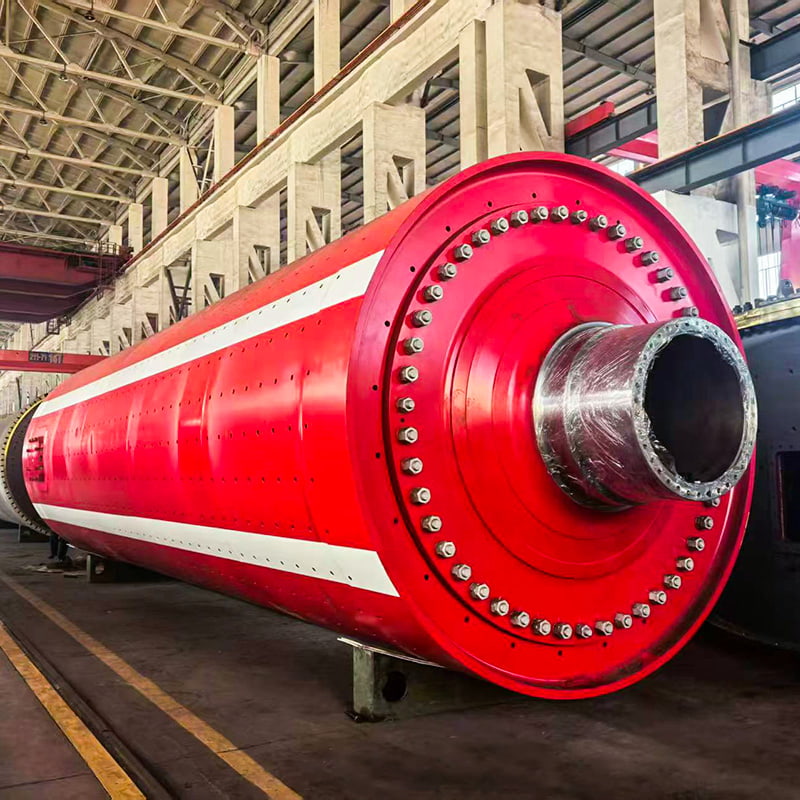
A Ball Mill is a type of grinder used in various industrial processes to grind or blend materials into fine powders. It operates on the principle of impact and attrition, where grinding media such as balls rotate inside a cylindrical chamber, crushing the material to achieve the desired fineness.
How Does a Ball Mill Work?
The working principle of a Ball Mill is simple yet efficient. When the cylinder rotates, the grinding media inside rise with the rotation until they reach a critical point, then fall, impacting the material to grind it. This process continues, producing a uniform fine powder.
Main Components of a Ball Mill
- Cylindrical Shell: The rotating chamber that contains the grinding media and material.
- Grinding Media: Steel, ceramic, or rubber balls that crush and grind the material.
- Motor: Provides the rotational power for the cylinder.
- Bearings and Drive: Support the rotation and allow speed control.
Specifications of a Ball Mill
Ball Mills come in various sizes and capacities depending on the industrial application. Key specifications include:
| Specification | Description |
| Diameter | From 0.3 m to 6 m depending on the application |
| Length | Typically 1–10 times the diameter |
| Capacity | 0.5–200 tons per hour |
| Rotation Speed | 15–90% of critical speed, depending on the material |
| Grinding Media | Steel, ceramic, or rubber balls of different sizes |
| Material Feed Size | Typically 25 mm or less |
| Output Particle Size | 0.074–0.4 mm (200–40 mesh) |
Applications of Ball Mills
Ball Mills are widely used across industries due to their versatility and efficiency:
- Mining Industry: Grinding ores for mineral extraction.
- Cement Industry: Pulverizing clinker and other raw materials.
- Chemical Industry: Mixing and grinding chemicals into powders.
- Ceramic Industry: Producing fine ceramic powders.
- Pharmaceutical Industry: Preparing powders for tablet production.
Advantages of Using a Ball Mill
Compared to other grinding machines, a Ball Mill offers multiple benefits:
- Uniform Grinding: Provides consistent particle size.
- Versatile Material Handling: Suitable for dry and wet grinding.
- Scalable: Easy to increase capacity by enlarging the cylinder.
- Cost-Effective: Relatively low maintenance compared to other grinding equipment.
Comparison with Other Grinding Machines
| Feature | Ball Mill | Rod Mill | Hammer Mill |
| Grinding Mechanism | Impact and attrition | Primarily impact with rods | Impact and shearing with hammers |
| Output Fineness | Fine powder (0.074–0.4 mm) | Coarser than ball mill | Variable, depends on screen size |
| Material Types | Hard, abrasive, and brittle | Soft to medium hardness ores | Soft to medium materials |
| Capacity | 0.5–200 t/h | 1–150 t/h | 0.5–50 t/h |
| Applications | Mining, cement, chemical, ceramic | Mining, metallurgy | Wood, biomass, feed processing |
Maintenance Tips for a Ball Mill
- Regular Lubrication: Ensure bearings and gears are properly lubricated to reduce wear.
- Inspect Grinding Media: Check for worn or broken balls and replace them promptly.
- Monitor Vibration: Excessive vibration can indicate misalignment or imbalance.
- Check Seals and Liners: Replace worn liners to maintain grinding efficiency and protect the shell.
- Clean the Cylinder: Periodic cleaning prevents material buildup and contamination.
Frequently Asked Questions (FAQ)
1. What materials can a Ball Mill grind?
A Ball Mill can grind a wide range of materials, including ores, chemicals, ceramics, and pharmaceuticals. It works effectively on hard, brittle, and abrasive substances.
2. What is the difference between a wet and dry Ball Mill?
In a dry ball mill, materials are ground without water, resulting in dry powder. A wet ball mill uses water or another liquid to reduce dust and improve grinding efficiency.
3. How do I choose the right Ball Mill for my plant?
Consider the required capacity, material hardness, desired fineness, and type of grinding (wet or dry). Matching these factors ensures optimal performance.
4. Can a Ball Mill be scaled up for larger production?
Yes, Ball Mills are highly scalable. Increasing cylinder size or installing multiple units can achieve higher production volumes.
5. How energy-efficient is a Ball Mill compared to other grinding machines?
While Ball Mills consume more energy than some high-speed grinders, their reliability, uniformity of particle size, and versatility make them cost-effective in the long run.
Conclusion
In conclusion, a Ball Mill is an essential piece of industrial equipment used for grinding a variety of materials. Its simple design, scalability, and efficiency make it a preferred choice in mining, cement, chemical, ceramic, and pharmaceutical industries. Understanding its specifications, applications, and maintenance requirements ensures maximum performance and longevity.


GET IN
TOUCH WITH US
TOUCH WITH US
-
 No.68, Shuanglou Road, Qutang Town, Haian City, Nantong, Jiangsu
 -
Tel:
 +86-13914355558/18994158908
 -
E-mail:
 sales@tp-machinery.com
COPYRIGHT © 2025 Nantong Alisen Environmental Protection Technology Co., Ltd.
ALL RIGHTS RESERVED.
China fertilizer machinery manufacturer wholesale fertilizer machinery factory
