 En
En
 English
  Français
  русский
  中文简体
中文简体  عربى
عربى  Español

A bucket elevator data sheet is the most compact and reliable way to verify whether a lift will actually work for your bulk material. It converts the variables that define safe operation—capacity, bulk density, lump size, temperature, moisture, and lift height—into a set of numbers that an engineer can act on. Selecting an elevator without first reading its data sheet is one of the most common causes of undersized drives, blocked inlets, and prematurely worn buckets.
What Is a Bucket Elevator Data Sheet and Why It Matters
A bucket elevator data sheet is a specification document issued by the manufacturer that defines the material to be handled, the operating duty, the dimensional envelope, and the drive requirements for a specific elevator configuration. It replaces assumptions with measurable parameters, giving both buyer and supplier the same baseline for performance, pricing, and installation planning.
Without a filled-in data sheet, a quote is only a guess. With one, you can compare models from different suppliers, check whether the elevator fits your plant layout, and confirm that the motor, buckets, chain or belt, and casing are all sized for the real conditions. This is why we ask every customer for four material values before we recommend a specific elevator: density, lump size, moisture, and temperature. These four values decide almost everything else on the sheet.
Key Fields You Will Find on Any Reliable Data Sheet
Every competent data sheet, whether from a compact unit or a heavy industrial line, begins with material characteristics. Material data decides everything downstream; if the density or lump size is wrong, the rest of the sheet is meaningless.
| Field | What It Means | Why It Matters |
|---|---|---|
| Material handled | Name and physical state of the product to be lifted | Determines whether a standard, abrasion-resistant, or food-grade design is needed |
| Bulk density | Weight per unit volume (kg/m³ or lb/ft³) | Drives bucket fill volume and motor power calculation |
| Capacity | Throughput expected in tonnes per hour | Sets bucket size, bucket spacing, chain speed, and casing width |
| Lump size and fines ratio | Largest lump dimension and percentage of fine particles | Controls inlet opening, bucket type, and risk of choking |
| Moisture content | Percentage of water or surface moisture | Affects flowability, build-up risk, and material discharge behaviour |
| Material temperature | Temperature at the inlet point | Decides between rubber belt, chain, or heat-tolerant components |
| Lift height and discharge height | Vertical rise from feed point to discharge point | Defines chain or belt tension and the structural strength of the casing |
| Drive power and head speed | Motor power and pulley or sprocket speed | Validates whether the stated capacity can be achieved without overloading |
Beyond these values, a complete data sheet also lists inlet and outlet sizes, trunking dimensions, and minimum centre distances. For plant layout work, this dimensional information is as important as the performance numbers, because it tells the civil engineer where the support steel and access platforms must go.
How to Read the Data Sheet: A Practical Selection Workflow
Reading a data sheet in the correct order prevents the most common specification errors. Start with the material, then check capacity, then confirm lift height, and only then look at the motor rating.
Start with Material Characteristics
Start by locking the material name, density, lump size, temperature, and moisture, because these four values separate a continuous-duty elevator from a light-duty one. For example, a free-flowing granular fertiliser with a bulk density of 0.85 t/m³ and a lump size under 5 mm is a straightforward application. The same product with 12% moisture and a tendency to cake requires a different bucket design and a slower filling speed, even if the capacity target is identical.
Confirm the Design Capacity Before the Motor Size
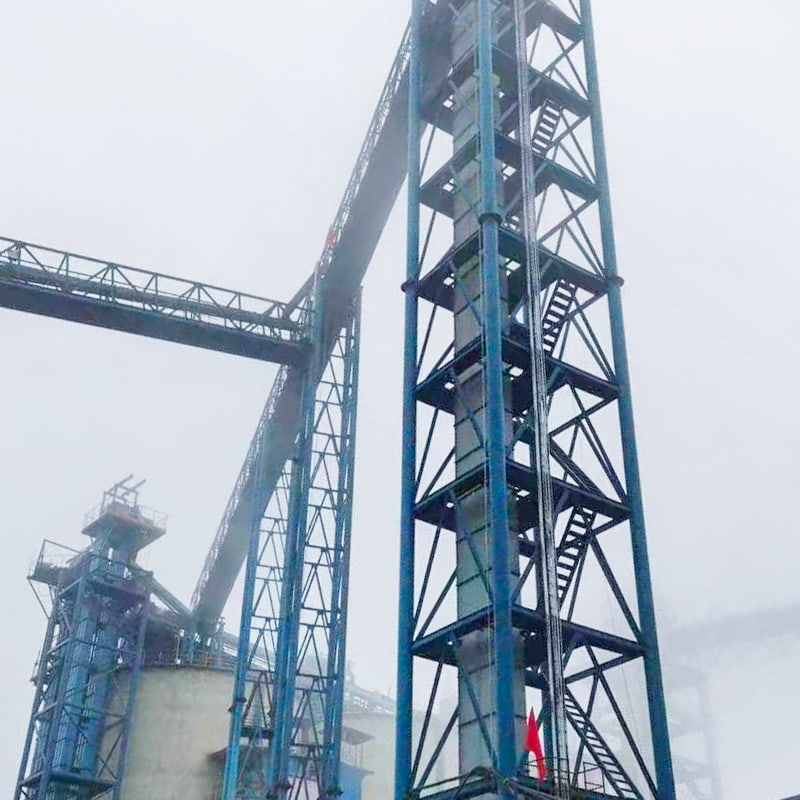
Check the capacity line on the data sheet, not the motor rating at the bottom of the page, because capacity determines whether the machine can serve your process flow. Capacity in tonnes per hour is the product of bucket volume, bucket spacing, chain speed, and material density, corrected by a filling efficiency factor. If the filling efficiency is assumed too high, the sheet may show an optimistic capacity that the elevator cannot sustain hour after hour. When we issue our own specification documents, we state the filling efficiency used, so the customer can see the basis of the calculation. For continuous high-capacity duties in mineral-fertiliser plants, the NE bucket elevator data sheet gives clearly defined capacities based on actual bulk density rather than an idealised figure.
 Custom NE Bucket Elevator Manufacturers, Factory - Fertilizer/Powder Production Nantong Alisen is a China NE Bucket Elevator manufacturers and NE Bucket Elevator factory. We provide solutions for Fertilizer/Powder Pro...View Product →
Check the Lift Height Against the Structural Design
Compare the required floor-to-discharge height with the maximum chain or belt tension that the elevator frame is designed to handle. Taller lifts require heavier chain, larger head shafts, and stiffer casing sections. A sheet that lists a maximum lift height of 40 m may still be safe for a 35 m installation, but only if the supplier has included the extra weight of the chain and buckets in the shaft sizing. If the data sheet does not state a maximum lift height, ask before you accept the layout.
Data Sheet Comparison: NE, TH, and TD Series
Most manufacturers offer more than one bucket elevator family, and the differences matter when you compare data sheets side by side. The carrying element, typical capacity range, material temperature limit, and drive arrangement are the main distinguishing points. The table below summarises how our three standard lines compare.
| Parameter | NE Series | TH Series | TD Series |
|---|---|---|---|
| Carrying element | Chain | Chain | Rubber belt |
| Typical capacity range | High | Medium to high | Low to medium |
| Material temperature limit | Up to about 120°C with optional heat-resistant components | Up to about 120°C with optional heat-resistant components | Up to about 80°C for standard belting |
| Typical applications | Continuous lifting of free-flowing granules, powders, and minerals | Abrasive and lumpy materials such as ores, limestone, and cement clinker | Light, fine, and semi-abrasive materials such as grains and dry sand |
| Drive requirements | Higher torque with moderate head speed | Heavy-duty torque with reinforced chain wheels | Lower torque with higher head speed |
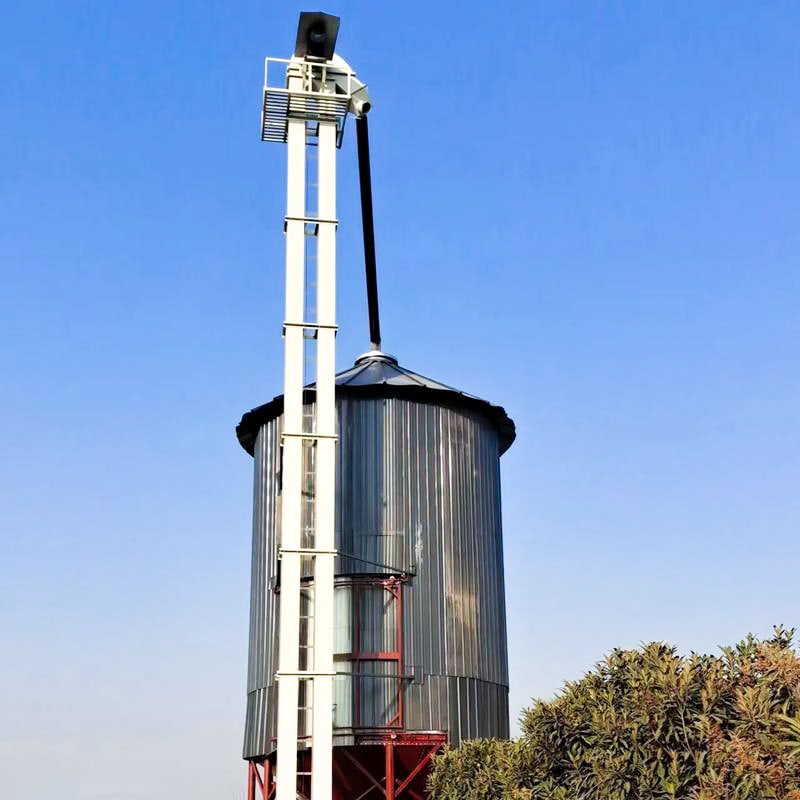
If the material is abrasive and contains irregular lumps, the TH bucket elevator data sheet will show heavier casing panels and a larger chain pitch than you would expect from a belt unit. For lighter and cooler materials where capital cost and compactness are priorities, the TD bucket elevator data sheet often provides a smaller footprint and a more economical drive. NE series sits between them for continuous, high-capacity service where a stable discharge pattern is required.
 Custom TD Bucket Elevator Manufacturers, Factory - Fertilizer/Powder Production Nantong Alisen is a China TD Bucket Elevator manufacturers and TD Bucket Elevator factory. We provide solutions for Fertilizer/Powder Pro...View Product →
 Custom TH Bucket Elevator Manufacturers, Factory - Fertilizer/Powder Production Nantong Alisen is a China TH Bucket Elevator manufacturers and TH Bucket Elevator factory. We provide solutions for Fertilizer/Powder Pro...View Product →
Common Selection Mistakes to Avoid
Most specification errors we see in returned data sheets are documentation failures, not design failures. The material data is left blank, copied from another plant, or written from memory, and the elevator is then undersized or oversized as a result.
- Guessing bulk density instead of measuring it. A 0.1 t/m³ error in density can create a 10% error in capacity and motor sizing. Ask for a density test result before finalising the sheet.
- Reporting average capacity instead of peak load. A mill or mixer upstream may discharge in batches, which the elevator must handle as a peak without stalling. Always specify the worst-case peak.
- Ignoring moisture changes between seasons. Fertiliser and mineral products often absorb moisture during storage, which raises cohesion and reduces flowability. The same material that handles well in winter can bridge in summer.
- Confusing capacity with conveyor speed. Increasing chain speed to lift more material often shifts the discharge trajectory, causing material to fall back into the boot and accelerate wear.
- Forgetting to check inlet and discharge heights against available space. A seemingly small change in discharge height may force additional trunking, a taller support structure, or a different bucket design.
Where to Get a Trustworthy Data Sheet
Request the data sheet directly from the equipment manufacturer before you ask for a price, and provide the same four material values you would include in any internal design review: density, lump size, moisture, and temperature. A reliable manufacturer will use those values to fill in a blank specification form and then match it to a standard model, just as we do for customers planning a compound fertiliser production line.
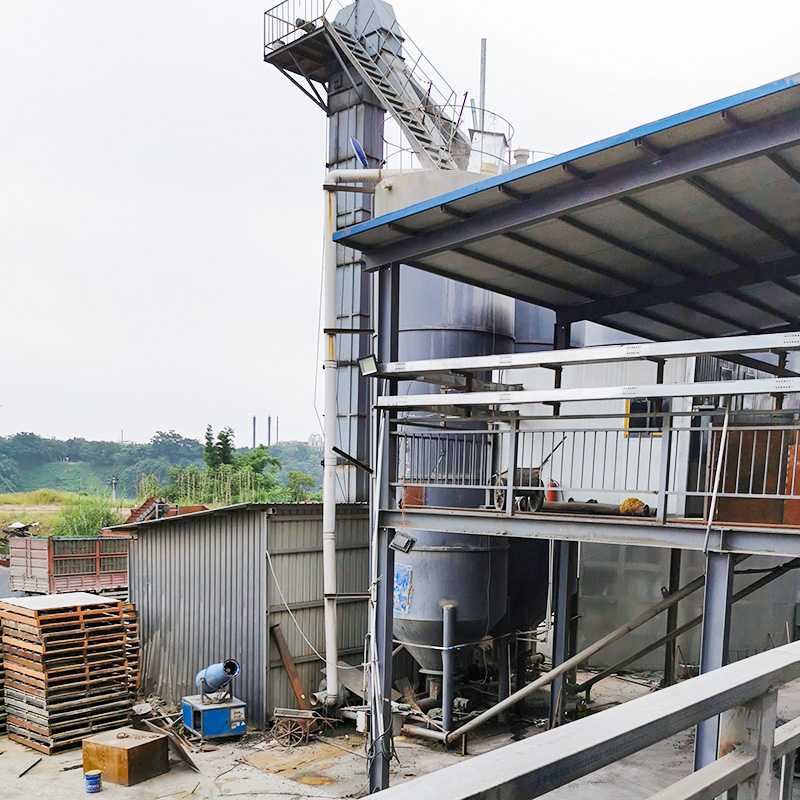
It is also worth confirming whether the elevator sits in a chain of equipment. In a typical fertiliser plant, the bucket elevator works together with belt conveyors, screw conveyors, and a wire belt hoist in special handling positions; data for one unit alone is rarely enough to sign off the full material-handling layout. A manufacturer that supplies complete process lines can show you the whole path, not just a single machine, which is one reason why the wider context matters when you evaluate data sheets. For background on how these elevators fit into the bigger process, our article on compound fertiliser production line improvements explains the equipment arrangement in practical terms.
Frequently Asked Questions
The list below reflects the questions we hear most often from plant buyers and maintenance teams, answered with the same logic a data sheet is built on.
- Can I use one data sheet for more than one material? No. If the material changes, density, lump size, moisture, and temperature all change, which alters capacity and drive loading. A separate sheet is needed for each distinct material.
- What if my material is hotter than 100°C? A chain-type elevator is usually the safer choice because rubber belting cannot withstand sustained high heat. Confirm the chain’s heat-treatment limit on the data sheet before ordering.
- How do I convert volumetric capacity to tonnes per hour? Multiply the volumetric flow in m³/h by the material’s bulk density in t/m³, then apply a realistic filling efficiency factor, usually between 0.7 and 0.9 depending on bucket design and product flowability.
- Is a data sheet the same as a general arrangement drawing? No. A data sheet lists performance and specification values, while a general arrangement drawing shows dimensions, nozzle positions, and support steel. Both documents are needed for installation planning.
- Why do two suppliers show different capacities for the same model? They often assume different filling efficiencies or different material densities. Ask each supplier to state the filling efficiency and density used so that you can compare the numbers on a fair basis.