 En
En
 English
  Français
  русский
  中文简体
中文简体  عربى
عربى  Español

Choosing between a dry ball mill and a wet ball mill depends primarily on your material properties, target particle size, downstream processing requirements, and operational budget. In short: if your material reacts with water, requires ultra-fine dry powder output, or operates in a water-scarce environment, a dry ball mill is the correct choice. If you need finer particle size distributions below 10 microns, handle slurry-based downstream processes, or work with materials that benefit from liquid dispersion, a wet ball mill will deliver superior results at lower energy consumption per ton.
What Is a Ball Mill? Dry and Wet Defined
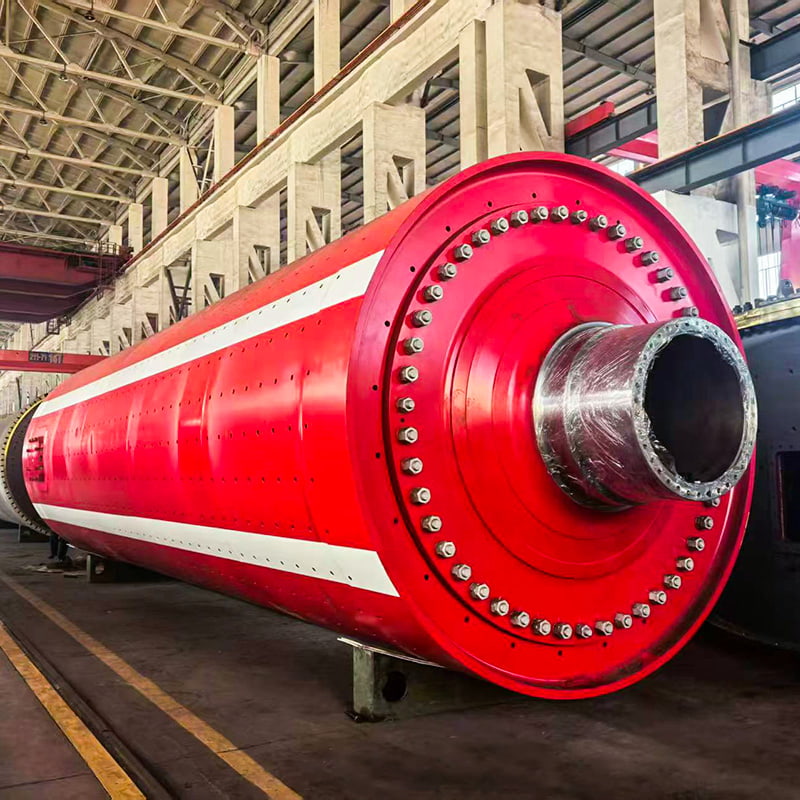
A ball mill is a rotating cylindrical grinding vessel that uses steel or ceramic balls as grinding media to reduce solid materials into fine powder — and it can operate in either a dry or wet mode depending on whether a liquid is added to the grinding chamber.
In both cases, the fundamental mechanism is the same: the cylinder rotates, causing the grinding media to cascade and fall, generating impact and attrition forces that break down the feed material. The critical difference is the environment inside the mill.
Dry Ball Mill
In a dry ball mill, material is ground without any liquid. The feed material and grinding media tumble together in an enclosed cylinder. Ground powder is continuously discharged by airflow (in air-swept mills) or by gravity through a grated end. Dust collection systems are mandatory to capture fine particles and protect the work environment. Dry ball mills are typically used when the final product must be in powder form and when the material is moisture-sensitive.
Wet Ball Mill
In a wet ball mill, a liquid — most commonly water, but sometimes alcohol, oil, or a chemical solution — is added to the grinding chamber. The material forms a slurry with the liquid, which acts as a lubricant and cooling agent. The ground slurry is then discharged through a screen or overflow weir. Wet milling is favored when downstream processes are slurry-based (e.g., flotation, leaching, or ceramic slip casting) or when very fine particle sizes below 10 microns are required.
How Dry and Wet Ball Mills Differ in Operation
The operational difference between dry and wet ball milling goes beyond just adding water — it affects grinding efficiency, energy consumption, liner wear, discharge method, and the entire downstream processing chain.
Grinding Efficiency
Wet milling reduces inter-particle friction and prevents cushioning (where fine particles buffer impact energy between coarser ones). Studies show that wet ball mills typically achieve 20–30% higher grinding efficiency per unit of energy than equivalent dry mills for the same feed and target size, because the slurry environment facilitates faster particle fracture and prevents agglomeration of ultra-fine particles.
Energy Consumption
Dry ball mills consume more energy per ton of product because of higher friction between dry particles and the need to overcome electrostatic agglomeration of fine powder. In large-scale mineral processing, the energy difference can be significant: wet milling may require 15–25% less kWh per ton to reach the same target particle size, translating directly into lower operating costs at scale.
Liner and Media Wear
Dry milling generates more abrasive wear on mill liners and grinding media because there is no liquid film to cushion and lubricate contact surfaces. As a result, liner replacement intervals are typically 20–40% shorter in dry mills compared to equivalent wet mills, increasing maintenance costs and downtime frequency.
Discharge and Classification
Wet mills use overflow or grate discharge and can be coupled with hydrocyclones for continuous size classification and recirculation. Dry mills rely on air classifiers or mechanical screens, which are less efficient at separating very fine fractions and add to system complexity and capital cost.
Dry vs. Wet Ball Mill: Full Comparison Table
The table below provides a structured, side-by-side comparison of dry and wet ball mills across all major operational and economic parameters to support your selection decision.
| Parameter | Dry Ball Mill | Wet Ball Mill |
|---|---|---|
| Grinding Medium | Air / no liquid | Water or other liquid (slurry 65–80% solids) |
| Minimum Particle Size | ~25–75 microns (practical limit) | <1–10 microns achievable |
| Energy Efficiency | Lower (15–25% higher kWh/t) | Higher |
| Water Consumption | None | Significant (requires water supply & treatment) |
| Liner / Media Wear Rate | Higher (20–40% faster) | Lower |
| Dust Control Required | Yes — mandatory dust collection | No (contained in slurry) |
| Downstream Process | Dry powder — packaging, dry blending, calcination | Slurry — flotation, leaching, slip casting, coating |
| Material Moisture Sensitivity | Suitable (required for hygroscopic materials) | Not suitable for moisture-reactive materials |
| Capital Cost | Moderate (plus air classifier / dust system) | Moderate (plus slurry handling & dewatering) |
| Operating Cost | Higher (energy + wear + dust control) | Lower per ton (energy savings offset water cost) |
| Noise Level | Higher (>90 dB typical) | Lower (slurry dampens impact noise) |
| Temperature in Mill | Higher (heat build-up in fine powder) | Self-cooling (liquid dissipates heat) |
Advantages and Limitations of Dry Ball Milling
Dry ball milling is the preferred choice when water would damage the material, contaminate the product, or when the final output must be a free-flowing dry powder.
Key Advantages of Dry Ball Mills
- No Water Required: Essential in arid regions or facilities without reliable water supply infrastructure. Also eliminates the need for effluent treatment or slurry disposal, which can carry significant environmental compliance costs.
- Suitable for Moisture-Sensitive Materials: Hygroscopic materials (such as certain fertilizers, lithium compounds, and food ingredients), materials that react violently with water, or materials that must remain anhydrous throughout processing can only be milled in a dry environment.
- Direct Powder Output: The product exits the mill as a dry powder, ready for direct packaging, blending, or calcination without a drying or dewatering step. This eliminates the capital and energy cost of downstream drying equipment, which can consume an additional 60–120 kWh per ton of water evaporated.
- Simpler Slurry Handling: No pumps, pipelines, thickeners, or filter presses are needed. Plant layout is simpler and maintenance complexity is reduced.
- Product Purity: In some applications (e.g., pharmaceutical or food-grade milling), avoiding water eliminates a potential contamination vector and simplifies product sterilization protocols.
Limitations of Dry Ball Mills
- Coarser Practical Grind Limit: Fine dry particles tend to agglomerate (stick together due to electrostatic and van der Waals forces), creating a practical lower limit of approximately 25–75 microns for most materials without grinding aids.
- Dust Generation and Explosion Risk: Dry fine powder creates significant dust hazards. Materials with a minimum ignition energy (MIE) below 100 mJ require ATEX-rated equipment and explosion suppression systems, adding $50,000–$200,000 or more to plant cost.
- Higher Temperatures: Without liquid cooling, mill interior temperatures can rise significantly. For temperature-sensitive materials (pigments, polymers, waxes), this can alter product quality or cause thermal degradation.
- Higher Energy and Wear Cost: As noted, dry mills typically consume 15–25% more energy and wear liners 20–40% faster than comparable wet mills, increasing both opex and maintenance downtime.
Advantages and Limitations of Wet Ball Milling
Wet ball milling is the dominant choice in mineral processing, ceramics, and chemical industries because the liquid phase enables finer grinding, lower energy use, and seamless integration with slurry-based downstream processes.
Key Advantages of Wet Ball Mills
- Finer Particle Sizes: The liquid medium prevents agglomeration of ultra-fine particles, allowing wet mills to achieve particle sizes below 1–10 microns that dry mills cannot reach economically. In ceramic processing, wet milling routinely achieves D50 values of 1–3 microns.
- Lower Energy Consumption: Reduced friction, better heat dissipation, and prevention of over-grinding make wet mills 15–25% more energy-efficient per ton at equivalent product fineness.
- No Dust Hazard: All material is contained within the slurry, eliminating airborne dust, respiratory health risks, and explosion hazards associated with dry fine powder handling.
- Lower Noise Levels: Slurry dampens impact noise between media and liners. Wet mill installations typically operate at 5–15 dB lower than dry mills of equivalent size, reducing the need for acoustic enclosures.
- Self-Cooling Operation: The liquid phase absorbs and dissipates grinding heat continuously, protecting temperature-sensitive materials and allowing higher mill speeds without thermal damage to the product.
- Seamless Slurry Integration: For processes such as froth flotation, hydrometallurgical leaching, ceramic slip casting, or paper coating, the slurry output is directly usable — no intermediate drying step is required.
Limitations of Wet Ball Mills
- Water Requirement: A large wet ball mill processing 1,000 t/day may consume 300–600 cubic meters of water per day. In water-scarce regions, this is a critical constraint, and recycling systems add capital and operating cost.
- Dewatering Cost: If a dry product is ultimately needed, the slurry must be filtered, thickened, and dried — adding significant capex (thickeners, filters, dryers) and energy cost that can eliminate the efficiency advantage of wet milling.
- Material Reactivity with Water: Certain materials — including quicklime (CaO), reactive metals, some lithium compounds, and Portland cement clinker — cannot be processed in a wet environment due to hydration reactions that alter composition or generate hazardous conditions.
- Corrosion Risk: In acidic or alkaline slurry conditions, mill liners and grinding media are subject to corrosive wear in addition to abrasive wear, requiring more expensive materials (rubber liners, ceramic media) to manage total wear cost.
Particle Size Performance: Which Grinds Finer?
Wet ball milling consistently achieves finer particle sizes than dry ball milling for the same material, media size, and mill residence time — often reaching sizes 3–10× finer than dry milling under comparable conditions.
The mechanism behind this difference is well understood. In dry milling, as particles become finer, they develop significant surface charges and van der Waals attraction forces. These cause ultra-fine particles to agglomerate back into clusters that behave as coarser particles, creating a practical floor on achievable fineness. Adding grinding aids (such as triethanolamine, glycol, or proprietary dispersants at doses of 0.02–0.1% by weight) can lower this floor, but dry mills still rarely achieve consistent sub-10-micron distributions without specialized equipment.
In wet milling, the liquid acts as a natural dispersant. The slurry's surface tension and electrostatic double layer prevent agglomeration, allowing fracture surfaces to remain separate and exposed to further grinding. By adjusting slurry density (typically maintained at 65–75% solids by weight for optimal grinding efficiency), operators can directly control the balance between grinding efficiency and product fineness.
| Target D80 Particle Size | Dry Ball Mill Feasibility | Wet Ball Mill Feasibility |
|---|---|---|
| 500–1000 microns | Excellent | Excellent |
| 75–500 microns | Good | Excellent |
| 25–75 microns | Challenging (grinding aids recommended) | Good |
| 10–25 microns | Generally not feasible | Good (with optimized media size) |
| <10 microns | Not achievable in standard ball mill | Achievable with fine media (<10 mm balls) |
Application Guide by Industry and Material
The choice between dry and wet ball milling is largely dictated by the specific industry and material — most industries have well-established standard practices based on decades of operational experience.
| Industry / Material | Recommended Type | Primary Reason |
|---|---|---|
| Copper / Gold / Iron Ore | Wet Ball Mill | Downstream flotation / leaching requires slurry feed |
| Cement Clinker | Dry Ball Mill | Water causes hydration; product must be dry powder |
| Ceramic Powders (Al₂O₃, ZrO₂) | Wet Ball Mill | Sub-micron size needed for sintering density; slip casting uses slurry |
| Coal Powder (Combustion) | Dry Ball Mill | Dry pulverized coal required for burner injection |
| Lithium Battery Materials (LFP, NMC) | Dry Ball Mill | Moisture degrades electrochemical performance |
| Calcium Carbonate (GCC / PCC) | Wet Ball Mill | Fine D97 <2 microns required for paper / paint coating |
| Pharmaceutical Active Ingredients | Dry Ball Mill (usually) | Product must be anhydrous; strict contamination control |
| Pigments (TiO₂, iron oxides) | Wet Ball Mill | Uniform dispersion in liquid medium required for color consistency |
| Fly Ash / Slag | Dry Ball Mill | Used as dry supplementary cementitious material (SCM) |
Decision Framework: 6 Questions to Ask Before Choosing
Before committing to a dry or wet ball mill, answering these six decisive questions will guide you to the correct selection in the vast majority of cases.
Question 1: Does your material react with water?
If yes — choose a dry ball mill, without exception. Materials such as quicklime, Portland cement clinker, reactive lithium compounds, anhydrous chemicals, and certain pharmaceutical actives will undergo chemical transformation, hydration, or hydrolysis in the presence of water, permanently altering their composition and utility.
Question 2: What is your target particle size?
If you require a D80 below 25 microns, a wet ball mill is almost always the more practical and economical solution. If your target is above 75 microns and your material is moisture-compatible, either type is viable and the decision shifts to downstream processing requirements.
Question 3: What is your downstream process?
If your next process step uses the material in slurry form (flotation, leaching, slip casting, paper coating, paint dispersion), a wet ball mill eliminates a dewatering step and directly feeds your process. If your downstream step requires a dry solid (dry blending, packaging, calcination, spray drying), a dry ball mill eliminates a drying step.
Question 4: What is your water availability and cost?
In water-scarce regions or facilities with high water costs and strict effluent discharge regulations, the operational cost of wet milling can exceed its energy savings. A detailed water balance and total cost of ownership analysis is essential. In some arid-region mining operations, the absence of available process water makes the wet mill option physically impossible.
Question 5: What are your environmental and safety constraints?
If your material produces hazardous dust (silica, asbestos-containing minerals, toxic metal powders), the contained nature of wet milling provides an inherent safety advantage. Conversely, if liquid effluent disposal is heavily regulated at your site, wet milling may create a compliance burden that dry milling avoids entirely.
Question 6: What is your total volume and budget?
At production volumes above 50,000 tons per year, the 15–25% energy saving of wet milling translates into hundreds of thousands of dollars annually, making the additional capital cost of slurry handling infrastructure easy to justify. At lower volumes or in batch operations, the simpler dry system may offer a better return on investment.
Frequently Asked Questions
Q: Can the same ball mill be used for both dry and wet grinding?
Some ball mills are engineered for dual-mode operation, but converting between modes requires significant mechanical modifications. Wet mills need slurry-sealed trunnion bearings, corrosion-resistant liners, and overflow or grate discharge systems. Dry mills need dust seals, air classifier connections, and often a different liner profile. While dual-purpose machines exist, they are typically optimized for one mode and compromise on the other. For serious production, dedicated single-mode machines are strongly recommended.
Q: What is the optimal slurry density for a wet ball mill?
The optimal slurry density for most wet ball mill applications is 65–75% solids by weight, though the ideal value depends on the specific gravity of the material and the target product size. At densities above 78–80% solids, the slurry becomes too viscous, reducing grinding efficiency and increasing wear. Below 60%, the slurry is too dilute, the grinding media contacts less material per revolution, and throughput drops. Regular density measurement and control is one of the most impactful variables in wet mill optimization.
Q: What grinding media is used in dry vs. wet ball mills?
Both types can use steel balls, but wet mills more commonly employ high-chrome steel, rubber-coated steel, or ceramic media (alumina, zirconia) to manage both abrasive and corrosive wear. In dry mills, forged steel and cast iron balls are most common. For contamination-sensitive applications (ceramics, pharmaceuticals, food), ceramic or alumina grinding media is used in both wet and dry modes. Media size typically ranges from 10–100 mm, with smaller media used for finer target sizes.
Q: How does critical speed affect dry vs. wet ball mill performance?
Both types operate at 65–80% of their critical speed (the speed at which centrifugal force prevents the media from cascading), but wet mills can often tolerate slightly higher speeds due to the dampening effect of the slurry. Critical speed (in RPM) is calculated as 42.3 / √D, where D is the internal mill diameter in meters. Operating below 60% produces insufficient impact; above 85%, media rides the wall without cascading. Most modern mills are variable-speed to allow optimization for different feed materials.
Q: Is wet ball milling always more expensive to operate?
Not necessarily — wet ball milling has lower energy and wear costs, but higher water treatment, slurry handling, and potentially dewatering costs. The total cost comparison depends on local water prices, energy tariffs, and whether the downstream process already requires slurry handling. In large-scale mineral processing where the product stays in slurry form throughout beneficiation, wet milling consistently delivers a lower total cost per ton of final product compared to dry grinding followed by re-slurrying.
Q: Can grinding aids improve dry ball mill performance to match wet milling?
Grinding aids can significantly improve dry ball mill efficiency — reducing energy consumption by 10–20% and allowing finer grind sizes — but they cannot fully close the performance gap with wet milling for sub-25-micron targets. Common grinding aids include triethanolamine (TEA), ethylene glycol (EG), and propylene glycol at dosages of 0.02–0.1% by weight of feed. They work by adsorbing onto fresh fracture surfaces, preventing re-agglomeration and reducing surface energy. For cement grinding specifically, grinding aids are standard practice and can increase mill output by 10–15%.
Final Verdict: Making the Right Choice Between Dry and Wet Ball Mills
There is no universally superior option. The correct choice between a dry ball mill and a wet ball mill is always application-specific. Use the decision framework above as your starting point: begin with material reactivity and target particle size, then factor in downstream process requirements, water availability, environmental constraints, and total cost of ownership.
As a general rule: wet ball mills dominate large-scale mineral processing, ceramics, pigment, and coating applications where fine grinding and slurry integration are required. Dry ball mills are indispensable for cement, moisture-sensitive chemicals, battery materials, and any application where water would compromise product quality or where a dry powder output is directly required. Getting this decision right at the project design stage will save years of suboptimal performance and unnecessary operating cost.