 En
 English
 Français
 русский
 中文简体
 عربى
 Español


Industrial dust collector maintenance is a fixed schedule of measurable checks — differential pressure, pulse-cleaning performance, hopper discharge, duct condition and fan vibration — carried out so that small deviations are corrected long before they become baghouse failures. On fertilizer, lime, cement and mineral processing lines, most unplanned collector shutdowns trace back to three causes: filter media loaded beyond design resistance, air leaking in through access doors and duct joints, and discharge systems that nobody emptied on a routine. The fan motor is usually the last component to fail, not the first.
A collector that has run for months without an inspection is not "fine because nothing broke yet"; it is running on a shrinking margin, and the margin disappears fastest in the weeks after a capacity change or a seasonal shift in moisture. The sections below set out what to check, how often, and which readings tell you to act rather than wait.
What Industrial Dust Collector Maintenance Actually Covers
Maintenance means keeping six subsystems inside their design envelope, not simply changing filter bags when the stack turns visible.
- Filter media and retention: bag or cartridge condition, cage corrosion, tube sheet seals, air-to-cloth ratio.
- Pulse cleaning: reservoir pressure, solenoid pilot valves, diaphragm valves, pulse sequence and duration.
- Hopper and discharge: rotary valve clearance, screw conveyor wear, level devices, bin filling limits.
- Ductwork and pickup points: transport velocity, elbow abrasion, flexible connections, hood gaps.
- Fan and motor: impeller balance, bearing temperature, belt tension, damper position, amperage.
- Instrumentation and safety: dP transmitter, thermocouples, spark detection, explosion venting, isolation valves.
These interact constantly, which is why a single-part fix often fails. A worn rotary valve admits cold air, the housing drops below dew point, bags wet out and blind off — and the incident is logged as a filter problem when it was a discharge problem.
Build a Calendar, Then Hold It
A written schedule with acceptance criteria beats an experienced technician working from memory, because it makes trends visible instead of relying on someone remembering last quarter's reading.
| Interval | Core tasks | Acceptance check |
|---|---|---|
| Every shift | Log differential pressure, inlet temperature and fan amps; confirm discharge runs; listen for pulse valves. | dP inside the normal band, no visible dust at the outlet. |
| Weekly | Inspect hopper, rotary valve and bin level; check door gaskets and duct flexibles; blow down dP lines. | No audible in-leak; hopper empties completely. |
| Monthly | Fire each pulse valve manually; check diaphragm valves and air header; inspect bearings and belt tension. | Every valve opens in sequence at rated pressure. |
| Quarterly | Enter the housing: bag condition, cage corrosion, tube sheet, wall coatings; smoke test pickup points. | Under 5 percent damaged media; no wall loss beyond allowance. |
| Annual shutdown | Bag replacement assessment, motor insulation test, liner touch-up, baseline reset and crew training. | New clean-media baseline recorded in writing. |
Differential Pressure Is Your Best Early Warning
Read differential pressure as a trend across days and weeks, never as a single snapshot, because the direction of change identifies the fault faster than any other instrument.
Record the clean-media baseline at commissioning — typically a few hundred pascals — then treat the normal operating band as the design figure, often 600 to 1,200 Pa for pulse-jet baghouses. A steady climb over two or three days usually means cleaning has stopped working: low reservoir pressure, a stuck diaphragm, moisture blinding the media, or a pulse sequence that has drifted. A sudden drop with dust at the outlet points to a torn bag, a corroded cage or a failed tube sheet seal. Suction loss while dP stays normal sends you upstream to the ductwork, not into the housing.
Log the reading with the process condition it was taken under. A collector at 1,100 Pa during peak drying load and 700 Pa at idle is behaving correctly; one that sits at 1,100 Pa in both states has a cleaning problem that no amount of bag changing will solve.
Filter and Pulse-Cleaning Care
Pulse cleaning fails quietly, and by the time the stack shows haze the media has usually been over-cleaned or under-cleaned for weeks.
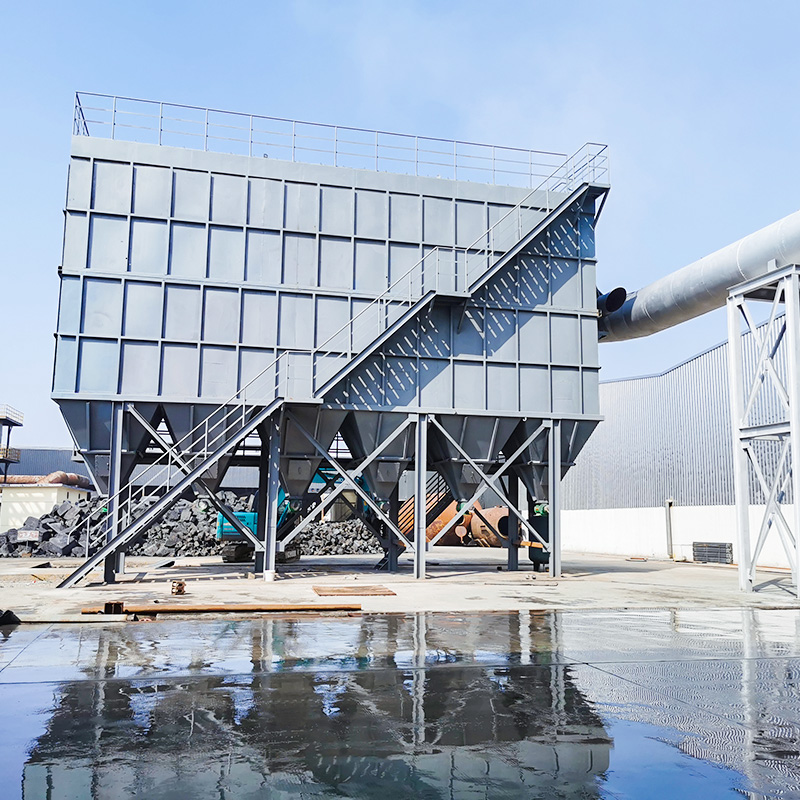
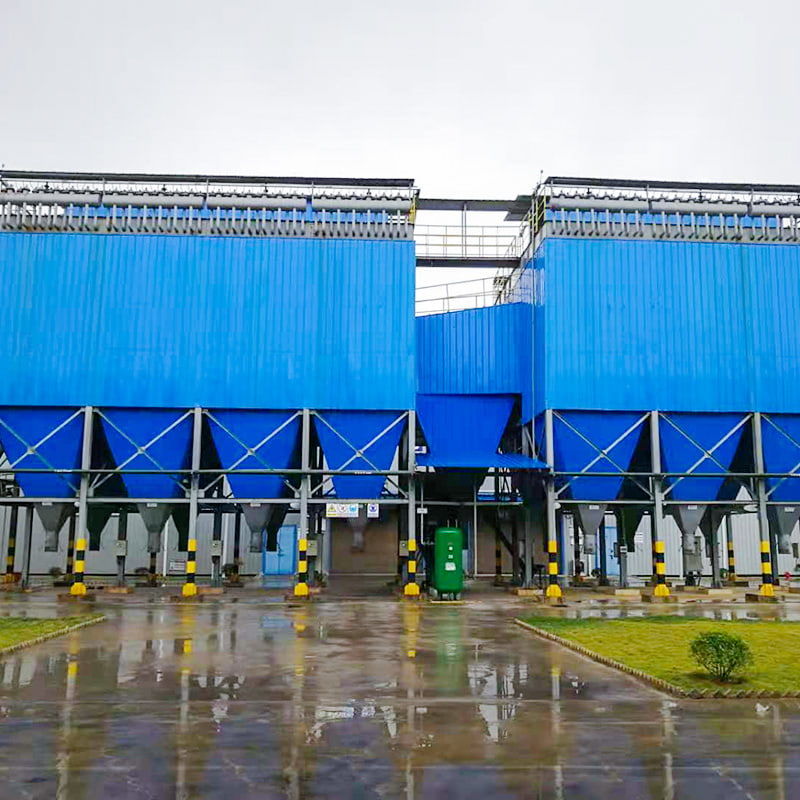
Verify header pressure at the tank, not at the compressor, and confirm each solenoid pilot valve responds. Diaphragm valves that hiss continuously waste compressed air and cool the housing. Pulse only as often as dP requires: continuous cleaning polishes the filter cake that protects the media and shortens bag life on abrasive or hygroscopic dust. For high-volume, round-the-clock duty, an 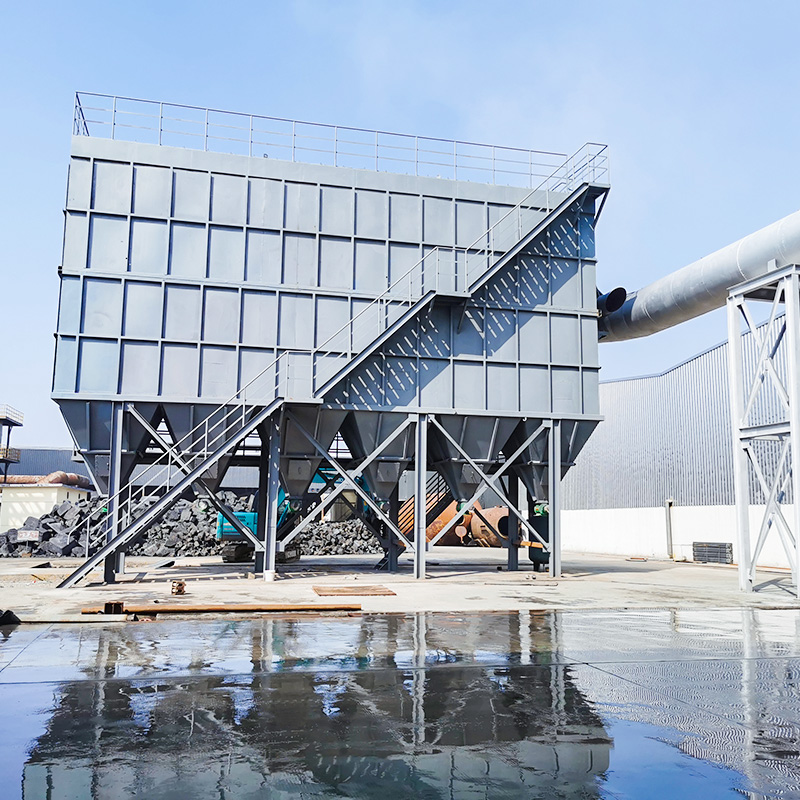 PPC Series Air Box Pulse Bag Dust CollectorChambered backflush and pulse-jet cleaning suit high-volume dust control in cement, metallurgy, and similar plants.View Product → is often chosen for its compartmented, offline cleaning, which lets one chamber rest while the rest keep working. Lighter or intermittent loads are usually served by a
 TDMC Chambered Pulse-Jet Bag Dust CollectorChamber-isolated pulse cleaning and PLC automation make this collector a practical option for lighter or intermittent dust loads.View Product →, where simpler cleaning logic keeps the maintenance routine short.
Physical inspection still matters. Bags that are stiff, shrunken or glued together by moisture indicate a dew point problem, not a media defect. Cages with rust blooms will abrade new bags within months, so replace cage and bag together when corrosion is visible.
Ductwork, Hoods and Hopper Discharge
Most "collector" faults begin several metres upstream, in duct runs and pickup points nobody inspects because they are hard to reach.
- Check transport velocity at the pickup: too low and dust settles in horizontal runs, too high and abrasion eats elbows.
- Look for rust streaks and dust trails at joints, flexible sleeves and access doors — that is air entering where it should not.
- Confirm damper positions have not drifted since the last balancing; a partly closed branch starves the hood it serves.
- Keep the dust bin below roughly half full; overfilling stresses the fabric and pushes re-entrained dust back onto the media.
- On sticky or hygroscopic material, the load profile changes with granulation and drying conditions across a compound fertilizer production line, so cleaning intervals should be reviewed when the recipe or moisture target changes.
Fan, Motor and Safety Hardware
The fan reports on everything upstream: raised amperage with normal airflow suggests restriction, while vibration suggests build-up on the impeller or bearing wear.
Clean the impeller during planned stops rather than waiting for imbalance, check coupling alignment after any duct modification, and record bearing temperature alongside dP in the same log so the two can be compared. Safety devices deserve the same discipline: test explosion vents, isolation valves, spark detection and high-temperature trips on a schedule you can prove, and never defeat a hopper high-level switch to keep a line running. Those interlocks exist because combustible dust events are rare until they are not.
Common Failures, Root Causes and First Actions
Matching the symptom to the right subsystem on the first visit is what separates a two-hour fix from a two-week outage.
| Symptom | Likely root cause | First action |
|---|---|---|
| Steady dP rise over several days | Pulse valves not firing, low header pressure, moisture blinding | Check tank pressure, manual pulse test, inspect for condensation |
| Sudden dP drop with dust at outlet | Torn bag, corroded cage, failed tube sheet seal | Isolate compartment, inspect and replace the affected row |
| Weak suction with normal dP | Duct leak, open access door, drifted damper, hood gap | Smoke test at pickup points and joints |
| Fan vibration and rising amps | Material build-up on impeller, bearing wear, misalignment | Clean and rebalance impeller, check alignment and bearings |
| Hopper bridging and dust carryover | Wet dust, worn rotary valve clearance, overfilled bin | Empty bin, verify valve clearance and hopper slope |
Repair, Rebuild or Replace
Decide from condition and duty, not from the age of the unit alone, and price the three options before a failure forces the choice.
Repair
Isolated faults on a sound housing: valves, solenoids, a bag row, one rotary valve. Payback is immediate and downtime is short.
Rebuild
Corrosion under about 30 percent wall loss, tube sheet intact, air-to-cloth ratio still adequate after a modest capacity increase.
Replace
Housing perforation, wrong sizing after expansion, or repeated bag failures where gas temperature or chemistry has changed.
Where the process runs hot — kiln off-gas, dryer exhaust, calcination — media selection and housing design matter more than cleaning hardware, which is why high-temperature duty is usually specified as a dedicated unit such as a  GMC High-Temperature Pulse Jet Bag Dust CollectorFor kiln, dryer, and cooler exhaust, this high-temperature collector uses individual pulse valves and microcomputer cleaning control.View Product → rather than a standard collector with upgraded bags.
Spare Parts and Procurement Planning
Availability, not price, decides most maintenance outcomes, because a failed diaphragm valve ordered on a two-week lead time becomes two weeks of degraded suction.
- Hold one full set of pulse diaphragms and solenoid pilots per collector size on site.
- Keep a spare rotary valve drive and a roll of door gasket material — gaskets fail far more often than steel.
- Stock two to five percent of bag count for immediate patching and row replacement.
- Confirm cage dimensions and finish before ordering media; mismatched cages destroy new bags.
- Review the wider dust collection equipment range against your duty conditions when sizing replacements, so cleaning mode, housing material and air volume are matched to the actual process rather than to the old nameplate.
Frequently Asked Questions
How often should filters be replaced?
Judge by dP trend, emission readings and inspection rather than a fixed date. Two to four years is common on clean, dry duty; twelve to eighteen months happens on abrasive, moist or chemically aggressive dust. Always reset the clean-media baseline after replacement.
Can we maintain the collector while the line is running?
External checks, dP readings, pulse tests and discharge inspection are safe during operation. Housing entry, bag change and internal inspection require isolation, lockout, ventilation and, for combustible dust, a permit that confirms the hazard assessment.
What differential pressure should trigger action?
Use the design band as the reference and act when the trend leaves it, typically above about 1,500 Pa sustained or after a sharp unexplained drop. A slow drift to 1,300 Pa with stable production may only need a cleaning review.
Why do new bags fail within months?
Usually because the cause of the first failure was never identified: excess inlet moisture, over-cleaning, a leaking tube sheet, or the wrong media for the temperature. Replacing media without correcting the condition repeats the result.
Is compressed air quality part of maintenance?
Yes. Oil and water carryover from the air header contaminates media and seizes pilot valves. Drain traps, filters and dryers belong on the same schedule as the collector itself.
Industrial dust collector maintenance rewards consistency more than skill in a crisis: a logged dP reading, an emptied bin, a tested pulse valve and a written schedule will prevent most of the failures that later look sudden. Start with the calendar, hold the daily readings for a month, and the trends will tell you where to spend the next maintenance budget.