 En
 English
 Français
 русский
 中文简体
 عربى
 Español


A vertical mixer wagon is a mobile feed mixer that uses one or two upright augers to blend silage, hay, straw, grain, and supplements into a total mixed ration. The short answer to whether it fits: choose a vertical wagon when the ration contains long fibre, when bale processing matters, and when you want a robust mixing action with straightforward maintenance. Choose a horizontal mixer instead when the priority is fast, complete discharge of dense, short-fibre blends. The decision should be made on ration structure, usable capacity, tractor power, discharge layout, and access to wear parts, not on brochure volume alone.
A vertical mixer wagon is not simply a tub with a screw inside. The mixing tub, vertical auger flighting, cutting knives, discharge door or conveyor, weighing system, and PTO drive all affect how quickly the ration reaches uniformity and how much the machine costs to run. Those details matter more than the number printed on the side of the tub.
What a Vertical Mixer Wagon Does and Where It Fits
Conclusion: a vertical mixer wagon is at its best when it must handle long, fibrous ingredients and turn them into a ration that animals cannot sort.
The vertical auger lifts material from the floor of the tub and lets it fall back through the mixer. Knives on the auger flighting shorten long forage, while the recirculating action blends forage, grain, by-products, minerals, and supplements. This is why vertical wagons are common on farms where grass silage, maize silage, straw, or hay form a large part of the ration. They can also process some round bales, although bale size, density, and tub design determine whether the wagon can handle them safely and consistently.
The working principle is simple, but the results depend on detail. A worn auger, dull knives, an inaccurate scale, or an overloaded tub will all produce a ration that looks mixed but varies from load to load. In practice, a vertical mixer wagon should be judged by three outcomes: a repeatable ration, a predictable mixing time, and a discharge that empties the tub without leaving a pocket of concentrate behind.
- Mixing tub: holds the ingredients and determines usable volume, loading height, and headspace.
- Vertical auger: lifts material and creates the recirculating mixing action.
- Knives and flighting: control fibre length and wear life; they are the first parts to inspect on a used wagon.
- Discharge system: door, conveyor, or cross-conveyor; it must match the feeding alley, barrier, and bin height.
- Weighing system: load cells and indicator; accuracy depends on calibration and on loading without shock loads.
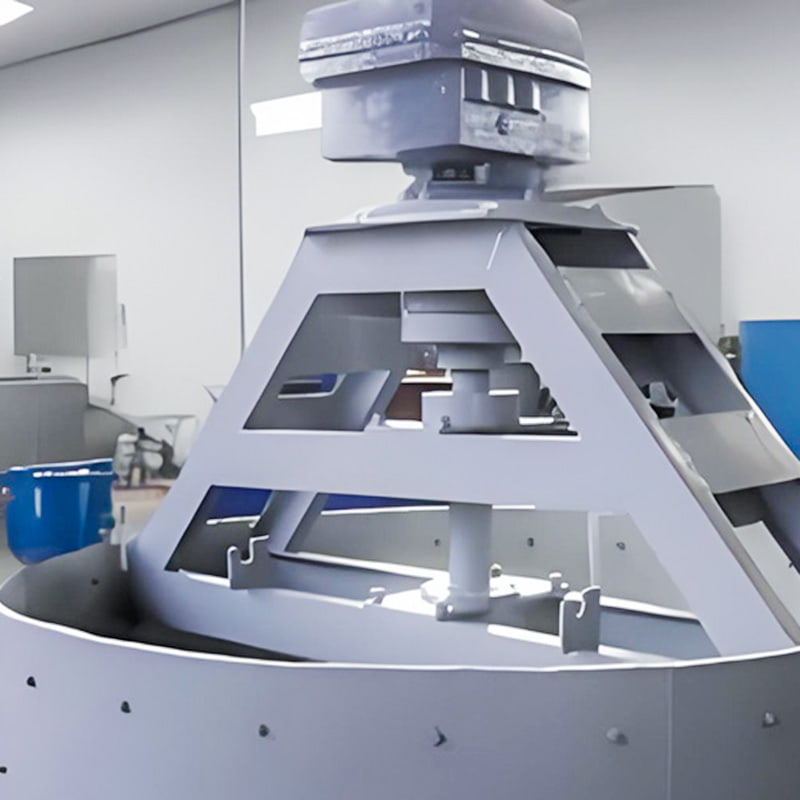
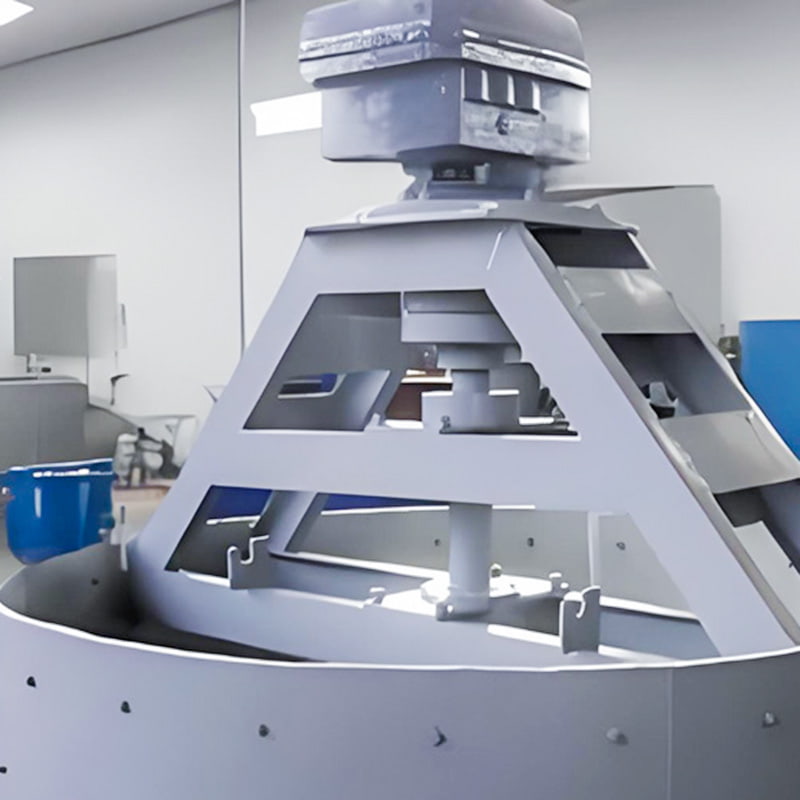 Vertical Mixer for Compound Fertilizer BlendingA compact, low-noise vertical mixer with a polypropylene-lined tank that resists sticking, wear, and corrosion while supporting uniform fertilizer batches and easier cleaning.View Product →
Capacity and Power: Size the Wagon to the Ration, Not the Tractor
Conclusion: start with the weight and volume of the ration you feed each day, then confirm the tractor power and discharge layout that the wagon actually needs.
Rated volume is not the same as load. A 12 m³ tub does not carry 12 tonnes of feed; at a ration density of about 300 kg/m³, it carries roughly 3.6 tonnes before allowing for headspace. Wet silage, high-moisture by-products, and mineral premixes change that figure. If the wagon is regularly filled to the top, mixing quality and PTO load both suffer. A practical approach is to size for the batch weight you feed most often, then check that the wagon can still handle the heaviest ration without exceeding its rated load or tractor power requirement.
Power demand is not decided by tub size alone. The required PTO power depends on the number of augers, the load, the starting condition, and whether the wagon is expected to process whole bales. A wagon that starts easily when half loaded may struggle when the tub is full and the ration is dense. Confirm the manufacturer's required horsepower at full load, the PTO speed, and the shaft rating. Also check that the tractor can run the wagon, the loader, and the weighing system safely at the same time.
| Check | Why it matters | Practical target |
|---|---|---|
| Usable volume versus rated volume | Overfilling reduces mixing quality and increases driveline load. | Leave adequate headspace and confirm the rated batch weight for the actual ration density. |
| Daily feed volume | Batch size controls labour, mixing time, and feed consistency. | Calculate loads per day from total ration weight divided by safe batch weight. |
| Tractor PTO power | Too little power causes stalling, clutch wear, and incomplete mixing. | Check full-load and start-up requirements, PTO speed, and shaft rating. |
| Discharge layout | Poor matching slows feeding and can spill ration in the alley. | Confirm door height, conveyor reach, and discharge side against the barn layout. |
| Footprint and turning | A wagon that cannot turn or pass a doorway is an expensive obstacle. | Measure alleys, doorways, turning radius, and clearance before delivery. |
| Weighing accuracy | Small ingredient errors become large ration errors over many loads. | Check load cell protection, indicator resolution, and calibration routine. |
Mix Quality and Ration Consistency
Conclusion: mix quality is judged by uniformity and by preserving the fibre length the ration needs, not by how long the wagon has been running.
A vertical mixer wagon can make an excellent ration, but it can also over-process fibre if the load is left to run while the operator does something else. Overmixing shortens particles, creates fines, increases power use, and can change how the ration behaves in the rumen. Undermixing is equally costly: concentrate pockets, sorting at the feed barrier, and variable intake are common signs that the loading order or mixing time is wrong.
Load order and mixing time
Start with the ingredients that need cutting or spreading, then add wet forage and concentrates in a sequence that keeps the auger loaded evenly. Minerals and premixes should go in at a point where they cannot remain in a corner of the tub. Many rations reach uniformity within a few minutes after the last ingredient, but the correct time should be verified for the specific wagon, ration, and load size. The scale should be checked regularly, because a small weighing error in a mineral or protein ingredient is a large error in the final ration.
What to check in the bunk and in the tub
- Use a particle separator or sieve test to compare fibre length with the ration specification.
- Watch for sorting at the feed barrier; it often begins with inconsistent mixing, not with the feed itself.
- Inspect the tub after discharge for clinging material, which can indicate wear, overload, or a damp ration.
- Record mixing time, load weight, and ingredient order so that a good batch can be repeated.
- Check knives and flighting before blaming the ration for poor mixing.
Vertical vs Horizontal Mixer: Which Fits the Job?
Conclusion: vertical wagons usually suit long-fibre rations and bale handling, while horizontal mixers can suit dense, short-fibre blends and fast, complete discharge.
The choice is not a matter of one design being universally better. A vertical mixer wagon uses a tall auger and gravity; a horizontal mixer uses a lower, wider mixing chamber with paddles or augers. The right choice depends on the ration, the building, the tractor, and the labour pattern. If the farm feeds a high-forage ration and needs to break down bales, the vertical design often has the advantage. If the ration is dense, finely blended, and needs rapid discharge into a central feeding system, a horizontal mixer may be more suitable.
| Criterion | Vertical mixer wagon | Horizontal mixer |
|---|---|---|
| Mixing action | Upright auger lifts and recirculates material; good for long fibre. | Lower mixing chamber with paddles or augers; often faster for dense blends. |
| Best ration fit | High-forage rations with silage, hay, straw, and some bale processing. | Short-fibre, high-density rations and blends requiring rapid uniformity. |
| Bale handling | Often capable with the right tub and knife arrangement, but check capacity and load limits. | Possible on some models, but bale size and power demand need careful checking. |
| Discharge | Door or conveyor discharge; clean-out depends on tub shape and auger condition. | Usually fast and complete, especially where a cross-conveyor is fitted. |
| Wear points | Auger flighting, knives, floor liner, and lower auger bearings. | Paddles, auger edges, trough liners, and drive components. |
| Power demand | Depends on load, auger count, and start-up condition; confirm full-load PTO requirement. | Can be higher for dense loads; check tractor capability and starting load. |
Wear Parts, Maintenance, and Operating Costs
Conclusion: the real cost per tonne is driven by auger flighting, knives, floor liners, scale reliability, and the way the wagon is loaded.
A vertical mixer wagon works in an abrasive environment. Silage acids, sand, soil, and mineral supplements all accelerate wear. The auger flighting and knives are the most obvious parts to inspect, but the floor liner, discharge door seals, lower bearing area, PTO shaft, and load cells also affect reliability. A wagon that is cheap to buy but needs frequent welding, knife changes, or scale repairs will not be cheap to own.
- Measure auger flighting thickness and knife condition at each service interval.
- Check the floor liner for thin spots, especially under the auger path.
- Inspect lower bearings, seals, and gearbox oil for contamination or movement.
- Test the weighing system with known weights and check load cell mounts for damage.
- Inspect PTO guards, shafts, and shear protection before every season.
- Clean the tub and discharge area after use, but never enter a running mixer.
For fixed production lines, the same vertical mixing principle appears in stationary mixers, but the priorities shift towards dust control, continuous feeding, and integration with batching and conveying equipment. A mobile feed wagon and a fixed-line mixer may look related, yet they are specified for different duty cycles and different discharge arrangements.
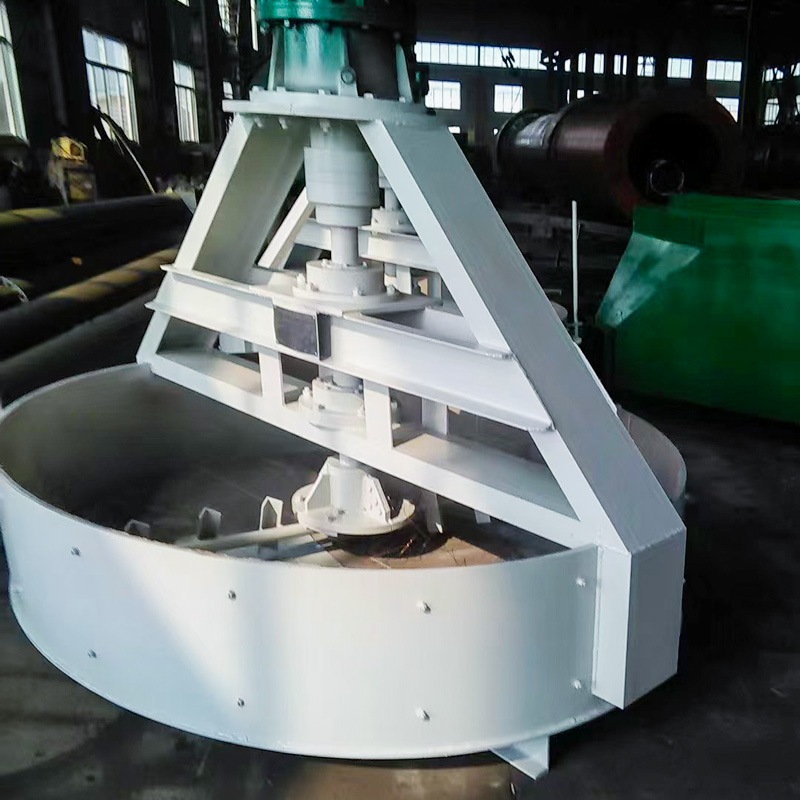
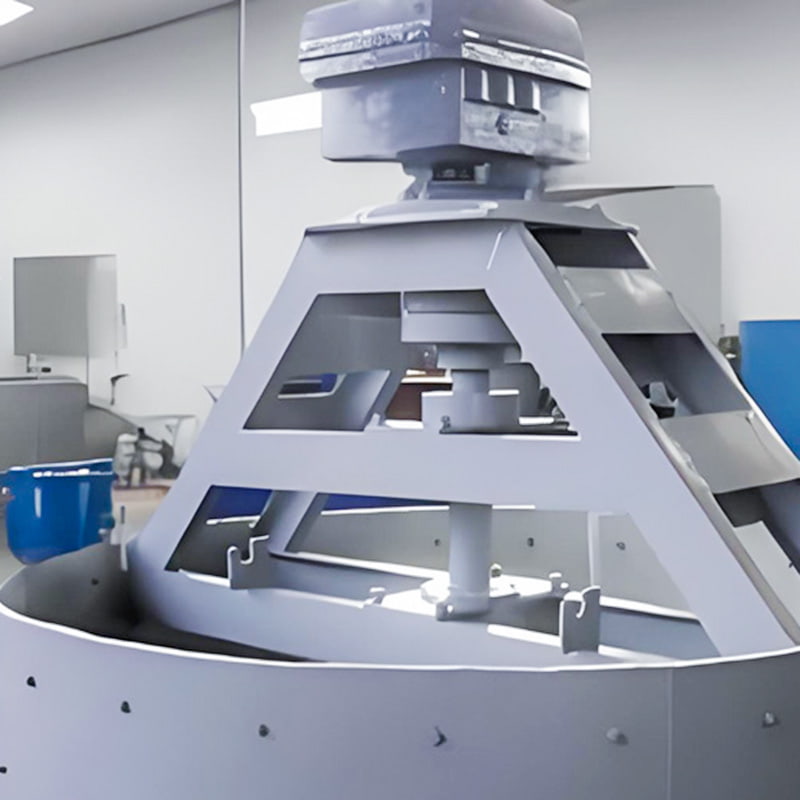 Compound Fertilizer Pan Mixer for Production LinesA stationary pan mixer with fixed agitator teeth and polypropylene or stainless-steel lining, suited to continuous fertilizer-line blending with convenient unloading and conveying.View Product →
Buying Checklist for a Vertical Mixer Wagon
Conclusion: match the wagon to the ration, the tractor, the building, and the service support before comparing price.
- Calculate the normal batch weight and the heaviest batch weight, then confirm usable volume at the real ration density.
- Check full-load PTO power, start-up behaviour, PTO speed, and shaft protection.
- Measure doorways, alleys, turning space, and discharge reach in the actual barn.
- Inspect auger flighting, knives, floor liner, bearings, and discharge seals on any used wagon.
- Verify scale calibration, indicator condition, and load cell protection.
- Confirm that the wagon can handle the bale size and forage length used on the farm.
- Ask for a demonstration with a ration similar to your own, not with a light or dry test load.
- Check spare-part availability for knives, flighting, bearings, seals, and scale components.
If the project also includes a fixed mixing section for fertilizer or industrial blending, the wider product range can be reviewed alongside the mobile wagon specification. The key is to separate mobile ration mixing from fixed-line production duties; they have different load profiles, discharge requirements, and maintenance routines.
Frequently Asked Questions
What size vertical mixer wagon do I need?
Size by the weight of the ration you feed most often, not by the largest number on the brochure. Calculate the batch weight at the real ration density, allow headspace, and check that the tractor can handle a full load. A slightly smaller wagon used efficiently is often better than an oversized wagon that is never filled properly.
How long should a vertical mixer wagon run?
Run it long enough to reach a uniform mix, but not so long that fibre is over-processed. The correct time depends on the ration, load size, knife condition, and wagon design. Verify the result with a particle separator and by checking whether animals sort at the feed barrier.
Can a vertical mixer wagon handle round bales?
Many can, but the ability depends on tub design, knife arrangement, bale size, and available PTO power. Do not assume that every vertical wagon can process every bale. Confirm the maximum bale size and the recommended loading method before purchase.
Do vertical mixer wagons need a large tractor?
Not always, but the tractor must meet the full-load power requirement, not just the power needed for an empty tub. Starting a full load, processing long fibre, and running the discharge conveyor can all demand more power than the rated average suggests.
How do I know the ration is mixed properly?
Check uniformity, fibre length, and animal sorting behaviour. A particle separator, scale records, and consistent bunk observations are more reliable than visual judgement alone. If the ration changes from load to load, check loading order, scale accuracy, and wear on the auger and knives.
Is a vertical wagon suitable for fertilizer blending?
A mobile feed wagon is built for ration mixing, not for fertilizer production. Fixed fertilizer blending lines use stationary mixers with different feeding, dust control, and discharge requirements. The mixing principle may be similar, but the equipment specification is not interchangeable.
The practical rule is simple: size the wagon by the weight and volume of the ration you actually feed, confirm the tractor and discharge layout, and inspect the wear parts before comparing price. A vertical mixer wagon earns its keep when it turns variable ingredients into a ration the animals cannot sort, and when it keeps doing that with predictable maintenance.